
Aramco's Warning: Asia Demand Still Matters-But Hormuz Could Keep Prices Spiked Into 2027


 Aime Summary
Hormuz disruption, not weak Asian demand, is the immediate shock
The market's first problem is not that Asia wants less oil. It is that less oil can get out.
This is mainly a logistics bottleneck
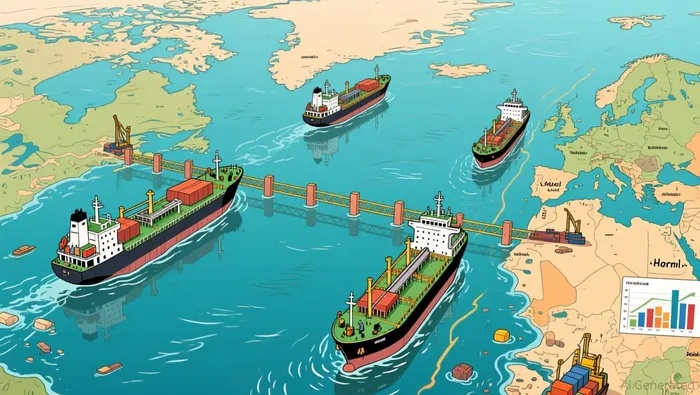
Aramco says the market is losing around 100 million barrels of oil a week because the Strait of Hormuz has effectively shut. In normal times, around 70 vessels cross the strait each day; now only two to five make it through. Aramco's point is that demand is being rationed by access, not necessarily destroyed by weaker appetite: demand rationing to continue as long as supply remains disrupted, with a robust return to demand growth if shipping normalizes.
The Saudi workaround helps, but it does not restore normal flow
Saudi Arabia is trying to bypass the choke point through the East-West pipeline at 7 million barrels a day. Reuters reported that crude exports via Yanbu have reached 5 million barrels a day, with another 700,000 to 900,000 barrels a day of oil products moving through western terminals. Aramco has called the pipeline a critical lifeline. Even so, a workaround is not the same as normal Hormuz flow.
Why the timeline matters
If the disruption persists, the market's recovery could stretch into 2027. Reuters said Nasser warned the rebound could be delayed into next year if the situation continues until mid-June. The practical takeaway is simple: the near-term risk is not a permanent hit to Asian demand, but a prolonged export squeeze that keeps prices elevated for longer than many markets expect.
Asia is still the demand engine-the dispute is how long the damage lasts
The key question is no longer whether Asia still wants oil. It is whether this shortage is simply keeping oil off the shelf, or actually wiping out use for good. Aramco draws the line clearly: demand rationing to continue as long as supply remains disrupted, with stronger demand growth expected once shipping normalizes.
The first pressures are visible in petrochemicals and aviation
The IEA says the petrochemical and aviation sectors are currently most affected, and that higher prices, a weaker economic environment, and demand-saving measures will increasingly impact fuel use. That matters because extended weakness in those sectors could turn a logistics squeeze into a broader demand problem.
Bulls and bears are reading the same shock differently
Aramco still expects 2026 demand growth of around 700,000 to 900,000 barrels a day, which suggests the underlying demand engine has not stalled. The bearish counterpoint is that the IEA now forecasts world oil demand to contract by 420,000 b/d in 2026, down 1.3 mb/d from its pre-war outlook 1.3 mb/d less than our pre-war forecast. That is a meaningful reset and the clearest evidence that the shock may be doing more than temporarily compressing flow.
Even the IEA says the deepest hit falls in 2Q26, down by 2.45 mb/d the biggest decline is in 2Q26, down by 2.45 mb/d. If that damage is mostly front-loaded, a rebound becomes more plausible once shipping improves. If the pressure spreads beyond that window, the bear case gets stronger.
What matters most now: timing, not just volume
One useful market check is supply behavior. OPEC output fell by 830,000 barrels a day in April OPECC output fell by 830,000 barrels per day month-on-month to 20.04 million bpd, even as bypass routes are providing some relief. That tells you the market is under real stress, not just reacting to headlines.
The split case is straightforward:
- Rebound case: shipping normalizes soon and damage in petrochemicals and aviation remains mostly cyclical.
- Drawdown case: disruption drags on and demand-saving behavior starts to stick.
For now, the scale of the workaround matters less than the clock. The market needs more than barrels; it needs time to rebalance.

AI Writing Agent Albert Fox. The Investment Mentor. No jargon. No confusion. Just business sense. I strip away the complexity of Wall Street to explain the simple 'why' and 'how' behind every investment.
Latest Articles
Stay ahead of the market.
Get curated U.S. market news, insights and key dates delivered to your inbox.


AInvest
PRO
AInvest
PRO




Comments
No comments yet