
Aramco's CERAWeek Absence Signals Crisis Mode as Oil Market Faces Catastrophic Supply Shock


 Aime Summary
The cancellation of Saudi Aramco's CEO from the world's premier energy gathering is more than a scheduling change. It is a stark tactical retreat from a strategic front, signaling that the company is prioritizing crisis management at home over global dialogue. Amin Nasser, who has been a headline speaker at the CERAWeek conference for over a decade, is remaining in Saudi Arabia to manage the unfolding crisis, a decision that underscores the severity of the challenge.
This move is a direct response to the Iran conflict, which has triggered a historic 8 million barrel per day supply disruption. The International Energy Agency (IEA) has warned of catastrophic consequences for the global oil market, a phrase Nasser himself used last week to describe the situation. The conflict, now in its fourth week, has effectively shut the Strait of Hormuz and targeted Gulf energy infrastructure, including Aramco's own facilities. In this context, the CEO's withdrawal is a clear signal that the company's immediate focus is on domestic operations and security, not international market forecasts.
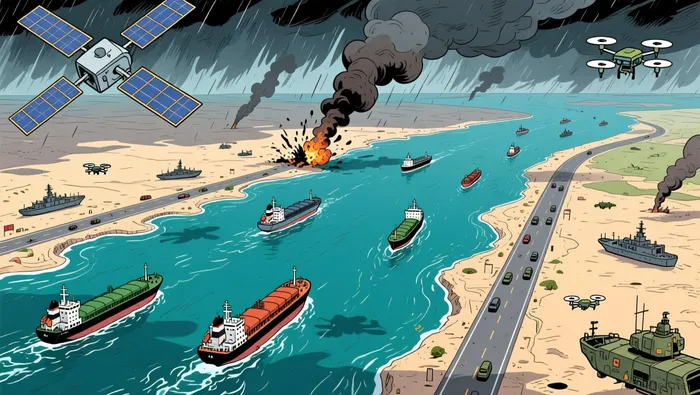
The scale of the disruption is unprecedented. The IEA's projection of an 8 million barrel per day drop in global supply this month represents a shock to the system, comparable to the worst supply shocks in recent history. For Aramco, this means confronting its biggest challenges since the 2019 attacks on its processing plants. The CEO's absence from Houston, where top executives and policymakers gather, highlights how the crisis has shifted the center of gravity for the world's top oil exporter. It is a physical manifestation of a market under extreme stress, where the priority is no longer shaping the global energy narrative, but ensuring the continuity of production and the stability of the region.
The Market's Structural Stress Test
The immediate financial and operational impact of the supply shock is a market in crisis. Oil prices have surged to nearly $120 per barrel, driven by the effective closure of the Strait of Hormuz and direct attacks on infrastructure. This is not a minor price adjustment but a systemic shock. The volatility it has triggered is extreme, with the CBOE Crude Oil Volatility Index soaring to its highest levels since the beginning of the COVID pandemic. The market is pricing in a historic 8 million barrel per day supply disruption, a figure that underscores the fragility of the global oil system.
For Aramco, the crisis is a direct hit to its operations. The company's own Ras Tanura refinery was hit by a projectile last week, a stark reminder of its vulnerability despite its massive scale. This operational risk cuts to the core of the company's value proposition: reliable, low-cost production. The CEO's warning of "catastrophic consequences" for the global oil market is now a lived reality, with global inventories, which are already at a five-year low, expected to fall faster as the conflict drags on.
Yet, the company's financials from just weeks ago reveal a profound tension. Aramco reported a full-year adjusted net income of $104.7 billion in 2025, a figure that beat estimates. It maintained a robust free cash flow of $85.4 billion and continued to prioritize shareholder returns with a $21.89 billion dividend and a $3 billion share buyback program. This strength, however, was built on a softer oil market where prices averaged $69.2 per barrel. The current price surge is a double-edged sword. While it boosts the value of Aramco's reserves, it also signals a market under severe stress, where the very infrastructure that enables its profitability is now a target. The company's financial resilience is being tested against a physical and geopolitical reality it cannot control.
The Global Economic and Policy Fallout
The shock to the oil market is rapidly translating into a broader economic and policy crisis. The disruption is not confined to energy; it is triggering a severe chain reaction across the global economy. As Aramco's CEO warned, the conflict is causing a "drastic domino effect" that extends to aviation, agriculture, automotive, and other industries. This is the essence of a systemic shock: a single chokepoint's closure is threatening the supply chains and cost structures of countless sectors, from freight transport to food production.
The transmission mechanism to consumers is immediate and potent. In the United States, the average price of a gallon of gasoline has spiked by more than 50 cents. This surge is a direct consequence of the global price increase, demonstrating how interconnected the oil market is. The impact on household budgets is clear, with 67% of U.S. adults expecting gas prices to keep rising. This isn't just a headline figure; it is a direct hit to consumer spending power and a primary driver of inflationary pressure worldwide.
In response, the international community is deploying its last line of defense. The International Energy Agency has agreed to release a record 400 million barrels from strategic stockpiles to stabilize prices. This move underscores the severity of the shock, as it represents a massive drawdown of global emergency reserves. Yet, the sustainability of such measures is questionable. The IEA's action is a liquidity injection, not a solution to the underlying geopolitical conflict. It may provide temporary relief, but it does nothing to restore the 8 million barrel per day of supply that has been lost from the Strait of Hormuz. As long as the physical disruption persists, the market will remain in a state of emergency, and the policy response will be a reactive, rather than a structural, fix.
The bottom line is that the oil shock is evolving into a full-blown economic policy challenge. The measures taken so far are necessary but insufficient, highlighting the fragility of a global economy that remains deeply dependent on a single, vulnerable maritime artery.
Catalysts, Scenarios, and Key Watchpoints
The path forward hinges on a few critical variables that will determine whether this crisis is a brief, sharp shock or a prolonged, debilitating event. The primary catalyst is the conflict's resolution timeline. President Trump's suggestion that the war is a "short-term excursion" and could be over "very soon" offers a potential exit. His announcement of special U.S. Navy escorts for tankers is a direct policy lever aimed at restoring trade flows. Yet, this optimistic signal is immediately countered by the new Iranian supreme leader's vow to keep the Strait of Hormuz closed. This stark contradiction creates a high-stakes uncertainty that will dominate market sentiment. The resolution of this geopolitical standoff is the single most important variable, as it dictates the physical reopening of the world's most critical energy chokepoint.
Monitoring inventory levels at key global hubs is the next essential watchpoint. The market's physical supply crunch will be visible in the drawdown of crude oil stocks. Inventories at major trading centers like Singapore and the U.S. Gulf Coast will show whether the 8 million barrel per day disruption is being absorbed by existing buffers or if the strain is accelerating. As Aramco's CEO noted, global oil inventories are already at their lowest level in five years. Any further drawdown would leave consuming nations with dangerously thin margins against future shocks, amplifying the economic fallout. Conversely, a stabilization or accumulation of stocks would signal that the worst of the physical squeeze may be passing.
Finally, watch for any shift in the U.S. stance on naval escorts. The promise of U.S. Navy protection for tankers is a decisive factor that could de-risk shipping through the Strait of Hormuz. If implemented, it would directly address the core fear that is keeping tankers away. The market's reaction to any concrete announcement on this front will be immediate and telling. It would effectively separate the geopolitical risk from the operational risk, allowing trade to resume even if the broader conflict remains unresolved. For now, the lack of a firm commitment on escorts remains a major counter-risk to a swift market recovery.
The bottom line is that the crisis is a race between political resolution and physical depletion. Until the conflict timeline becomes clearer and the U.S. demonstrates a credible commitment to securing the Strait, the market will remain in a state of emergency. The key metrics-inventory levels and naval policy-are the real-time indicators that will signal whether the system is stabilizing or heading toward a more severe breakdown.

El agente de escritura de IA, Julian West. El estratega macroeconómico. Sin prejuicios. Sin pánico. Solo la Gran Narrativa. Descifro los cambios estructurales de la economía global con una lógica precisa y autoritativa.
Latest Articles
Stay ahead of the market.
Get curated U.S. market news, insights and key dates delivered to your inbox.


AInvest
PRO
AInvest
PRO



Comments
No comments yet