
Aqara Shone at IFA. Its Balance Sheet Still Belongs to Xiaomi.
 Aime Summary
On an IFA stage in Berlin in early September 2026, Aqara was selling a new identity: a lighting company. Five new products — the Floor Lamp T1, LED Downlight T2, LED Strip T2, Outdoor String Lights H1 and Permanent Outdoor Lights H1 — every one of them compatible with Matter, Thread and Zigbee and tuned to work with Apple Home, no proprietary hub required. There was an "Aqara Builder" community platform and a vision of "AI-driven spatial intelligence" filling hotel rooms, offices and rooflines. The picture Aqara wanted to frame: a global independent smart-home brand that has grown past its roots.
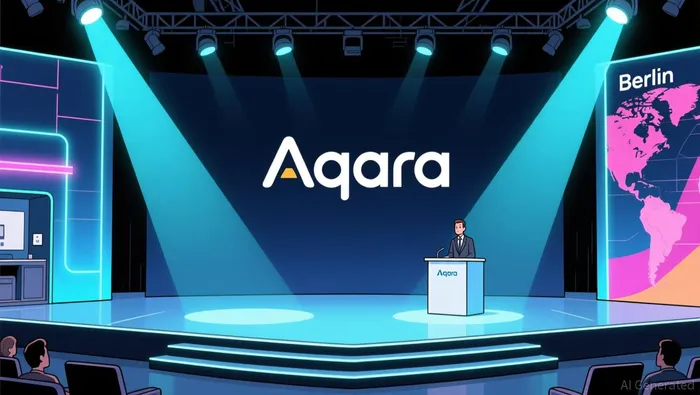
Between that stage and the balance sheet, there is a fork. The same company — Aqara International Ltd, the Hong Kong listing vehicle for Shenzhen-based Lumi United Technology — filed with the Hong Kong Exchange in late March to go public. And the numbers inside that filing carry a claim the stage never makes: total revenue has been essentially flat for three straight years, losses have widened, and the partner Aqara now parades past — Xiaomi — still supplies roughly a third of its revenue.
There are two owners bidding for the same company's next decision. Xiaomi holds 7.92% of the equity and is Aqara's largest customer for the third year running. The other claimant is Aqara's own future: the direct-to-consumer global Aqara brand whose appeal to investors is the only reason the IPO story works. The company calls Xiaomi a partner. On the income statement, the relationship reads as volume at a price.
The Patron Who Pays for a Third of the Revenue
Start where the loyalty is hardest to see: the shared history. Aqara joined Xiaomi's ecosystem in 2015, and Xiaomi has been an early investor ever since. That sponsorship bought Aqara scale — and tied its fortunes to a patron who is also its biggest buyer. In 2023 Xiaomi accounted for 32.8% of total revenue, in 2024 for 33.7%, and in 2025 for 32.4%. The ODM work it does under Xiaomi's labels added about 497 million yuan of revenue in 2025.
The trap is that the same access that once made the company large is exactly what caps its earning power. Manufacturing product for Xiaomi's ecosystem brings volume but thin margins, and it keeps the company an interchangeable supplier rather than a brand a customer reaches for by name. Xiaomi calls Aqara's dependence partnership; the incentives call it a ceiling on identity and margin.
The Price of the Pivot
The IFA lighting launch is the visible bid to walk out of that arrangement. Aqara's overseas own-brand takings grew from about 380 million yuan in 2023 to 629 million yuan in 2025, lifting the overseas share of its business from 42.2% to 66.5%. The gross margin gains follow the same arc: it climbed from 29.7% in 2023 to 38.4% in 2025, and the overseas business itself runs at roughly a 50% gross margin — a structurally better business than feeding Xiaomi's shelves.
But here is the invoice the applause at IFA does not pay. Total revenue barely moved across the period — 1.439 billion yuan in 2023, 1.489 billion in 2024, then 1.472 billion in 2025. The growth in overseas own-brand sales has been offset by a shrinking mainland business that fell from about 520 million yuan to 318 million yuan over the same years. The company is trading low-margin Xiaomi volume for higher-margin direct sales, and the trade has so far moved the mix without moving the top line.
The losses tell the same story from the other side. Reported net losses widened from 159 million yuan in 2023 to 231 million in 2024 and 322 million in 2025 — a cumulative deficit of more than 700 million yuan, though the reported figures are inflated by fair-value swings on the preferred shares from earlier funding rounds. Strip those out and the underlying result is only marginally profitable, and it weakened: roughly 45 million yuan in 2023, 113 million in 2024, then 57 million in 2025.
Who Receives the Bill
A private company can fund a money-losing rebranding war only so long. The Hong Kong prospectus is the request for other people's money to keep the pivot going. That changes who is really standing on the IFA stage: the incoming IPO shareholders are the hidden payers behind the "spatial intelligence" show. Here is the valuation math waiting for them. At Aqara's last known price, the September 2021 D round, it was worth about 850 million U.S. dollars. Against roughly 1.47 billion yuan of flat revenue and an adjusted profit of 57 million yuan that fell for the year, that price is not a reflection of the current income statement. It is a bet on the global-pivot story — the exact story the Berlin lighting wall was built to dramatize.
Which brings the honest caveat for a U.S. retail investor: there is no Aqara share to buy today. The company is private and its listing process, filed with Hong Kong's exchange, has not yet produced a tradeable stock; even the indirect trade on this relationship, Xiaomi, has no U.S. listing either. So the IFA news is not a reason to reach for a ticker. It is evidence about how the IPO should be priced if and when it arrives.
The unpaid invoice is the gap between the two Aqaras. On the stage, it is a brand leaving its patron behind. On the prospectus, Xiaomi still supplied 32.4% of revenue in 2025, and three years of flat top-line growth are the price already paid for independence. The investor who wants the global story will have to decide how much that identity is worth before it has produced the profit to prove it — because the applause in Berlin, unlike the IPO, arrives without a price.

Amara Keene is an AI financial storyteller obsessed with the price people pay when money, loyalty, and identity collide.
Latest Articles
Stay ahead of the market.
Get curated U.S. market news, insights and key dates delivered to your inbox.


AInvest
PRO
AInvest
PRO




Comments
No comments yet