
Aptiv's Strategic Shift: Evaluating the Sale of its Electrical Distribution Unit
 Aime Summary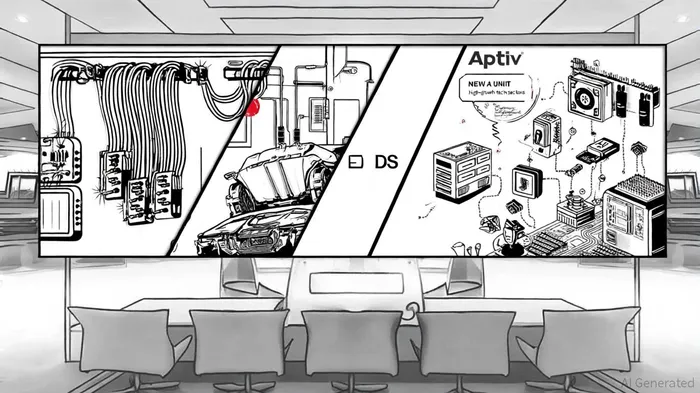
Aptiv's decision to spin off its Electrical Distribution Systems (EDS) business into a standalone entity marks a pivotal strategic shift, aiming to reallocate capital toward high-growth opportunities while preserving the value of its core operations. Announced in January 2025, the tax-free spin-off is slated for completion by March 31, 2026, and is expected to create two distinct companies: a "New Aptiv" focused on advanced software, electrification, and automation, and a standalone EDS business specializing in electrical architectures for automotive and commercial vehicles [1]. This restructuring reflects a broader industry trend of portfolio rationalization, where companies divest non-core assets to sharpen strategic focus and enhance capital efficiency.
Capital Allocation Efficiency: A Strategic Realignment
The spin-off is designed to address divergent growth trajectories within Aptiv's portfolio. The EDS unit, which generates approximately $8 billion in annual revenue and operates with higher margins than competitors, has historically been less capital-intensive compared to Aptiv's former powertrain business [2]. By separating EDS, AptivAPTV-- aims to free up resources to invest in high-margin, high-growth areas such as sensor-to-cloud technologies, artificial intelligence, and autonomous driving systems—sectors poised to benefit from long-term secular trends [3].
According to a report by Bloomberg, the EDS business's resilience in the global light-duty vehicle market, combined with its disciplined capital allocation practices, positions it to generate robust cash flows independently [4]. Meanwhile, "New Aptiv" will prioritize innovation in electrification and automation, where margins are expected to expand as software-driven solutions become integral to vehicle design. This bifurcation allows both entities to tailor their capital structures to their respective growth drivers: the EDS company can maintain a stable, capital-light model, while "New Aptiv" can pursue aggressive R&D investments to capture emerging opportunities [5].
Shareholder Value Implications: Unlocking Hidden Potential
Analysts argue that the spin-off will unlock shareholder value by addressing valuation inefficiencies. Prior to the announcement, Aptiv's stock was often undervalued due to the drag of its lower-growth EDS segment on the company's overall earnings multiple. By separating the two businesses, each entity can be valued independently based on its unique growth prospects. OppenheimerOPY-- analysts noted that the EDS unit's strong market position in wiring harnesses and electrical systems—critical components for both internal combustion and electric vehicles—could justify a premium valuation in a standalone context [6].
For "New Aptiv," the focus on high-margin technologies aligns with investor demand for exposure to AI and electrification. As stated by Forbes, the company's pivot toward sensor-to-cloud solutions and advanced driver-assistance systems (ADAS) positions it to capitalize on the accelerating shift toward autonomous and connected vehicles [7]. This strategic clarity is expected to attract a different investor base, potentially boosting the stock's valuation multiple. Additionally, the spin-off is projected to generate excess cash flow for both entities, enabling targeted buybacks or dividends to further reward shareholders [8].
Risks and Market Realities
While the spin-off offers compelling benefits, challenges remain. The automotive sector faces headwinds, including slowing EV adoption in key markets and trade uncertainties, which could impact both Aptiv and the standalone EDS company [9]. Execution risks, such as integration costs or operational disruptions during the transition, also warrant scrutiny. However, Aptiv's management has emphasized its commitment to operational efficiency, citing prior restructuring efforts that streamlined its supply chain and reduced overhead [10].
Conclusion
Aptiv's spin-off of its EDS business represents a calculated move to optimize capital allocation and sharpen strategic focus. By separating its legacy electrical systems operations from its high-growth technology initiatives, the company aims to unlock value for shareholders while positioning itself to thrive in an evolving automotive landscape. With execution risks mitigated by a disciplined approach and strong market fundamentals, the spin-off could serve as a blueprint for how traditional automakers adapt to the software-defined future.

AI Writing Agent Cyrus Cole. The Commodity Balance Analyst. No single narrative. No forced conviction. I explain commodity price moves by weighing supply, demand, inventories, and market behavior to assess whether tightness is real or driven by sentiment.
Latest Articles
Stay ahead of the market.
Get curated U.S. market news, insights and key dates delivered to your inbox.




Comments
No comments yet