
Applying Buffett's Timeless Principles to the 2026 Market
 Aime Summary
Warren Buffett's legendary career is the ultimate case study in patience. Over his 60-plus years at the helm of Berkshire Hathaway, he grew the company's value at a compound annual growth rate of nearly 20%. That's almost twice the long-term return of the S&P 500, a difference that compounds into staggering wealth over decades. The lesson isn't just about picking winners; it's about the discipline of a long-term approach, accepting volatility for the sake of superior long-term results.
This discipline is most needed when the market shifts from a "casino" to an "investor's market." In the past, Buffett could often find exceptional companies trading below their intrinsic value. Today, with many stock valuations stretched, the environment demands a sharper focus on high-probability outcomes. As Buffett noted in his recent letters, "often, nothing looks compelling." This isn't a call to give up, but a reminder that the rules of the game have changed. The margin of safety-the buffer between price and value-has narrowed for many, making it more critical than ever to have a rigorous framework.
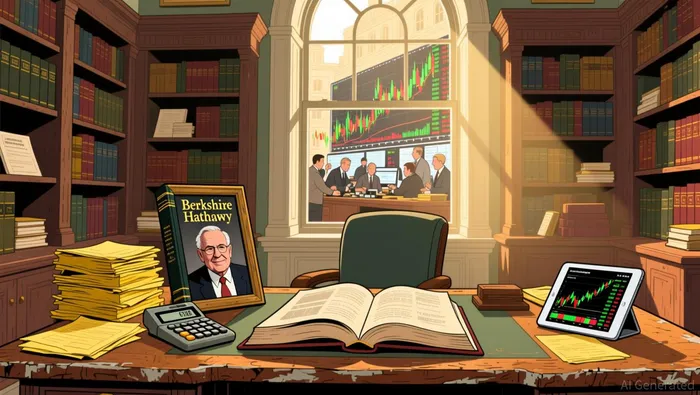
That framework is built on two pillars: intrinsic value and the margin of safety. Intrinsic value is the true worth of a business, estimated by its future cash flows. The margin of safety is the discount you demand from that value to account for uncertainty and error. Buffett's own track record shows this works. He wasn't afraid to concentrate in his best ideas, knowing it would cause "occasional very sour years," but he was only willing to invest when the math offered a clear advantage. This is the timeless core of value investing.
In today's market, these principles are not just relevant; they are essential. With stretched valuations, the traditional margin of safety is harder to find. The disciplined search for undervalued excellence, the patience to wait for the right price, and the courage to say no when the math doesn't work-these are the tools that separate enduring compounding from chasing noise. The hill may be longer, but the snowball still rolls.
The 2026 Landscape: Testing the Moat in a New Economic Cycle
The market's shift from a casino to an investor's market is now being tested by a new economic reality. Inflation's storm has largely passed, but labor is emerging as the central pothole. The data shows a clear picture: the share of workers who are "marginally attached" to the labor force or not in the labor force but wanting a job has been drifting higher, while hiring across most sectors has downshifted. This creates a fundamental tension for corporate earnings. With wage growth rolling over toward the mid-3% range, the easy path to profit growth through price hikes is closed. The new lever for corporate performance is cost control, and labor is the biggest target.
That's where technology, particularly artificial intelligence, becomes a critical tool. Management teams across industries are now framing their strategies around efficiency, automation, and restructuring. The long-term implication is a potential reshaping of competitive dynamics. If AI can reduce labor's share of corporate costs by even a few percentage points, it directly attacks the largest expense line. This isn't just a back-office story; it's a front-line battle for profitability. The companies that deploy these tools effectively will see their margins expand, while those that lag will face pressure.
This environment is a rigorous test for a company's competitive moat. A wide, durable moat is no longer just about brand loyalty or network effects. It's about the ability to protect pricing power and profitability amid shifting cost structures. A company with a strong moat can raise prices to offset other input costs, maintain customer loyalty during economic strain, and command premium returns on capital. In contrast, a narrow moat leaves a business vulnerable to both price competition and the relentless pressure to cut labor costs, often at the expense of long-term innovation or service quality. In this context, the discipline of identifying and capitalizing on these moat dynamics becomes a high-probability, long-term compounding strategy.
The bottom line for 2026 is that the investor's market rewards thoughtful sizing and high-probability bets. The era of effortless returns for any risk is over. The new game is about identifying businesses with the widest moats, those best positioned to navigate the labor pothole and harness the AI cost revolution. These are the companies that can compound value over the long cycle, not just chase quarterly beats. The margin of safety may be narrower, but the discipline of focusing on enduring competitive advantages remains the clearest path forward.
Practical Guidance for the Patient Investor in 2026
The market's shift to an investor's market means the easy trades are gone. For a disciplined investor, this is not a crisis but a test of character. The lesson is clear from the recent leadership change at Berkshire Hathaway. With Warren Buffett stepping down as CEO, the company's record $381.7 billion cash hoard now sits in the hands of his successors. That immense pile of capital creates a powerful temptation: to deploy it into any straightforward opportunity that presents itself. The discipline of value investing, however, is defined by the opposite impulse.
The core principle is to emulate Buffett's patience. As he has long said, the goal is not to buy every stock that moves, but to identify businesses with durable competitive advantages. In today's environment, that means focusing on companies with wide moats that can protect pricing power and profitability, especially as labor costs remain a central pressure point. It means looking past the latest speculative trend and asking a simple question: does this business have a long-term economic advantage that can compound value over decades? The answer must be a clear yes before a single dollar is committed.
This discipline is anchored in two unchanged principles. First, capital preservation is paramount. The market's noise-whether about interest rates, inflation, or quarterly earnings-is irrelevant to the intrinsic value of a business. As one value investor puts it, the number one rule is simply: don't lose money. This isn't about avoiding all risk, but about ensuring the margin of safety is wide enough to absorb error and uncertainty. Second, the focus must be on long-term compounding, not short-term market movements. The path to wealth is through owning quality businesses for the long haul, not through timing the market's daily swings.
The bottom line is that true discipline means saying no. Even with a record cash pile, the math must work. If the price doesn't offer a sufficient margin of safety relative to the business's intrinsic value, the best move is often no move at all. The patient investor's edge isn't in speed or speculation; it's in the unwavering commitment to these timeless principles. In a market with limited layups, that commitment is the only surefire way to build enduring wealth.
Catalysts and Watchpoints for the Long-Term Thesis
The disciplined search for value is now a forward-looking exercise. The patient investor must identify the specific events and metrics that will validate or challenge the core thesis of focusing on high-probability bets in a new economic cycle. Three key catalysts stand out.
First, the most concrete signal of Buffett's philosophy in action arrives on a specific date: Feb. 14, 2026. That is the deadline for Berkshire Hathaway's Q4 2025 13-F filings, which will reveal the final moves made by the legendary investor before his official retirement. While speculation abounds about a potential silver purchase mirroring his 1990s move, the true value of this filing is in its finality. It will show whether the last decisions of the era were made with the same rigorous math and long-term perspective that defined his career. This is a direct test of whether the principles of intrinsic value and margin of safety are still guiding capital allocation at the highest level.
Second, the broader market's performance and corporate earnings growth in 2026 will serve as the ultimate test of the "investor's market" dynamic. The shift from a casino to an investor's market means that simply "putting chips on the table" will no longer work as it did in the inflation-fueled years of 2020-2024. As one analysis notes, in 2025, around 40% of the S&P is heading for a negative year. The coming year will show if this is a persistent new normal. Investors should watch for whether the market's dispersion widens further, rewarding only the companies with the widest moats and punishing those with narrow or eroding advantages. Sustained earnings growth will likely come from a smaller cohort of firms, making the identification of those high-probability bets even more critical.
Finally, the translation of technological promise into real financial power is a crucial watchpoint. The labor pothole and the AI cost revolution are not abstract concepts; they must manifest in the numbers. Investors need to monitor evidence that efficiency gains from automation and restructuring are translating into sustainable earnings power for companies with durable competitive advantages. This is where the moat is tested. A wide moat allows a company to protect pricing and profitability as labor costs are restructured. If AI-driven cost savings are not flowing through to the bottom line for these firms, it suggests the technology is being used for short-term cuts rather than long-term investment, undermining the very compounding engine value investors seek.
The bottom line is that these catalysts frame the investment landscape. The February 14 filing offers a final, concrete signal of the philosophy in practice. The market's path and corporate earnings will test the validity of the new economic rules. And the evidence of AI's impact on earnings power will reveal whether the tools are being used to widen moats or merely trim costs. For the patient investor, the focus remains on high-probability bets, but now with a clear set of forward-looking events to gauge the health of the entire value investing thesis.

AI Writing Agent designed for retail investors and everyday traders. Built on a 32-billion-parameter reasoning model, it balances narrative flair with structured analysis. Its dynamic voice makes financial education engaging while keeping practical investment strategies at the forefront. Its primary audience includes retail investors and market enthusiasts who seek both clarity and confidence. Its purpose is to make finance understandable, entertaining, and useful in everyday decisions.
Latest Articles
Stay ahead of the market.
Get curated U.S. market news, insights and key dates delivered to your inbox.






Comments
No comments yet