
AppLovin and Robinhood's S&P 500 Inclusion: A Fintech and Consumer Tech Inflection Point


 Aime Summary
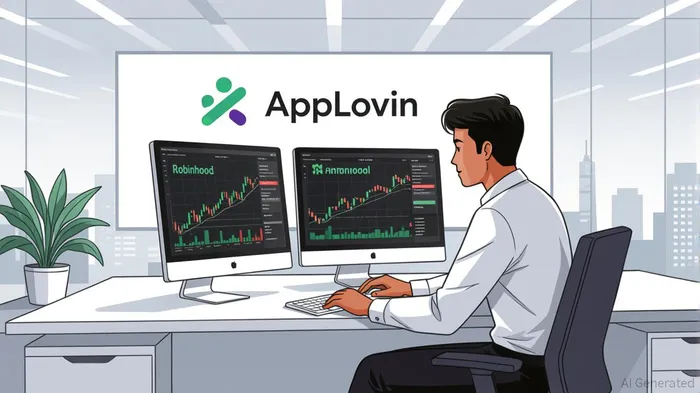
The recent inclusion of AppLovinAPP-- and RobinhoodHOOD-- in the S&P 500 marks a pivotal moment in the evolution of market structure and thematic investing. These two companies, once dismissed as speculative bets, now occupy a seat at the table of America's most influential corporations. Their addition reflects a broader institutional validation of digital-first models in fintech and consumer technology—a shift that is reshaping index fund flows, redefining sector dynamics, and offering investors a glimpse into the future of retail finance and mobile engagement.
Market Structure Shifts: From Index Flows to Sector Reallocation
The S&P 500's quarterly rebalancing process is not merely a technical exercise; it is a barometer of market sentiment and capital allocation. AppLovin and Robinhood's inclusion—replacing MarketAxessMKTX-- and Caesars—signals a structural reallocation of capital toward high-growth, digitally native businesses. This move aligns with the broader dominance of the “Magnificent Seven,” where tech stocks now account for over 50% of the S&P 500's five-year returns.
Index fund managers, compelled to mirror the index's composition, will now increase their holdings in AppLovin and Robinhood. This creates a self-reinforcing cycle: higher liquidity, tighter bid-ask spreads, and enhanced visibility for these stocks. For AppLovin, which provides AI-driven ad targeting for mobile apps, and Robinhood, the retail trading platform that democratized access to markets, this institutional embrace is a validation of their disruptive potential.
However, the implications extend beyond these two names. The S&P 500's growing tech concentration—now over 30% of its market cap—raises questions about systemic risk. As non-tech companies lag in earnings growth, the index's performance becomes increasingly tied to a narrow cohort of innovators. This overconcentration mirrors historical patterns, such as the U.S. shale boom of the mid-2000s, where excessive capital flowed into a single sector, creating vulnerabilities when conditions shifted.
Valuation Dynamics: Growth vs. Realism
AppLovin and Robinhood's valuations reflect the tension between optimism and caution. AppLovin trades at a P/E ratio of 102 and a price-to-book ratio exceeding 100, while Robinhood's P/E of 52.27 and P/B of 26.47 remain elevated. These metrics suggest that investors are pricing in aggressive future growth, particularly for AppLovin's AI-driven ad platform, which generates 66% of its revenue and has seen 75% year-over-year growth in its software segment.
Yet, such valuations leave little room for error. If AppLovin's AI-driven ad margins compress or if Robinhood's user base stagnates, the market could react harshly. Regulatory pressures, macroeconomic headwinds (e.g., tariffs, stagflation), and the inherent volatility of tech stocks amplify these risks. For investors, the key is to balance the allure of growth with a disciplined assessment of fundamentals.
Sector Momentum: Fintech's Resurgence and Consumer Tech's Evolution
The fintech and consumer tech sectors are experiencing a renaissance. Post-pandemic, digital adoption has accelerated, with FinTech super apps consolidating financial services into single platforms. Robinhood's role in the meme stock frenzy and AppLovin's pivot from gaming to AI-driven ad tech exemplify this shift.
Moreover, the integration of AI and blockchain is unlocking new value. AppLovin's Axon 2.0 engine, for instance, optimizes ad targeting in real time, while Robinhood's expansion into crypto and embedded finance positions it to capitalize on the next wave of digital assets. These innovations are not just incremental—they are transformative, redefining how consumers interact with financial services.
The sector's momentum is further fueled by macroeconomic tailwinds. Lower interest rates are spurring lending activity, with fintech lenders like LendingClubLC-- and SoFi reporting robust growth. Meanwhile, the potential for a crypto-friendly regulatory environment in the U.S. could catalyze a new phase of adoption, particularly for platforms like Robinhood that serve as gateways to digital assets.
Long-Term Structural Trends: The Future of Retail Finance
The inclusion of AppLovin and Robinhood in the S&P 500 is a harbinger of deeper structural trends. First, the democratization of finance continues to erode traditional gatekeepers. Robinhood's no-fee trading model and AppLovin's ad-tech ecosystem empower individuals and small businesses, aligning with the broader shift toward decentralized, user-centric platforms.
Second, the rise of AI and data-driven personalization is reshaping consumer engagement. AppLovin's ability to monetize mobile app interactions through hyper-targeted ads mirrors the broader trend of leveraging data for value creation. Similarly, Robinhood's use of AI in customer service and risk management underscores the sector's technological maturity.
Third, the regulatory landscape is evolving. While the antitrust ruling against Google's Chrome browser highlights ongoing scrutiny, the potential for a crypto-friendly U.S. administration could create a more favorable environment for fintech innovation. Investors must navigate this duality—balancing regulatory risks with the opportunities for sector-specific growth.
Investment Implications: Navigating the Inflection Point
For investors, the inclusion of AppLovin and Robinhood in the S&P 500 presents both opportunities and challenges. On the one hand, these companies represent the cutting edge of fintech and consumer tech, with strong growth trajectories and institutional backing. On the other, their valuations demand a premium, and the sector's concentration in the S&P 500 increases systemic risk.
A prudent approach would involve:
1. Diversification: Balancing exposure to high-growth fintech and consumer tech stocks with defensive sectors to mitigate overconcentration.
2. Valuation Discipline: Monitoring key metrics like P/E and P/B ratios for signs of overvaluation, particularly in AppLovin.
3. Thematic Allocation: Increasing exposure to AI-driven fintech and digital engagement platforms, which are likely to dominate the next decade of innovation.
In conclusion, AppLovin and Robinhood's S&P 500 inclusion is more than a technicality—it is a signal of the market's pivot toward digital-first models. As institutional capital flows into these companies, they will shape the future of retail finance and mobile engagement. For investors, the challenge lies in harnessing the upside of this inflection point while managing the inherent risks of a rapidly evolving landscape. The next chapter of the S&P 500's story is being written by disruptors, and those who recognize the shift early may find themselves well-positioned for the decades ahead.

Delivering real-time insights and analysis on emerging financial trends and market movements.
Latest Articles
Stay ahead of the market.
Get curated U.S. market news, insights and key dates delivered to your inbox.




Comments
No comments yet