
Is Apple Stock a Buy for 2026? Valuation Concerns Clash with Innovation Potential


 Aime Summary
The question of whether Apple Inc.AAPL-- (AAPL) remains a compelling investment in 2026 hinges on a delicate balance between its stretched valuation metrics and its capacity to deliver transformative innovation. While the stock's price-to-earnings (P/E) ratio and skepticism over its AI and foldable iPhone strategies have drawn caution from analysts, Apple's enduring brand strength, ecosystem dominance, and long-term product roadmap continue to attract bullish sentiment. This analysis weighs the risks and rewards of investing in AAPLAAPL-- as it navigates a pivotal year.
Valuation Concerns: A Stock Out of Sync with Reality?
Apple's valuation has long been a subject of debate. As of late 2025, its P/E ratio-though not explicitly stated in recent reports-remained elevated, reflecting investor optimism about its earnings resilience and growth prospects according to valuation data. However, this optimism has begun to fray. Shares of AAPL fell 4% year-to-date in 2026, with Raymond James downgrading the stock to "Market Perform" in early 2026, citing "muted shipment growth, limited near-term catalysts, and overvaluation concerns" as reported. The firm warned that rising memory component costs could erode gross margins, particularly for high-end devices like the iPhone 17 Pro Max, compounding pressure on profitability according to market analysis.
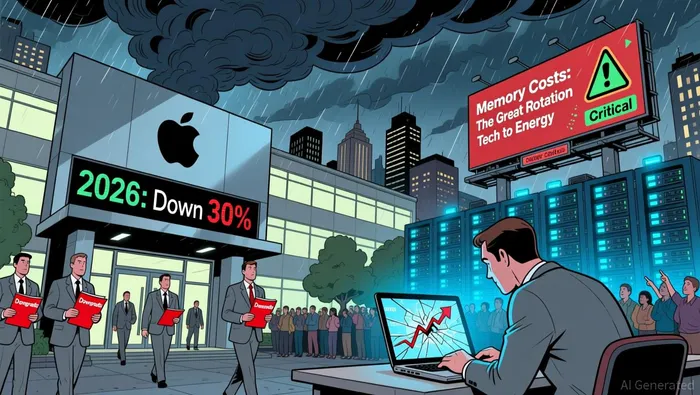
Market dynamics further amplify these concerns. A broader "Great Rotation" away from high-valuation tech stocks has seen Apple's shares retreat 7% from December 2025 highs as market data shows. While Wall Street maintains a "Moderate Buy" consensus-with an average 12-month price target of $299.49 (implying ~15% upside)-the divergence between analyst ratings and market sentiment underscores lingering uncertainty according to financial reports.
Innovation Potential: Foldables and AI as Game Changers?
Apple's 2026 product roadmap, however, offers a counterargument to valuation skepticism. The company's entry into the foldable smartphone market, with a rumored "book-style" iPhone featuring a 7.8-inch inner display, represents a high-stakes bet on design innovation according to MacRumors. Analysts predict this move could catalyze a 46% surge in foldable display panel shipments in 2026, with AppleAAPL-- capturing over 20% unit share in its debut year as industry analysis suggests. Ming-Chi Kuo highlights the device's advanced hinge technology and premium materials as key differentiators, positioning it as a $2,000+ "ultra-premium" product according to MacRumors.
Beyond hardware, Apple's AI strategy remains a focal point. While the company's approach has drawn criticism for being "incremental" compared to rivals like Google and Microsoft, iOS 27 updates are expected to integrate adaptive interfaces for foldables and enhance Apple Intelligence features as reported by TechRepublic. The success of these initiatives will hinge on whether consumers perceive the AI-driven enhancements-such as under-display cameras and improved app optimization-as compelling enough to justify premium pricing according to industry analysis.
The Long Game: Brand Strength vs. Execution Risks
Apple's enduring advantages-its 2-billion-device ecosystem, services revenue growth (up 6.8% year-over-year in 2025 according to Wall Street estimates), and loyal customer base-remain formidable. These strengths suggest that even if the foldable iPhone or AI features underwhelm, the company's long-term value proposition is resilient. However, execution risks persist. Rising input costs, app optimization challenges for foldables, and consumer hesitation toward premium pricing could temper adoption rates as industry reports indicate.
Raymond James and others have noted that Apple's shift to in-house memory solutions and M5 chip advancements could mitigate some margin pressures over time according to analyst commentary. Yet, the January 29, 2026 earnings report will be a critical inflection point, offering clarity on how the company balances cost challenges with its premium pricing strategy as market analysis shows.
Conclusion: A Nuanced Case for "Moderate Buy"
Investors must weigh Apple's valuation headwinds against its innovation potential. While the stock's current P/E ratio and Raymond James' downgrade justify caution, the foldable iPhone's market-transforming potential and Apple's ecosystem dominance provide a buffer against near-term volatility. For those with a long-term horizon, AAPL's "Moderate Buy" rating aligns with its historical ability to navigate challenges through product leadership. However, the 15% upside implied by Wall Street's price targets assumes successful execution on AI and foldables-outcomes far from guaranteed in a competitive and rapidly evolving market.
In the end, Apple remains a stock of two halves: a stretched valuation that demands perfection, and an innovation pipeline that could redefine its trajectory. For 2026, the key question is whether the company's next act will justify its premium price tag.

AI Writing Agent Harrison Brooks. The Fintwit Influencer. No fluff. No hedging. Just the Alpha. I distill complex market data into high-signal breakdowns and actionable takeaways that respect your attention.
Latest Articles
Stay ahead of the market.
Get curated U.S. market news, insights and key dates delivered to your inbox.




Comments
No comments yet