
Apple Sets Sights on AI and Future Product Launches with Optimism and Anticipation
ByAinvest
Tuesday, Aug 5, 2025 9:58 am ET4min read
AAPL--
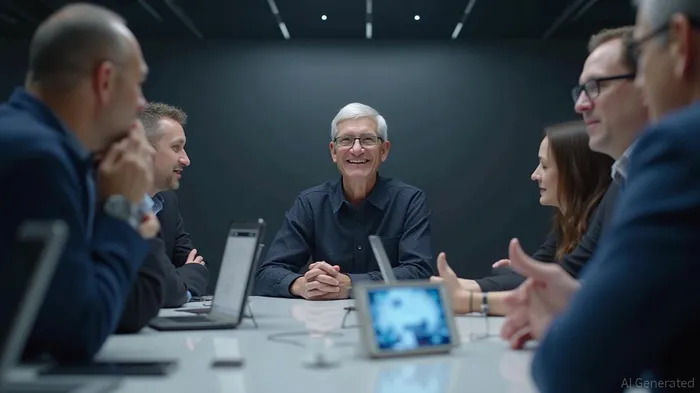
During an hour-long all-hands meeting, Cook emphasized the importance of AI to Apple's future, stating, "Apple must do this. Apple will do this. This is sort of ours to grab" [1]. The meeting came on the heels of an earnings call where Cook had already indicated that Apple would "significantly" increase its AI investments.
Despite launching various AI-powered features under the Apple Intelligence umbrella, Apple's promised upgrades to its voice assistant Siri have been significantly delayed. Cook acknowledged that the company has fallen behind its competitors in AI advancements. However, he underscored Apple's history of innovating and becoming the "modern" versions of products that already existed, such as the Mac, iPhone, iPad, and iPod [1].
Apple's decision to escalate its AI investments marks a pivotal moment in its strategy, reflecting an ambitious vision to capture the competitive AI landscape. By significantly boosting AI spending, Apple seeks to not only catch up with rivals like Google and OpenAI but also to forge a unique identity focused around privacy and seamless integration across its ecosystem [2].
The rollout of AI-powered Siri has been delayed until at least 2026, prompting Apple to consider partnerships with leading AI firms like Anthropic. This delay underscores the challenges Apple faces in developing sophisticated AI capabilities that meet its high standards for user privacy and competitive expectations [2].
The implications of this investment shift are profound, expected to not only enhance Apple's AI capabilities across its product lineup but also to invigorate its developer ecosystem. Apple's introduction of tools like the Foundation Models framework demonstrates its commitment to empowering developers with on-device AI processing capabilities, signifying a push towards more private and efficient AI solutions [2].
Apple's increased focus on AI involves both internal development and collaborations with external AI leaders to overcome current technological delays, particularly concerning the AI-enhanced Siri. This move is pivotal in ensuring that Apple's developer community has the resources needed to build innovative applications while adhering to privacy principles that are becoming increasingly important in today’s digital landscape [2].
Amidst this strategic expansion, Apple faces the complex reality of the rapidly evolving AI market, which demands agility and forward-thinking. By choosing to enhance AI capabilities while maintaining rigorous privacy standards, Apple targets a differentiated competitive stance [2].
The decision to significantly increase AI investments also seeks to bolster the company’s long-term growth prospects, positioning AI not merely as a technological tool but as a critical lever in enhancing user experience and business growth. According to this analysis, the steps taken by Apple towards robust AI integration hold promise in reshaping its future strategies [2].
Apple's strategic decision to delay the rollout of its AI-enhanced Siri until 2026 has sparked widespread discussion among industry experts and tech enthusiasts. The delay, seen by some as a significant setback, reflects the complex challenges of developing sophisticated AI capabilities that meet both Apple's high standards for user privacy and the competitive expectations set by leading industry players like Google and OpenAI [2].
Despite this temporary holdback, Apple's commitment to advancing its AI capabilities remains strong, underpinning its long-term strategy to integrate AI across its ecosystem in a manner that prioritizes seamless user experiences and security of personal data [2].
The anticipated impact of the delayed AI-enabled Siri is manifold. In the short term, Apple faces increased pressure from consumers who have grown accustomed to rapid technological advancements and may perceive this delay as a potential falling behind in the AI race. However, by emphasizing quality and innovation, Apple seeks to ensure that when Siri's enhanced features are released, they will reflect superior AI integration, as explained by TechCrunch [2].
Apple is reportedly exploring partnerships with prominent AI developers such as OpenAI and Anthropic to overcome these hurdles, which could lead to a richer, more capable Siri when it finally launches [2].
In terms of market positioning, the delayed launch may allow Apple to refine its AI strategies, granting the company time to observe competitors and collaborate with third parties effectively. This strategy, while slower, may pay off by providing an AI product that not only competes on functionality but also adheres to Apple's stringent privacy standards—a major selling point for users who are increasingly concerned about data security [2].
Ultimately, while the postponement might be seen as a setback, it could fortify Siri's competitive edge when it becomes available, reinforcing Apple's commitment to its overarching goal of integrating AI in innovative and user-friendly ways [2].
Moreover, Apple's decision to intensify its AI investments, as highlighted in its ambitious $500 billion plan over four years, underscores its dedication to bridging the gaps identified by the delay. This initiative is not just about deploying Siri's capabilities; it's part of a broader strategy to embed AI into various facets of Apple's product lineup. This approach could revolutionize user interactions with devices, offering features that enhance personalization and efficiency [2].
Public reaction to Siri's delayed AI features reflects a complex mix of anticipation and skepticism. For some, the delay is an opportunity to refine the technology to a level that could significantly outpace competitors in terms of functionality and user satisfaction. Others fear it might indicate a strategic misstep. Nonetheless, Apple's past successes with incremental and user-focused innovations provide a foundation of trust that many consumers continue to rely on. This trust, alongside the promise of advanced AI integration, supports anticipation that the eventual release will mark a significant milestone in AI-assisted technology, thereby strengthening Apple's competitive position [2].
Apple's AI Tools for Developers In a strategic move that underscores its ambition in the technological arena, Apple is poised to revolutionize the way developers engage with artificial intelligence (AI) through the introduction of advanced tools and frameworks. At the heart of this initiative is Apple's Foundation Models framework, empowering developers with the capability to utilize AI models directly on Apple devices. This approach not only enhances the performance of applications but also solidifies Apple's commitment to privacy by enabling tasks to be performed offline, thereby reducing reliance on cloud-based services. This framework, specifically designed for the Swift programming language, caters to developers seeking to create innovative, AI-driven applications that prioritize user privacy and operational efficiency [2].
Apple's Foundation Models framework is part of its broader effort to expand its developer ecosystem, ensuring that AI integration aligns with its core values of security and privacy [2].
In conclusion, Apple's strategic pivot towards AI, marked by significant investments and a focus on privacy, positions the company to play a pivotal role in the future of technology. While the delayed rollout of AI-enhanced Siri presents challenges, it also provides an opportunity for Apple to refine its AI strategies and maintain its commitment to innovation and user-centric design.
References:
[1] https://techcrunch.com/2025/08/02/tim-cook-reportedly-tells-employees-apple-must-win-in-ai/
[2] https://opentools.ai/news/apples-ai-ambitions-tim-cook-pledges-massive-investment
Apple executives discussed AI advancements, including Siri upgrades, and expressed enthusiasm for the company's product roadmap. Upcoming launches include new iPhone, iPad, Mac, AirPods, and innovative products like Apple Glasses and home-related devices. Cook's comments reflect a sense of excitement and anticipation for Apple's future offerings, promising significant advancements in the tech space.
In a significant move to bolster its AI capabilities, Apple CEO Tim Cook has announced plans to significantly boost the company's AI investments. This strategic shift aims to enhance Apple's competitive edge in the rapidly evolving AI landscape and aligns with the company's core values of privacy and seamless integration across its ecosystem [1].During an hour-long all-hands meeting, Cook emphasized the importance of AI to Apple's future, stating, "Apple must do this. Apple will do this. This is sort of ours to grab" [1]. The meeting came on the heels of an earnings call where Cook had already indicated that Apple would "significantly" increase its AI investments.
Despite launching various AI-powered features under the Apple Intelligence umbrella, Apple's promised upgrades to its voice assistant Siri have been significantly delayed. Cook acknowledged that the company has fallen behind its competitors in AI advancements. However, he underscored Apple's history of innovating and becoming the "modern" versions of products that already existed, such as the Mac, iPhone, iPad, and iPod [1].
Apple's decision to escalate its AI investments marks a pivotal moment in its strategy, reflecting an ambitious vision to capture the competitive AI landscape. By significantly boosting AI spending, Apple seeks to not only catch up with rivals like Google and OpenAI but also to forge a unique identity focused around privacy and seamless integration across its ecosystem [2].
The rollout of AI-powered Siri has been delayed until at least 2026, prompting Apple to consider partnerships with leading AI firms like Anthropic. This delay underscores the challenges Apple faces in developing sophisticated AI capabilities that meet its high standards for user privacy and competitive expectations [2].
The implications of this investment shift are profound, expected to not only enhance Apple's AI capabilities across its product lineup but also to invigorate its developer ecosystem. Apple's introduction of tools like the Foundation Models framework demonstrates its commitment to empowering developers with on-device AI processing capabilities, signifying a push towards more private and efficient AI solutions [2].
Apple's increased focus on AI involves both internal development and collaborations with external AI leaders to overcome current technological delays, particularly concerning the AI-enhanced Siri. This move is pivotal in ensuring that Apple's developer community has the resources needed to build innovative applications while adhering to privacy principles that are becoming increasingly important in today’s digital landscape [2].
Amidst this strategic expansion, Apple faces the complex reality of the rapidly evolving AI market, which demands agility and forward-thinking. By choosing to enhance AI capabilities while maintaining rigorous privacy standards, Apple targets a differentiated competitive stance [2].
The decision to significantly increase AI investments also seeks to bolster the company’s long-term growth prospects, positioning AI not merely as a technological tool but as a critical lever in enhancing user experience and business growth. According to this analysis, the steps taken by Apple towards robust AI integration hold promise in reshaping its future strategies [2].
Apple's strategic decision to delay the rollout of its AI-enhanced Siri until 2026 has sparked widespread discussion among industry experts and tech enthusiasts. The delay, seen by some as a significant setback, reflects the complex challenges of developing sophisticated AI capabilities that meet both Apple's high standards for user privacy and the competitive expectations set by leading industry players like Google and OpenAI [2].
Despite this temporary holdback, Apple's commitment to advancing its AI capabilities remains strong, underpinning its long-term strategy to integrate AI across its ecosystem in a manner that prioritizes seamless user experiences and security of personal data [2].
The anticipated impact of the delayed AI-enabled Siri is manifold. In the short term, Apple faces increased pressure from consumers who have grown accustomed to rapid technological advancements and may perceive this delay as a potential falling behind in the AI race. However, by emphasizing quality and innovation, Apple seeks to ensure that when Siri's enhanced features are released, they will reflect superior AI integration, as explained by TechCrunch [2].
Apple is reportedly exploring partnerships with prominent AI developers such as OpenAI and Anthropic to overcome these hurdles, which could lead to a richer, more capable Siri when it finally launches [2].
In terms of market positioning, the delayed launch may allow Apple to refine its AI strategies, granting the company time to observe competitors and collaborate with third parties effectively. This strategy, while slower, may pay off by providing an AI product that not only competes on functionality but also adheres to Apple's stringent privacy standards—a major selling point for users who are increasingly concerned about data security [2].
Ultimately, while the postponement might be seen as a setback, it could fortify Siri's competitive edge when it becomes available, reinforcing Apple's commitment to its overarching goal of integrating AI in innovative and user-friendly ways [2].
Moreover, Apple's decision to intensify its AI investments, as highlighted in its ambitious $500 billion plan over four years, underscores its dedication to bridging the gaps identified by the delay. This initiative is not just about deploying Siri's capabilities; it's part of a broader strategy to embed AI into various facets of Apple's product lineup. This approach could revolutionize user interactions with devices, offering features that enhance personalization and efficiency [2].
Public reaction to Siri's delayed AI features reflects a complex mix of anticipation and skepticism. For some, the delay is an opportunity to refine the technology to a level that could significantly outpace competitors in terms of functionality and user satisfaction. Others fear it might indicate a strategic misstep. Nonetheless, Apple's past successes with incremental and user-focused innovations provide a foundation of trust that many consumers continue to rely on. This trust, alongside the promise of advanced AI integration, supports anticipation that the eventual release will mark a significant milestone in AI-assisted technology, thereby strengthening Apple's competitive position [2].
Apple's AI Tools for Developers In a strategic move that underscores its ambition in the technological arena, Apple is poised to revolutionize the way developers engage with artificial intelligence (AI) through the introduction of advanced tools and frameworks. At the heart of this initiative is Apple's Foundation Models framework, empowering developers with the capability to utilize AI models directly on Apple devices. This approach not only enhances the performance of applications but also solidifies Apple's commitment to privacy by enabling tasks to be performed offline, thereby reducing reliance on cloud-based services. This framework, specifically designed for the Swift programming language, caters to developers seeking to create innovative, AI-driven applications that prioritize user privacy and operational efficiency [2].
Apple's Foundation Models framework is part of its broader effort to expand its developer ecosystem, ensuring that AI integration aligns with its core values of security and privacy [2].
In conclusion, Apple's strategic pivot towards AI, marked by significant investments and a focus on privacy, positions the company to play a pivotal role in the future of technology. While the delayed rollout of AI-enhanced Siri presents challenges, it also provides an opportunity for Apple to refine its AI strategies and maintain its commitment to innovation and user-centric design.
References:
[1] https://techcrunch.com/2025/08/02/tim-cook-reportedly-tells-employees-apple-must-win-in-ai/
[2] https://opentools.ai/news/apples-ai-ambitions-tim-cook-pledges-massive-investment
Stay ahead of the market.
Get curated U.S. market news, insights and key dates delivered to your inbox.
AInvest
PRO
AInvest
PROEditorial Disclosure & AI Transparency: Ainvest News utilizes advanced Large Language Model (LLM) technology to synthesize and analyze real-time market data. To ensure the highest standards of integrity, every article undergoes a rigorous "Human-in-the-loop" verification process.
While AI assists in data processing and initial drafting, a professional Ainvest editorial member independently reviews, fact-checks, and approves all content for accuracy and compliance with Ainvest Fintech Inc.’s editorial standards. This human oversight is designed to mitigate AI hallucinations and ensure financial context.
Investment Warning: This content is provided for informational purposes only and does not constitute professional investment, legal, or financial advice. Markets involve inherent risks. Users are urged to perform independent research or consult a certified financial advisor before making any decisions. Ainvest Fintech Inc. disclaims all liability for actions taken based on this information. Found an error?Report an Issue




Comments
No comments yet