
Apple Fights US Ban on Apple Watch Models Over Patent Dispute
Apple is intensifying its legal efforts to overturn a ruling that could potentially halt the sale of certain AppleAAPL-- Watch models equipped with blood oxygen monitoring features in the US. The tech giant has petitioned the US Court of Appeals for the Federal Circuit to reverse a 2023 determination by the US International Trade Commission (ITC) that Apple had infringed on patents held by medical device producer MasimoMASI--. The ruling in question could effectively ban the import of the Apple Watch Series 9 and Ultra 2, two of Apple’s latest models, due to their use of pulse oximetry technology.
Apple's attorney, Joseph Mueller of WilmerHale, argued that the ITC ruling has had a significant impact on Apple Watch users, blocking millions from accessing a popular health feature. Mueller also contended that Masimo’s product was still in the prototype stage when the lawsuit was filed in 2021. The dispute centers around the blood-oxygen sensor technology that Apple introduced with its Series 6 watches in 2020. Masimo alleges that Apple copied this technology after being informed about it during discussions for a potential collaboration.
Masimo, a California-based medical technology company, has accused Apple of employing unfair practices to gain an advantage in the emerging market for health-related wearable devices. According to Masimo, Apple was in talks with them in 2013 to collaborate on health monitoring features but instead hired some of Masimo’s staff and integrated Masimo’s pulse oximetry technology into its own products. Masimo introduced its smartwatch, the W1, in 2022, after Apple had already released its models with blood-oxygen tracking. However, Masimo maintains that its intellectual property was violated months before the W1 was released, leading to the ITC’s decision in 2023 that Apple had infringed on its patents.
In late December 2023, the ruling briefly halted Apple’s ability to sell its most current watch series in the US. Apple promptly requested a temporary block on the ban, allowing it to continue sales. However, the court reinstated the ban in January 2024, prompting Apple to remove the blood-oxygen-sensor feature from the affected models in the US. Masimo’s attorney, Joseph Re of Knobbe Martens Olson & Bear, defended the ITC ruling, arguing that Apple was attempting to rewrite the law by claiming that a final, market-ready product must exist to enforce a patent violation. Re asserted that this was not how patent protection works.
During the appeals court hearing, a three-judge panel expressed a keen interest in the timing of events, particularly whether Masimo had a product with sufficient standing to trigger the ITC’s trade-related enforcement capabilities in 2021. Apple argued that the ban was unjustified because Masimo only had prototypes at that time, and the ITC’s trade protection rules are intended to stop unfair competition with real products, not ideas that aren’t yet realized. Masimo countered that its domestically produced rival was sufficiently advanced and that the agency doesn’t need a finished product to act. The judges did not rule immediately but pressed both sides with questions about product readiness, patent rights, and balancing innovation protection with consumer access.
The court’s ultimate decision could set an important precedent for resolving patent disputes involving emerging technologies. If the court rules in Apple’s favor, it could limit the ability of companies like Masimo to use the ITC to block imports of partially developed devices. Conversely, if the ban is upheld, tech companies may need to reconsider how they form partnerships and leverage the innovations of third parties. The outcome of this legal battle will have significant implications for the wearable technology industry and the broader landscape of patent disputes in the tech sector. 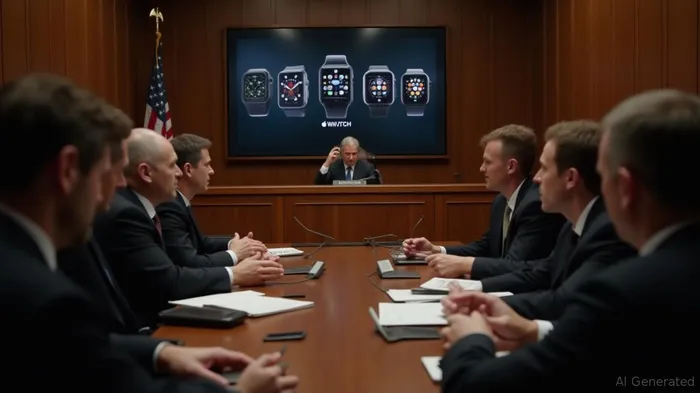

Stay ahead of the market.
Get curated U.S. market news, insights and key dates delivered to your inbox.




Comments
No comments yet