
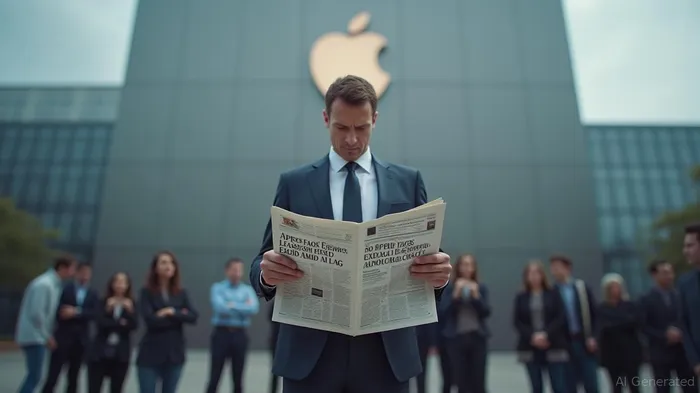
Apple Faces Leadership Exodus Amid AI Lag
Tim Cook, the CEO of AppleAAPL--, has been widely recognized for his exceptional leadership, creating more shareholder value than his predecessor, Steve Jobs. However, recent developments have brought to light some of Cook's weaknesses, particularly in the rapidly evolving AI era.
In recent months, Apple has faced a series of leadership changes that have raised concerns about the company's direction. Chief Operating Officer Jeff Williams announced his retirement by the end of the year, following the departure of top AI executive Ruoming Pang to Meta and another high-level AI researcher, Tom Gunter. These departures have created an image of a leadership exodus within the company.
One of the most pressing issues for Apple is its apparent lag behind competitors in incorporating AI into its products and services. Last year, Apple introduced Apple Intelligence, a version of AI designed to be user-friendly. However, the company has since played down its AI capabilities, partnering with OpenAI for some tasks performed by Siri and reportedly considering partnerships with Anthropic and Perplexity AI. This lag in AI development is reminiscent of the company's struggles to keep up with the internet revolution in the early 2000s, highlighting the critical importance of AI as a general-purpose technology that can revolutionize the business landscape.
Despite these challenges, it is important to acknowledge Cook's remarkable success at Apple. When he took over as CEO, the company was worth about $300 billion. Under his leadership, Apple's value has grown to $3.2 trillion, representing a compound annual growth rate of 18.4% over 14 years. This growth has created far more shareholder wealth than under Jobs' tenure. However, some analysts, such as Craig Moffett of the MoffettNathanson research firm, have noted that Apple's success under Cook has been largely due to the execution of strategies and manufacturing products set in motion years before, rather than significant product innovation.
The issue of product innovation is particularly important in the context of the AI revolution, as it is unclear which products will be right for this new era. Jony Ive, Apple's longtime design genius, left the company in 2019 and is now working with OpenAI. Speculation has it that he might be creating a new device for AI, but any such projects at Apple remain deeply hidden. Among known products, Apple's Vision Pro goggles are a high-end niche item, and its HomePod and HomePod mini smart speakers have been modest successes. However, if smartphones are not at the center of life in the AI world, Apple could face significant challenges.
Investors are increasingly concerned that Apple may be unprepared for the transformational changes brought about by AI. While Cook could still surprise the market with a stunning new device or service, or by acquiring or partnering with a major AI company, the likelihood of such events happening soon seems low. If Apple fails to adapt to the AI era, the company's board of directors must consider whether Cook is the right leader for this new season, fundamentally different from the past 14 years.

Stay ahead of the market.
Get curated U.S. market news, insights and key dates delivered to your inbox.




Comments
No comments yet