
Apple Dominates 2025 Smartphone Market as Chip Shortages Loom
 Aime Summary
Apple captured 20% of the global smartphone market in 2025, driven by strong demand in emerging markets and robust sales of the iPhone 17 series. Google's Pixel brand posted 25% year-over-year growth in 2025 but remains outside the top five global smartphone vendors. Rising component costs and chip shortages are expected to temper smartphone growth in 2026 as manufacturers adjust to prioritize AI and data center production. Apple's strategic pricing and storage improvements helped boost iPhone 17 demand by 31% in China, contributing to its lead over Samsung.
Apple's 2025 success in the global smartphone market was driven by a combination of strong demand, pricing strategy, and improved inventory discipline. The iPhone 17 series, particularly the base model, became a key driver of growth in emerging markets like China, where demand rose 31% year-over-year. This strategic move helped AppleAAPL-- secure a 20% market share in 2025, ahead of Samsung, which held 19%. The company also benefited from early shipment moves in 2025 to avoid potential U.S. tariff impacts.
Despite Samsung's 7.9% year-over-year growth in 2025, Apple's 10% growth was more sustainable and positioned the company as the global leader in smartphone shipments. Samsung's growth was driven by its mid-range A series and flagship Galaxy devices, but some analysts argue that its product lineup lacked innovation compared to Apple's offerings. The Korean giant also invested resources into foldable phones, like the Galaxy Z TriFold, which may have diverted attention from core product development.
Google's Pixel brand, while still a distant second to Apple and Samsung, showed notable momentum in 2025 with 25% year-over-year sales growth. The Pixel 9 and Pixel 10 models helped the brand attract more consumers, particularly in the premium segment. The company is now moving its high-end Pixel NPI to Vietnam, signaling a broader effort to diversify manufacturing outside China. This shift aligns with industry trends as companies like Apple and Samsung also move production to Southeast Asia to reduce risks from geopolitical tensions and U.S. trade policies.
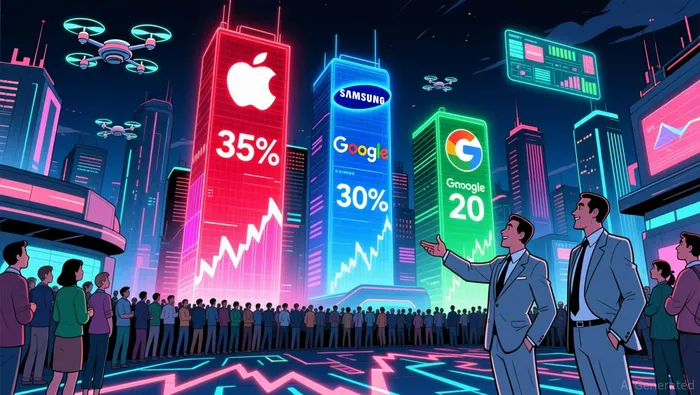
Did Apple Outperform Samsung in the 2025 Smartphone Market?
Apple sold 247.8 million smartphones in 2025, capturing 19.7% of the global market, compared to Samsung's 241.2 million units and 19.1% share. The company's success was attributed to a well-balanced mix of premium and more affordable devices, including the iPhone 16e and iPhone 17 series. These models offered higher storage capacities at competitive prices, which helped drive demand in emerging and mid-sized markets.
Samsung's Q4 2025 growth was stronger—up 18.3% year-over-year compared to Apple's 4.9%—but this didn't translate to a larger market share for the year. The company's reliance on mid-range devices and foldable phones may have limited its ability to compete with Apple's broader appeal and brand strength.
How Is the Smartphone Market Expected to Evolve in 2026?
While the 2025 market grew 2%, the industry faces headwinds in 2026 due to rising component costs and chip shortages. Chipmakers are increasingly prioritizing AI data centers, which means reduced availability of key components for consumer electronics. Counterpoint Research noted that manufacturers are already adjusting production strategies to manage these costs and maintain competitiveness.
Omdia reported a 4% growth in Q4 2025, driven by seasonal demand and improved inventory discipline, but the firm warned that rising costs and memory shortages will continue to challenge the market. For investors, this means that while 2025 was a record year for many smartphone makers, 2026 could bring tighter margins and slower growth unless manufacturers adapt to new supply chain realities.
Google's move to Vietnam is one such adaptation. By shifting its NPI process to a new region, the company is reducing dependency on China while also gaining more flexibility in production planning. This strategy reflects a broader trend among tech firms, particularly as trade policies and geopolitical risks continue to evolve.
For now, Apple's 2025 dominance is a strong indicator of its ability to balance premium brand identity with accessible product lines. While the market may slow in 2026, Apple's early success with the iPhone 17 and growing presence in key markets like China and the U.S. suggest it is well-positioned to maintain its leadership.

Stay ahead of the market.
Get curated U.S. market news, insights and key dates delivered to your inbox.




Comments
No comments yet