
Apple's Crossroads: Can Trump's Tariffs and Antitrust Push Fuel a Tech Reckoning?
The tech sector's valuation paradigm faces its sternest test yet. President Donald Trump's escalating rhetoric against Apple's reliance on China—a cornerstone of its supply chain—has thrown the company's strategic footing into sharp relief. Meanwhile, antitrust probes and geopolitical posturing threaten to reshape the global tech landscape. For investors, AppleAAPL-- (AAPL) stands at the intersection of opportunity and peril. Here's why the stakes couldn't be higher.
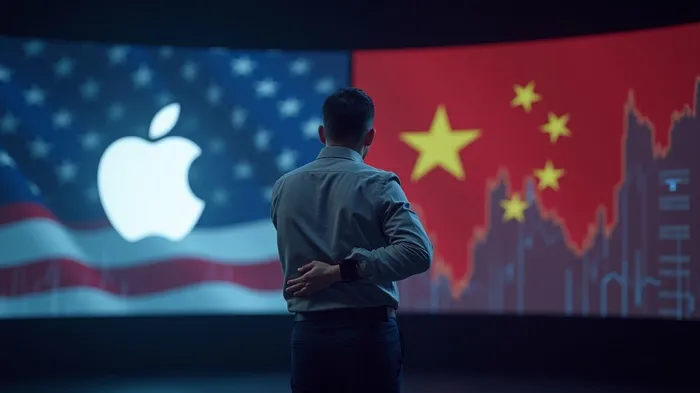
The Tariff Threat: A 25% Tax on Apple's China Dependency
Trump's ultimatum—that Apple manufacture iPhones in the U.S. or face a 25% tariff on imports—has sent shockwaves through markets. The stock dropped 3% in April when the threat went public, reflecting investor anxiety over Apple's ability to pivot. The math is grim: reshifting 10% of iPhone production to the U.S. would cost $30 billion and take three years, per analysts. The result? iPhones could triple in price to $3,500, pricing U.S. consumers out of the market.
The company's Q1 2025 results underscore the dilemma. Despite record $95.36 billion in revenue, tariffs already cost Apple $900 million—a figure that could balloon if Trump follows through. Apple's “solution”—sourcing U.S.-bound iPhones from India and Vietnam—avoids tariffs but leaves 90% of global production still tied to China, a vulnerability in an era of trade wars.
Antitrust Headwinds: Alibaba's AI Deal Sparks National Security Fears
Apple's partnership with Alibaba to integrate its AI into iPhones sold in China has drawn fire from U.S. regulators. The Trump administration sees it as a Trojan horse for Chinese surveillance tech, citing fears that data flows could aid Beijing's military and intelligence efforts. This isn't just about tariffs; it's a broader battle over who controls AI's future.
Meanwhile, Apple's App Store faces existential legal risks. A federal judge recently ruled Apple violated a 2021 court order by blocking alternative payment systems—a decision that could force Fortnite's return to the App Store. With Apple appealing, the outcome remains uncertain, but the message is clear: U.S. antitrust enforcers are targeting tech giants with unprecedented vigor.
Supply Chain Reshuffling: A Race Against Physics
Apple's $500 billion U.S. investment pledge—touted by Trump as a victory—masks a harsh reality: none of it funds iPhone production. Instead, the money goes to AI server farms and training programs. The company's supply chain remains strangled by China's dominance in semiconductor manufacturing and component ecosystems.
Efforts to diversify are faltering. While India now builds the “majority” of iPhones sold in the U.S., its infrastructure can't match China's scale. Vietnam, the source of most U.S.-bound iPads and Macs, lacks the supply chain density to handle iPhone production at scale. The result? Apple's China revenue fell 2% in Q1 2025, with shipments dropping 9% year-over-year—a market share now ranking fifth behind Xiaomi and Huawei.
The Investment Playbook: Mitigating Risk, Capturing Reward
Apple isn't just a hardware company anymore. Its $26.65 billion in services revenue (up 11.8% in Q1) represents a fortress of recurring income, insulated from supply chain whims. Investors should focus on:
- Services Dominance: Apple's ecosystem lock-in remains unmatched. The App Store's $38 billion in 2024 revenue and rising cloud services are defensible against antitrust scrutiny.
- Geopolitical Diversification: Apple's shift to India/Vietnam, while costly, buys time to navigate tariffs. Monitor its $500 billion U.S. investment for clues on reshoring feasibility.
- AI Play: The Alibaba deal, while risky, is a lifeline in China's AI-censored market. Apple's AI partnerships (e.g., with Inflection AI) could offset regulatory blows elsewhere.
Actionable Takeaways
- Overweight AAPL if you believe services growth and geographic diversification outweigh near-term supply chain pain.
- Underweight if you fear escalating tariffs, antitrust fines (the EU just fined Apple €700 million for anticompetitive practices), or a sustained China sales slump.
- Hedging: Pair AAPL with semiconductors (e.g., Intel, NVIDIA) to capture upside from a potential tech sector rebound.
The verdict? Apple's valuation hinges on navigating a geopolitical minefield while defending its ecosystem. The next 12 months will determine whether it's a leader in the AI era—or a casualty of its own supply chain.

Stay ahead of the market.
Get curated U.S. market news, insights and key dates delivered to your inbox.


AInvest
PRO
AInvest
PRO



Comments
No comments yet