
Apple's Crossroads: Can Tim Cook Navigate Geopolitical Storms and Leadership Challenges?
The relationship between AppleAAPL-- CEO Tim Cook and Donald Trump has gone from cozy to combustible, with profound implications for the tech giant's geopolitical risks, brand credibility, and investor confidence. As Trump's tariff threats escalate and Cook's public credibility wanes, Apple faces a critical juncture—one that could redefine its trajectory for years to come.
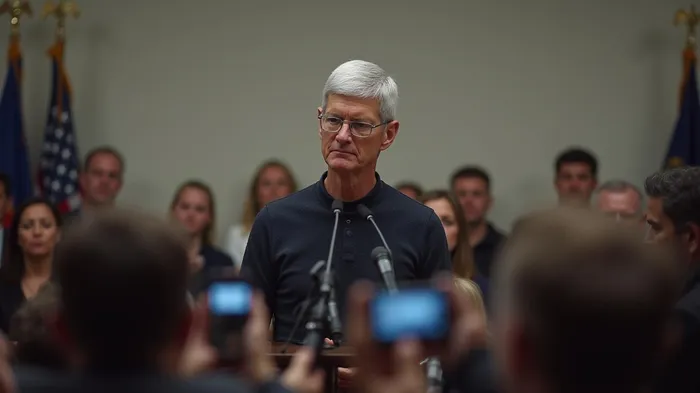
The Geopolitical Tightrope
The decline of Cook's relationship with Trump has spiraled into a high-stakes conflict. After Cook skipped Trump's 2025 Middle East tour—a snub Trump called “disappointing”—the White House retaliated with threats of a 25% tariff on iPhones made abroad. This clash has exposed Apple's reliance on Asian manufacturing: 85% of iPhones still originate in China, despite efforts to shift production to India and Vietnam.
The market has already priced in pain. Apple's stock has fallen 8% in 2025, underperforming peers as investors brace for tariff-driven margin erosion. Analysts estimate tariffs could add $900 million to Q1 earnings headwinds, with further risks if the EU retaliates against U.S. trade policies.
Supply Chain Diversification: Fairy Tale or Necessity?
Apple's push to move production to India and Vietnam—14% of iPhones now made there—has been framed as both a strategic move and a political concession. But reshoring iPhones to the U.S. is a “fairy tale,” according to Wedbush's Dan Ives, given labor and infrastructure costs that could push prices to $3,500 per device.
The math is brutal. While India offers cost savings, it lacks China's scale and supply chain maturity. This leaves Apple in a bind: appease Trump or risk tariffs, but at the cost of operational efficiency.
Leadership and Legacy: Beyond Tim Cook
Cook's tenure has seen Apple transition from a hardware-centric firm to a services powerhouse—28% of revenue now from services like Apple Music and iCloud—but his legacy is now shadowed by political missteps and innovation lags. Internal changes, such as Jony Ive's departure for OpenAI, signal a leadership vacuum in design and vision.
The next CEO must address three existential challenges:
1. Developer Relations: Apple's App Store policies, under fire in antitrust lawsuits (including a $10.2B EU fine), risk alienating the ecosystem's lifeblood.
2. Software Quality: Missteps like the “Apple Intelligence fiasco” have eroded trust in Cook's innovation agenda.
3. Market Penetration: iPhone sales in China have stalled, while rivals like Samsung and Xiaomi dominate price-sensitive markets.
The Silver Linings: Services and Innovation
Amid the turmoil, Apple's strengths remain formidable. Its Vision Pro headset—launching in 2024—could redefine AR/VR, leveraging its 1.5 billion active devices. AI investments, too, could pay dividends: a privacy-first AI platform could differentiate Apple in a sector dominated by Google and Microsoft.
Services now account for $80 billion in annual revenue, a pillar of resilience. With a $200 billion cash hoard and a $100 billion buyback program, Apple is financially bulletproof—provided it executes on its strategic bets.
Investor Playbook: How to Navigate the Storm
- Buy the Dip, but Hedge: Apple's stock trades at 25x forward earnings, below its five-year average. A $260 entry price offers upside to $300 by 2026 (Goldman Sachs) if services grow and tariffs are resolved. Pair this with put options to cushion geopolitical risks.
- Focus on Long-Term Trends: Ignore the noise around tariffs. Apple's ecosystem dominance and $500 billion U.S. investment pledge (including a Texas server factory) suggest a commitment to U.S. ties without sacrificing global supply chain flexibility.
- Watch for Leadership Clarity: The next CEO's vision for AI, hardware innovation, and developer relations will determine whether Apple can sustain its premium pricing and brand equity.
Final Verdict: Apple's Future Hangs in the Balance
Apple's brand credibility is under siege: executive missteps, geopolitical volatility, and innovation skepticism threaten its premium positioning. Yet its ecosystem, services, and cash reserves remain unmatched.
Investors should proceed cautiously but confidently:
- Buy below $260, with a stop-loss at $240.
- Hold for the long term, betting on Vision Pro's success and services growth.
- Avoid overreacting to short-term tariff headlines—Apple's global scale and adaptability have weathered worse storms.
The question isn't whether Apple can survive—it's whether it can thrive in a world where politics and innovation collide. The next CEO's first moves will tell the tale.
Final Note: This analysis synthesizes geopolitical risks, leadership transitions, and Apple's strategic moves. Stay tuned for updates on tariff resolutions and the Vision Pro's market reception—they could make or break this investment.

Delivering real-time insights and analysis on emerging financial trends and market movements.
Latest Articles
Stay ahead of the market.
Get curated U.S. market news, insights and key dates delivered to your inbox.




Comments
No comments yet