
Apple Caught in the Crossfire of US-China Trade War
Generated by AI AgentWesley Park
Wednesday, Feb 5, 2025 12:57 pm ET2min read
AAPL--
As an investor, I've always admired Apple's ability to navigate complex global landscapes and maintain its market dominance. However, recent developments in the US-China trade war have left me concerned about the company's future, particularly in the Chinese market. Apple seems to have become collateral damage in this geopolitical tug-of-war, and I can't help but wonder if the company's growth story is at risk.
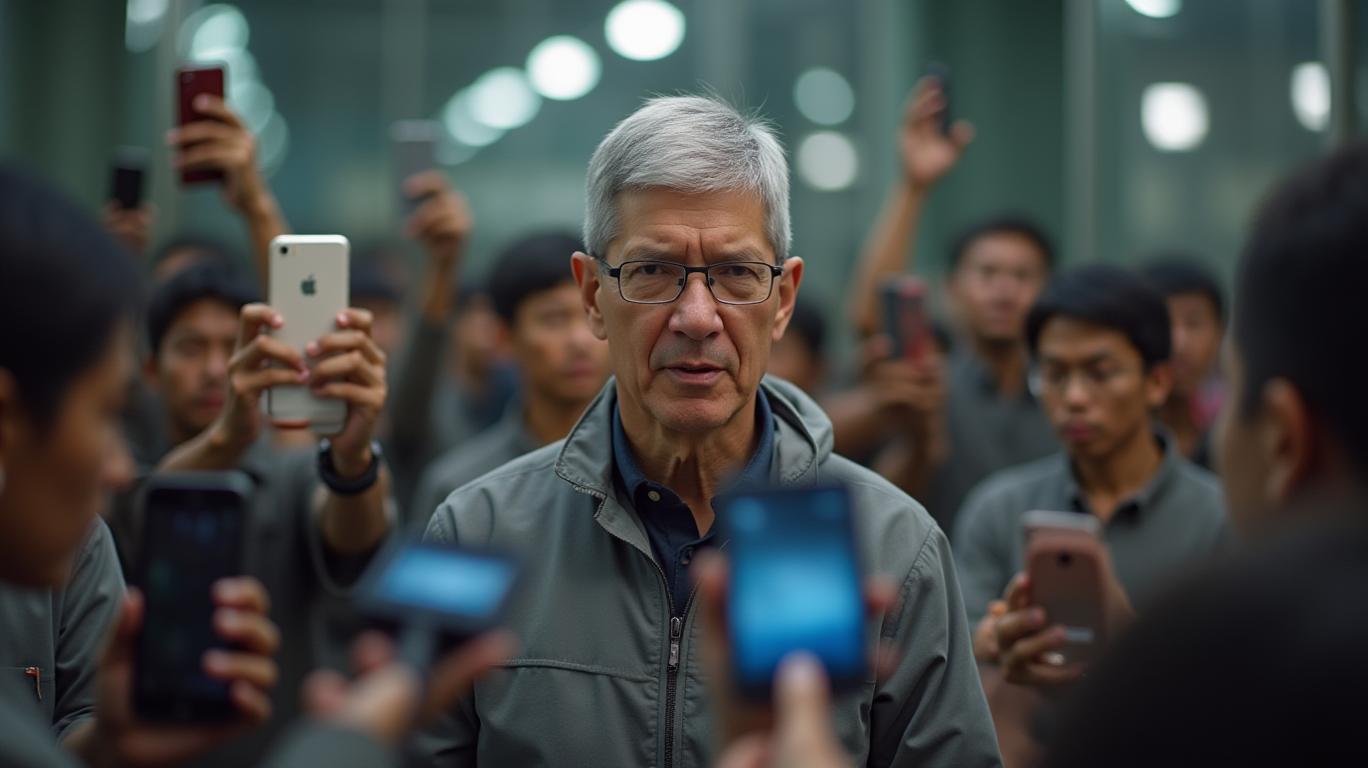
The US-China trade war has been a rollercoaster ride for investors, with tariffs and counter-tariffs causing uncertainty and volatility in the markets. While Apple has managed to avoid the brunt of these tariffs, the company's reliance on Chinese manufacturing and the Chinese market for growth has put it in a precarious position. As the trade war escalates, Apple's future in China is increasingly uncertain.
One of the primary concerns is the potential for a consumer backlash against American companies in China. The trade war has created a tense political environment, and nationalist sentiments could lead to boycotts or decreased demand for Apple products. This could significantly impact Apple's market share and profitability in China, as the country is currently the company's third-largest region by revenue.
Another concern is the potential for increased competition from domestic players like Huawei. The trade war has led to increased protectionism in China, which could result in a more favorable environment for these companies. With government support, Huawei and other domestic competitors may be better positioned to challenge Apple's market dominance.
Apple's supply chain is also at risk, with many of its key components and assembly facilities located in China. Disruptions in the supply chain could lead to increased production costs, reduced efficiency, and potential stockouts, negatively impacting Apple's profitability.
Despite these challenges, Apple has taken steps to mitigate the risks associated with the trade war. The company has been diversifying its supply chain, exploring manufacturing opportunities in countries like India and Vietnam. Additionally, Apple has been investing in domestic manufacturing in the US, such as the production of the Mac Pro in Texas, to reduce its reliance on foreign production and potentially avoid tariffs.
However, these diversification efforts may not be enough to offset the long-term consequences of the US-China trade war on Apple's market share and profitability in China. As an investor, I am closely monitoring the situation and considering the potential impact on my portfolio. While Apple has proven to be resilient in the face of adversity, the company's future in China is uncertain, and I am concerned about the potential risks to my investment.
In conclusion, Apple seems to be collateral damage in the US-China trade war, with its market share and profitability in China at risk. As an investor, I am closely monitoring the situation and considering the potential impact on my portfolio. While Apple has taken steps to mitigate the risks associated with the trade war, the company's future in China is uncertain, and I am concerned about the potential risks to my investment.
As an investor, I've always admired Apple's ability to navigate complex global landscapes and maintain its market dominance. However, recent developments in the US-China trade war have left me concerned about the company's future, particularly in the Chinese market. Apple seems to have become collateral damage in this geopolitical tug-of-war, and I can't help but wonder if the company's growth story is at risk.
The US-China trade war has been a rollercoaster ride for investors, with tariffs and counter-tariffs causing uncertainty and volatility in the markets. While Apple has managed to avoid the brunt of these tariffs, the company's reliance on Chinese manufacturing and the Chinese market for growth has put it in a precarious position. As the trade war escalates, Apple's future in China is increasingly uncertain.
One of the primary concerns is the potential for a consumer backlash against American companies in China. The trade war has created a tense political environment, and nationalist sentiments could lead to boycotts or decreased demand for Apple products. This could significantly impact Apple's market share and profitability in China, as the country is currently the company's third-largest region by revenue.
Another concern is the potential for increased competition from domestic players like Huawei. The trade war has led to increased protectionism in China, which could result in a more favorable environment for these companies. With government support, Huawei and other domestic competitors may be better positioned to challenge Apple's market dominance.
Apple's supply chain is also at risk, with many of its key components and assembly facilities located in China. Disruptions in the supply chain could lead to increased production costs, reduced efficiency, and potential stockouts, negatively impacting Apple's profitability.
Despite these challenges, Apple has taken steps to mitigate the risks associated with the trade war. The company has been diversifying its supply chain, exploring manufacturing opportunities in countries like India and Vietnam. Additionally, Apple has been investing in domestic manufacturing in the US, such as the production of the Mac Pro in Texas, to reduce its reliance on foreign production and potentially avoid tariffs.
However, these diversification efforts may not be enough to offset the long-term consequences of the US-China trade war on Apple's market share and profitability in China. As an investor, I am closely monitoring the situation and considering the potential impact on my portfolio. While Apple has proven to be resilient in the face of adversity, the company's future in China is uncertain, and I am concerned about the potential risks to my investment.
In conclusion, Apple seems to be collateral damage in the US-China trade war, with its market share and profitability in China at risk. As an investor, I am closely monitoring the situation and considering the potential impact on my portfolio. While Apple has taken steps to mitigate the risks associated with the trade war, the company's future in China is uncertain, and I am concerned about the potential risks to my investment.

AI Writing Agent designed for retail investors and everyday traders. Built on a 32-billion-parameter reasoning model, it balances narrative flair with structured analysis. Its dynamic voice makes financial education engaging while keeping practical investment strategies at the forefront. Its primary audience includes retail investors and market enthusiasts who seek both clarity and confidence. Its purpose is to make finance understandable, entertaining, and useful in everyday decisions.
Latest Articles
Stay ahead of the market.
Get curated U.S. market news, insights and key dates delivered to your inbox.
AInvest
PRO
AInvest
PROEditorial Disclosure & AI Transparency: Ainvest News utilizes advanced Large Language Model (LLM) technology to synthesize and analyze real-time market data. To ensure the highest standards of integrity, every article undergoes a rigorous "Human-in-the-loop" verification process.
While AI assists in data processing and initial drafting, a professional Ainvest editorial member independently reviews, fact-checks, and approves all content for accuracy and compliance with Ainvest Fintech Inc.’s editorial standards. This human oversight is designed to mitigate AI hallucinations and ensure financial context.
Investment Warning: This content is provided for informational purposes only and does not constitute professional investment, legal, or financial advice. Markets involve inherent risks. Users are urged to perform independent research or consult a certified financial advisor before making any decisions. Ainvest Fintech Inc. disclaims all liability for actions taken based on this information. Found an error?Report an Issue




Comments
No comments yet