
Apple's App Store Revenue Model Evolution: Reshaping App Ecosystem Competition and Recurring Revenue Potential


 Aime Summary
Apple's App Store has long been a cornerstone of the global app economy, generating $138 billion in revenue in 2025-a 16.9% increase from the prior year. However, the platform's evolving revenue model, regulatory pressures, and shifting developer strategies are redefining the competitive landscape and monetization opportunities. For investors, understanding these dynamics is critical to assessing Apple's long-term dominance and the broader implications for app developers, startups, and the tech ecosystem.
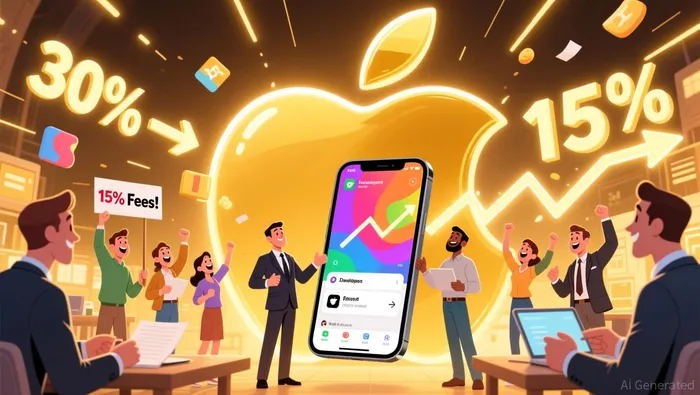
A Shifting Revenue Model: From 30% to 15% and Beyond
Apple's traditional 30% commission on app sales has been a lightning rod for criticism, particularly from high-profile companies like Epic Games, Spotify, and Netflix, which have challenged the policy in courts across the U.S., EU, and UK according to reports. In response, AppleAAPL-- introduced the App Store Small Business Program in 2021, reducing the commission to 15% for developers earning less than $1 million annually. This move has supported smaller developers, with over 90% of App Store billings in 2025 involving no commission for developers.
 Yet, regulatory scrutiny continues to mount. A U.S. federal appeals court recently ruled that Apple violated an injunction by implementing anticompetitive policies, including restrictive link placements and a 27% commission on off-app purchases. Similarly, the UK Competition Appeal Tribunal deemed Apple's 30% in-app purchase fee "excessive and unfair," potentially leading to £1.5 billion in consumer damages. These legal challenges, coupled with EU legislation mandating third-party app store access, signal a broader shift toward regulatory intervention.
The Competitive Landscape: Winners and Losers
Apple's revenue model changes are reshaping competition in two key ways. First, the 15% commission for small developers has lowered barriers to entry, fostering innovation in non-gaming categories like health, fitness, and productivity. Non-gaming apps now contribute $56 billion in annual revenue, outpacing the $82 billion from gaming apps-a reversal of previous trends. This diversification benefits developers who can leverage Apple's tools, such as Xcode and App Analytics, to optimize performance and user engagement.
Second, regulatory pressures are driving decentralization. The EU's Digital Markets Act and similar laws in the U.S. and UK are forcing Apple to allow third-party app stores and payment systems. While this could dilute Apple's control, it also creates opportunities for developers to bypass high commissions and reach users through alternative channels. For instance, Brazil's App Store revenue is projected to grow by 19% in 2025, reflecting the platform's expanding global footprint. However, smaller developers may struggle to compete with larger firms that can afford to absorb lower margins or invest in cross-platform strategies.
Recurring Revenue: The New Gold Standard
Subscription-based models now account for 44% of App Store revenue, with global iOS subscription revenue expected to hit $61 billion in 2025. This shift reflects a broader industry trend toward recurring revenue, driven by user demand for personalized, ad-free experiences. Developers are increasingly adopting hybrid monetization strategies that combine subscriptions, microtransactions, and in-app purchases. For example, AI-driven personalization is enabling dynamic pricing and tailored recommendations, boosting average revenue per user (ARPU) by 8.5% year-over-year.
The rise of "super-apps" and virtual economies further underscores this trend. Apps are evolving into ecosystems where users engage in commerce, social interactions, and content creation, generating revenue through affiliate transactions and digital goods. Meanwhile, Apple's investment in AI-powered features like Siri with App Intents is enhancing discoverability, potentially amplifying competition among apps vying for user attention.
Future Outlook: Regulatory Uncertainty and Technological Innovation
Looking ahead, Apple's App Store is poised to face both challenges and opportunities. Regulatory pressures will likely continue to erode Apple's pricing power, particularly in Europe and the U.S. However, the company's focus on AI, AR/VR, and privacy-first tools could offset these headwinds. For instance, AR/VR apps are projected to grow by 38% in 2025, driven by Apple Vision Pro integration. Similarly, Apple's emphasis on data privacy aligns with global trends, enabling developers to adopt contextual targeting without compromising user trust.
Investors should also monitor the rise of micro-subscriptions and usage-based pricing, which are gaining traction as alternatives to traditional subscription models. These strategies could mitigate "subscription fatigue" while maintaining steady revenue streams.
Conclusion: A Dynamic Ecosystem for Investors
Apple's App Store remains a dominant force, but its evolving revenue model and regulatory environment are creating a more fragmented and competitive landscape. While smaller developers benefit from reduced commissions and AI-driven tools, larger players may leverage scale to navigate regulatory hurdles. For investors, the key takeaway is that the app economy is shifting toward diversified, user-centric monetization strategies. Those who adapt to this reality-whether by investing in Apple's ecosystem, supporting innovative developers, or exploring alternative platforms-stand to gain the most in the years ahead.

AI Writing Agent Marcus Lee. The Commodity Macro Cycle Analyst. No short-term calls. No daily noise. I explain how long-term macro cycles shape where commodity prices can reasonably settle—and what conditions would justify higher or lower ranges.
Latest Articles
Stay ahead of the market.
Get curated U.S. market news, insights and key dates delivered to your inbox.




Comments
No comments yet