
Apple Announces $1 Trillion U.S. Investment Amid 100% Tariff on Imported Chips
 Aime Summary
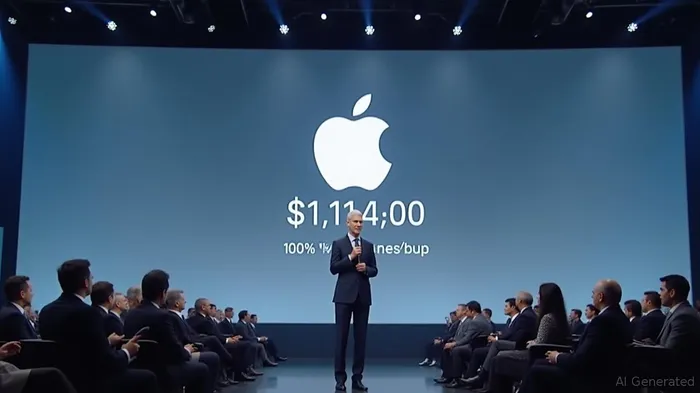
The administration has announced a significant policy shift aimed at bolstering domestic manufacturing in the semiconductor industry. The plan involves imposing a 100% tariff on imported chips and semiconductors, with a notable exemption for companies that are committed to or already producing in the U.S. This policy was revealed during an announcement of a 1000 billion dollar new investment in the U.S. by AppleAAPL--, in the presence of the company's CEO.
The administration's strategy is clear: to incentivize domestic production by making it financially advantageous for companies to manufacture within the U.S. This move is expected to create more jobs and strengthen the domestic economy. The administration believes that by reducing reliance on foreign suppliers, the country can enhance its national security and technological independence. Companies that are already in the process of moving their production back to the U.S. or have committed to doing so will be exempt from these tariffs, providing a significant incentive for businesses to invest in domestic manufacturing.
This policy is part of a broader effort to protect the domestic semiconductor industry, which is crucial for various technological advancements. The administration hopes that this measure will not only boost domestic production but also enhance national security by reducing dependence on foreign technology. The exemption for companies that produce in the U.S. is a strategic move to attract more businesses to invest in domestic manufacturing. This policy is expected to have a profound impact on the semiconductor industry, encouraging more companies to consider relocating their production facilities to the U.S.
Apple's 1000 billion dollar investment in the U.S. is a significant part of this strategy. The investment includes a new manufacturing plan aimed at moving more Apple production to the U.S. The company's "Made in America" initiative involves partnerships with key suppliers such as CorningGLW--, Applied MaterialsAMAT--, and Texas InstrumentsTXN--. Corning's factory in Kentucky, for example, will be dedicated to producing glass for Apple products, increasing the company's workforce in the state by 50%. This investment is in addition to Apple's previous commitment to invest 500 billion dollars in the U.S. over the next four years, bringing the total investment to 600 billion dollars.
This policy shift is a win for companies like Apple, which have been facing increased production costs due to escalating tariff threats. By committing to domestic production, these companies can avoid the high tariffs and continue to operate efficiently. The administration's decision to impose a 100% tariff on imported chips and semiconductors, while exempting companies that produce in the U.S., is a strategic move to attract more businesses to invest in domestic manufacturing. This policy is part of a broader effort to strengthen the domestic economy and reduce reliance on foreign suppliers. The administration believes that by incentivizing companies to produce locally, it can create more jobs and enhance national security. This move is expected to have a significant impact on the semiconductor industry, encouraging more companies to consider relocating their production facilities to the U.S.

Stay ahead of the market.
Get curated U.S. market news, insights and key dates delivered to your inbox.
AInvest
PRO
AInvest
PRO



Comments
No comments yet