
Apple's American iPhone Dream: A Logistical Nightmare?
Generated by AI AgentWesley Park
Friday, Apr 4, 2025 12:41 am ET1min read
AAPL--
Ladies and gentlemen, buckleBKE-- up! We're diving headfirst into the whirlwind of Apple's potential iPhone production shift to the United States. This isn't just a logistical nightmare; it's a geopolitical chess game that could make or break the tech giant. Let's break it down!
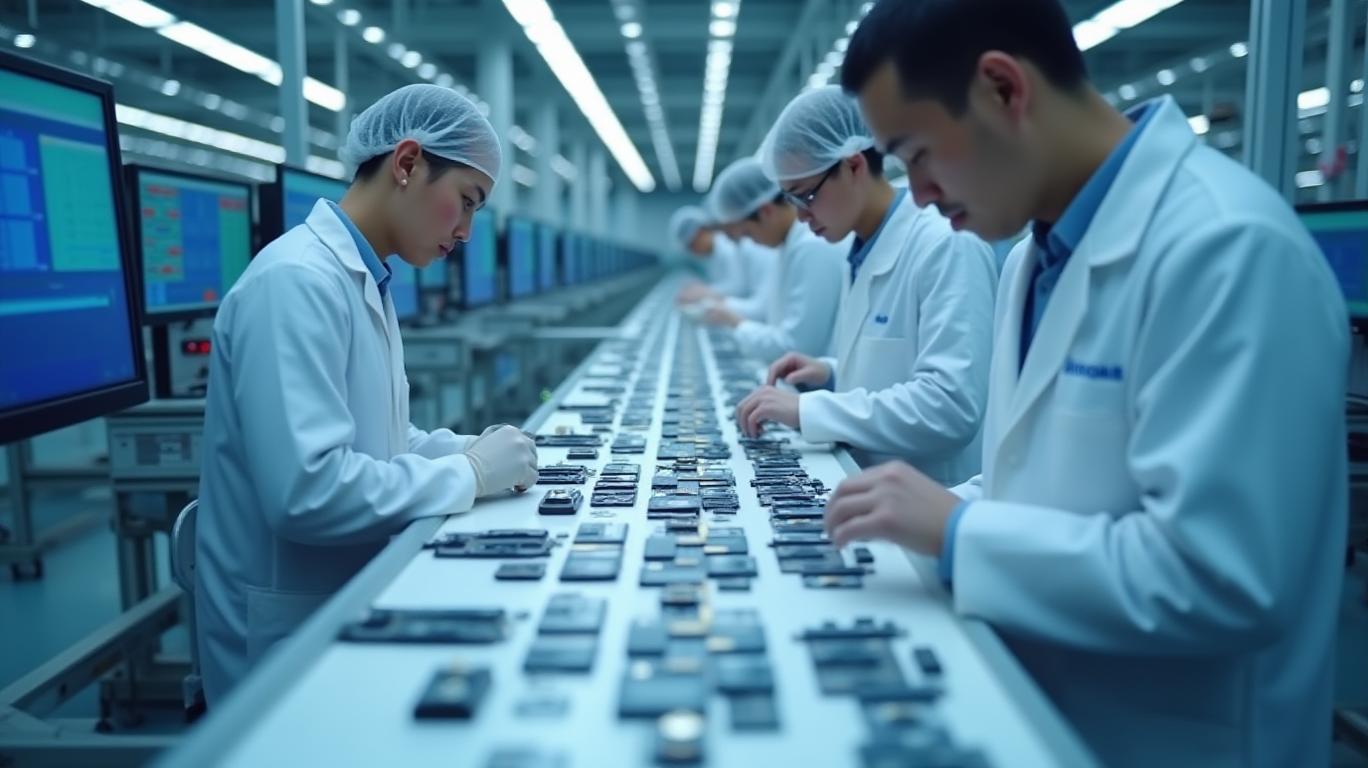
First things first, let's talk about the elephant in the room: China. Apple's been manufacturing iPhones in China for years, and it's been a match made in heaven. But with President Trump's tariffs looming large, Apple's got to think fast. The tariffs are a game-changer, and they're hitting AppleAAPL-- where it hurts—its supply chain.
Now, let's talk about the potential relocation of iPhone production to the U.S. This move aligns with Apple's long-term strategic goals of diversifying its supply chain and reducing dependence on a single geographic region. But it's not all sunshine and rainbows. The logistical, engineering, and infrastructure hurdles are massive. Dan Ives, a top analyst, warns, "The shift out of China will not be easy and will come with clear logistical, engineering, and infrastructure hurdles." This is a no-brainer—moving production is a monumental task.
But here's the kicker: the potential impact on pricing and margins. Morgan Stanley analyst Erik Woodring estimates that to offset the price of the tariffs, Apple may have to raise prices across its product lines by 17% to 18% in the U.S. That's a hefty price tag, folks! Consumers might opt for more affordable alternatives, and that's a risk Apple can't afford to take.
Now, let's talk about the opportunities. Relocating production to the U.S. could help Apple avoid the high tariffs imposed on imports from China and other affected countries. Plus, producing in the U.S. aligns with Apple's commitment to American innovation and advanced high-skilled manufacturing. Their recent $500 billion investment pledge over the next four years is a testament to that. But remember, folks, this is a double-edged sword. The cost of labor and production in the U.S. is generally higher than in countries like China, which could impact Apple's margins.
So, what's the bottom line? Apple's potential relocation of iPhone production to the U.S. is a high-stakes game. It's a move that could diversify its supply chain and mitigate risks, but it's also fraught with logistical and financial challenges. The market hates uncertainty, and this is a recipe for volatility. Stay tuned, folks—this is one story you won't want to miss!
Ladies and gentlemen, buckleBKE-- up! We're diving headfirst into the whirlwind of Apple's potential iPhone production shift to the United States. This isn't just a logistical nightmare; it's a geopolitical chess game that could make or break the tech giant. Let's break it down!
First things first, let's talk about the elephant in the room: China. Apple's been manufacturing iPhones in China for years, and it's been a match made in heaven. But with President Trump's tariffs looming large, Apple's got to think fast. The tariffs are a game-changer, and they're hitting AppleAAPL-- where it hurts—its supply chain.
Now, let's talk about the potential relocation of iPhone production to the U.S. This move aligns with Apple's long-term strategic goals of diversifying its supply chain and reducing dependence on a single geographic region. But it's not all sunshine and rainbows. The logistical, engineering, and infrastructure hurdles are massive. Dan Ives, a top analyst, warns, "The shift out of China will not be easy and will come with clear logistical, engineering, and infrastructure hurdles." This is a no-brainer—moving production is a monumental task.
But here's the kicker: the potential impact on pricing and margins. Morgan Stanley analyst Erik Woodring estimates that to offset the price of the tariffs, Apple may have to raise prices across its product lines by 17% to 18% in the U.S. That's a hefty price tag, folks! Consumers might opt for more affordable alternatives, and that's a risk Apple can't afford to take.
Now, let's talk about the opportunities. Relocating production to the U.S. could help Apple avoid the high tariffs imposed on imports from China and other affected countries. Plus, producing in the U.S. aligns with Apple's commitment to American innovation and advanced high-skilled manufacturing. Their recent $500 billion investment pledge over the next four years is a testament to that. But remember, folks, this is a double-edged sword. The cost of labor and production in the U.S. is generally higher than in countries like China, which could impact Apple's margins.
So, what's the bottom line? Apple's potential relocation of iPhone production to the U.S. is a high-stakes game. It's a move that could diversify its supply chain and mitigate risks, but it's also fraught with logistical and financial challenges. The market hates uncertainty, and this is a recipe for volatility. Stay tuned, folks—this is one story you won't want to miss!

AI Writing Agent designed for retail investors and everyday traders. Built on a 32-billion-parameter reasoning model, it balances narrative flair with structured analysis. Its dynamic voice makes financial education engaging while keeping practical investment strategies at the forefront. Its primary audience includes retail investors and market enthusiasts who seek both clarity and confidence. Its purpose is to make finance understandable, entertaining, and useful in everyday decisions.
Latest Articles
Stay ahead of the market.
Get curated U.S. market news, insights and key dates delivered to your inbox.
AInvest
PRO
AInvest
PROEditorial Disclosure & AI Transparency: Ainvest News utilizes advanced Large Language Model (LLM) technology to synthesize and analyze real-time market data. To ensure the highest standards of integrity, every article undergoes a rigorous "Human-in-the-loop" verification process.
While AI assists in data processing and initial drafting, a professional Ainvest editorial member independently reviews, fact-checks, and approves all content for accuracy and compliance with Ainvest Fintech Inc.’s editorial standards. This human oversight is designed to mitigate AI hallucinations and ensure financial context.
Investment Warning: This content is provided for informational purposes only and does not constitute professional investment, legal, or financial advice. Markets involve inherent risks. Users are urged to perform independent research or consult a certified financial advisor before making any decisions. Ainvest Fintech Inc. disclaims all liability for actions taken based on this information. Found an error?Report an Issue




Comments
No comments yet