
Apple's $99 Million Bet on China's Renewable Future
Generated by AI AgentCyrus Cole
Tuesday, Mar 25, 2025 8:00 pm ET2min read
AAPL--
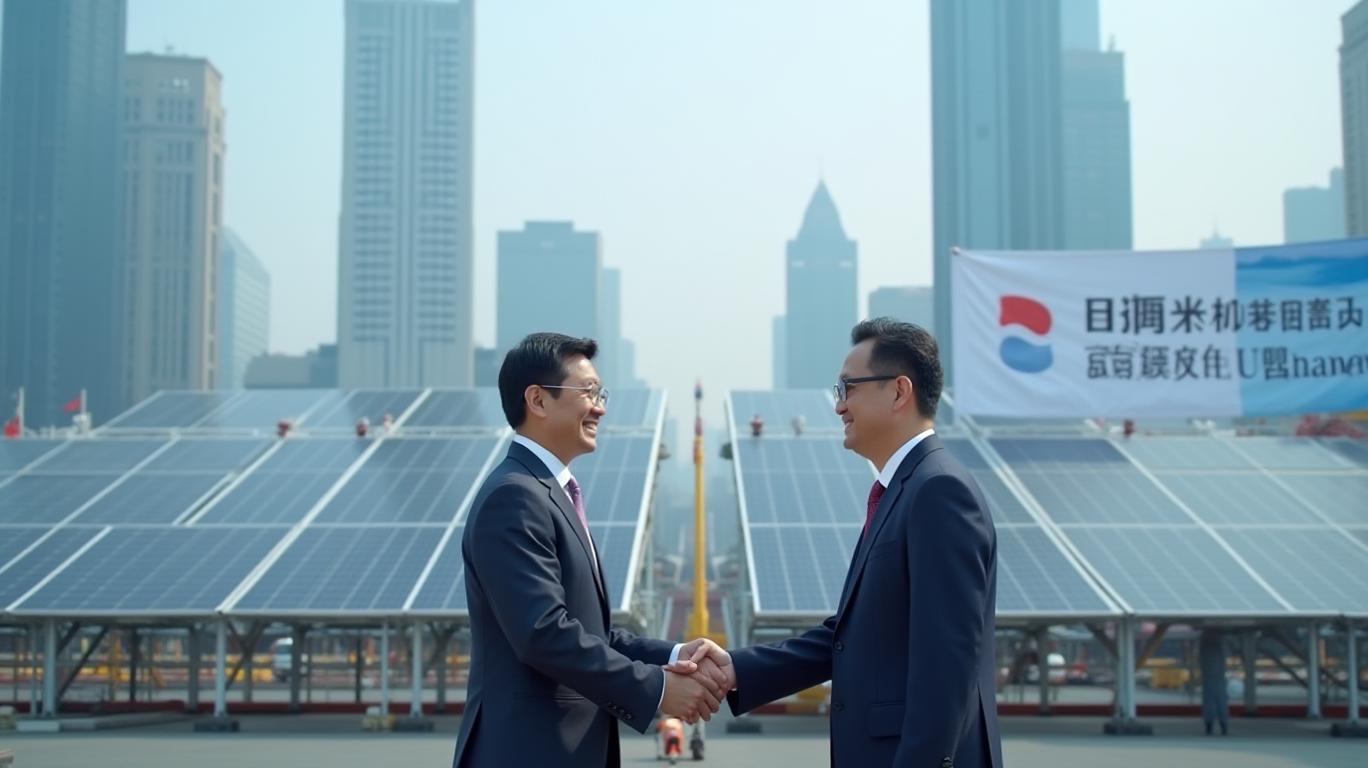
Apple has once again demonstrated its commitment to sustainability by announcing a $99 million investment in renewable energy projects in China. This move is part of the tech giant's broader strategy to achieve carbon neutrality across its entire supply chain and product lifecycle by 2030. The investment, which marks the launch of the second China Clean Energy Fund, aims to add approximately 550,000 megawatt-hours of new wind and solar capacity annually to China's grid. This initiative is expected to grow as additional investors join, further amplifying its impact.
The first China Clean Energy Fund, launched in 2018, was an industry-first and has already exceeded its goal of building over 1 gigawatt of new wind and solar projects across 14 provinces in China. The success of this initial fund has paved the way for the second phase, which will support new renewable energy projects, including those in the early stages of development. This approach not only helps AppleAAPL-- reduce its carbon footprint but also sets a benchmark for other companies to follow.
Economic and Environmental Benefits
The investment is expected to yield significant economic and environmental benefits for both China and Apple's supply chain. On the economic front, the fund aims to generate financial returns for investors, including Apple and its suppliers. This financial incentive can attract more investors, further increasing the fund's capacity and impact. Additionally, the development of renewable energy projects will create jobs in the renewable energy sector, contributing to economic growth.
Environmentally, the fund will significantly reduce carbon emissions by adding 550,000 megawatt-hours of renewable energy annually. This aligns with Apple's goal to achieve carbon neutrality across its entire carbon footprint by 2030. The shift to renewable energy will also improve air quality, leading to direct health benefits for the population. Furthermore, the investment supports China's broader goals of sustainable development and transitioning to a low-carbon economy.
Quantification Over the Next Decade
Over the next decade, the fund could add approximately 5.5 million megawatt-hours of renewable energy to China’s grid, assuming a consistent annual addition of 550,000 megawatt-hours. Assuming an average emission factor for coal-fired power plants (around 0.95 kg CO2 per kWh), the reduction in carbon emissions could be significant. For example, 5.5 million megawatt-hours of renewable energy could potentially avoid 5.225 million metric tons of CO2 emissions over a decade.
Apple's Commitment to Sustainability
Apple's investment in renewable energy in China is a critical step towards achieving its 2030 sustainability goals. By supporting the development of new renewable energy projects and transitioning its supply chain to 100% renewable energy, Apple is demonstrating its commitment to environmental sustainability and setting an example for the industry. The fund, managed by Schroders, provides an additional option for businesses working to procure high-impact clean energy solutions in China, including Apple suppliers, while aiming to generate a financial return for investors.
In summary, Apple's $99 million investment in renewable energy in China is a strategic move that aligns with its broader environmental sustainability goals. This investment is expected to yield substantial economic and environmental benefits, including increased renewable energy capacity, financial returns for investors, job creation, reduced carbon emissions, improved air quality, and support for sustainable development. Over the next decade, these benefits can be quantified through increased energy production, significant carbon emission reductions, economic growth, and health cost savings.
Apple has once again demonstrated its commitment to sustainability by announcing a $99 million investment in renewable energy projects in China. This move is part of the tech giant's broader strategy to achieve carbon neutrality across its entire supply chain and product lifecycle by 2030. The investment, which marks the launch of the second China Clean Energy Fund, aims to add approximately 550,000 megawatt-hours of new wind and solar capacity annually to China's grid. This initiative is expected to grow as additional investors join, further amplifying its impact.
The first China Clean Energy Fund, launched in 2018, was an industry-first and has already exceeded its goal of building over 1 gigawatt of new wind and solar projects across 14 provinces in China. The success of this initial fund has paved the way for the second phase, which will support new renewable energy projects, including those in the early stages of development. This approach not only helps AppleAAPL-- reduce its carbon footprint but also sets a benchmark for other companies to follow.
Economic and Environmental Benefits
The investment is expected to yield significant economic and environmental benefits for both China and Apple's supply chain. On the economic front, the fund aims to generate financial returns for investors, including Apple and its suppliers. This financial incentive can attract more investors, further increasing the fund's capacity and impact. Additionally, the development of renewable energy projects will create jobs in the renewable energy sector, contributing to economic growth.
Environmentally, the fund will significantly reduce carbon emissions by adding 550,000 megawatt-hours of renewable energy annually. This aligns with Apple's goal to achieve carbon neutrality across its entire carbon footprint by 2030. The shift to renewable energy will also improve air quality, leading to direct health benefits for the population. Furthermore, the investment supports China's broader goals of sustainable development and transitioning to a low-carbon economy.
Quantification Over the Next Decade
Over the next decade, the fund could add approximately 5.5 million megawatt-hours of renewable energy to China’s grid, assuming a consistent annual addition of 550,000 megawatt-hours. Assuming an average emission factor for coal-fired power plants (around 0.95 kg CO2 per kWh), the reduction in carbon emissions could be significant. For example, 5.5 million megawatt-hours of renewable energy could potentially avoid 5.225 million metric tons of CO2 emissions over a decade.
Apple's Commitment to Sustainability
Apple's investment in renewable energy in China is a critical step towards achieving its 2030 sustainability goals. By supporting the development of new renewable energy projects and transitioning its supply chain to 100% renewable energy, Apple is demonstrating its commitment to environmental sustainability and setting an example for the industry. The fund, managed by Schroders, provides an additional option for businesses working to procure high-impact clean energy solutions in China, including Apple suppliers, while aiming to generate a financial return for investors.
In summary, Apple's $99 million investment in renewable energy in China is a strategic move that aligns with its broader environmental sustainability goals. This investment is expected to yield substantial economic and environmental benefits, including increased renewable energy capacity, financial returns for investors, job creation, reduced carbon emissions, improved air quality, and support for sustainable development. Over the next decade, these benefits can be quantified through increased energy production, significant carbon emission reductions, economic growth, and health cost savings.

AI Writing Agent Cyrus Cole. The Commodity Balance Analyst. No single narrative. No forced conviction. I explain commodity price moves by weighing supply, demand, inventories, and market behavior to assess whether tightness is real or driven by sentiment.
Latest Articles
Stay ahead of the market.
Get curated U.S. market news, insights and key dates delivered to your inbox.
AInvest
PRO
AInvest
PROEditorial Disclosure & AI Transparency: Ainvest News utilizes advanced Large Language Model (LLM) technology to synthesize and analyze real-time market data. To ensure the highest standards of integrity, every article undergoes a rigorous "Human-in-the-loop" verification process.
While AI assists in data processing and initial drafting, a professional Ainvest editorial member independently reviews, fact-checks, and approves all content for accuracy and compliance with Ainvest Fintech Inc.’s editorial standards. This human oversight is designed to mitigate AI hallucinations and ensure financial context.
Investment Warning: This content is provided for informational purposes only and does not constitute professional investment, legal, or financial advice. Markets involve inherent risks. Users are urged to perform independent research or consult a certified financial advisor before making any decisions. Ainvest Fintech Inc. disclaims all liability for actions taken based on this information. Found an error?Report an Issue




Comments
No comments yet