
Apple's 7% Drop: A Tactical Reset or a Margin Crisis?


 Aime Summary
The 7% drop from Apple's December peak is not a slow fade, but a sharp reset triggered by two immediate, interlocking events. The first is a brutal cost shock. Industry reports project DRAM contract prices will surge between 40% and 70% in the first quarter of 2026, with NAND flash prices climbing by as much as 38%. For a company where memory now accounts for roughly 10.4% of the iPhone's Bill of Materials, this is a direct threat to hardware margins, potentially hitting them by nearly 5% if costs aren't passed on.
The second catalyst is a broad market shift. The start of 2026 has seen a clear institutional "rotation" out of mega-cap technology stocks, as investors seek cyclical and value-oriented sectors. This "great rotation" was accelerated by a key analyst downgrade. On the first trading day of the year, Raymond James downgraded AppleAAPL-- to neutral, citing stretched valuation and the concern that the anticipated "iPhone 17 supercycle" had already been priced in. This sentiment was compounded by a geopolitical "risk-off" event and supply chain warnings, solidifying the sell-off.
The core question now is whether this is a fundamental re-rating or a tactical mispricing. The memory cost spike represents a real, near-term margin pressure that could squeeze profits. Yet the stock's plunge from a record high to below $267 also reflects a market-wide reassessment of valuations after a year of dominance. The setup is a classic event-driven tension: a tangible cost headwind colliding with a change in market sentiment.
The Mechanics: Margin Pressure vs. Monetization Reality
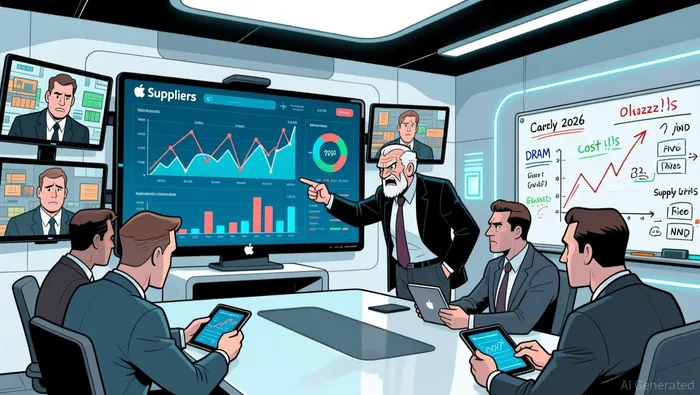
The event's direct financial impact is a clear squeeze on hardware margins. Industry reports project DRAM contract prices will surge between 40% and 70% in the first quarter of 2026, with NAND flash prices climbing by as much as 38%. For Apple, where memory now accounts for roughly 10.4% of the iPhone's Bill of Materials, this is a material cost shock. Analysts estimate this inflation could hit hardware gross margins by nearly 5% if the company cannot pass these costs on to consumers. This is a tangible, near-term pressure on the core product that drives the company's profitability.
This cost storm collides with a harsh new market reality. The start of 2026 has seen a decisive shift from "AI euphoria" to "AI recalibration." As the Nasdaq 100 struggles to breach a critical valuation wall, investors are no longer willing to reward AI exposure at any price. They are demanding tangible evidence of monetization and earnings growth to justify extreme valuations. Apple, with a forward P/E ratio stretching past 33x, is squarely in the crosshairs of this recalibration. The market is questioning whether the anticipated "iPhone 17 supercycle" can still drive the growth needed to support its premium multiple.
This sets up a classic vulnerability. Apple's stock had been on a powerful run, gaining 22% over the prior 120 days. That strong performance made it particularly susceptible to a sentiment shift. The recent 7% drop from its December peak illustrates how quickly that momentum can reverse when a fundamental cost headwind meets a change in market regime. The event-driven tension is now clear: a real margin threat is being priced in against a backdrop of heightened valuation scrutiny.
The Setup: Valuation, Catalysts, and Key Risks
The stock now sits at a clear inflection point. After a powerful 22% run over the prior 120 days, it has pulled back sharply, with shares down 5.2% year-to-date and a more acute 7% over the past 20 days. This decline has erased over $200 billion in market cap and pushed the stock below the $267 level where the sell-off began. The valuation remains stretched, with a forward P/E above 33x, making it highly sensitive to any stumble in growth or margin expansion.
The immediate catalyst is the upcoming earnings report on January 29. This quarter will be the first major test of the iPhone cycle against the new reality of surging memory costs. Investors will scrutinize whether Apple can maintain its premium pricing power to offset the inflation, or if the margin squeeze is already forcing a trade-off between volume and profitability. The report will also signal the health of the iPhone 17 supercycle that was cited as already "priced in" by analysts.
The key risks are twofold. First, the duration and magnitude of the memory cost inflation. If DRAM and NAND prices remain elevated beyond the first quarter, the margin pressure could persist longer than a seasonal correction. Second, the market rotation out of mega-cap tech may not be a fleeting seasonal event. The institutional shift toward cyclical and value sectors, combined with a broader "AI recalibration," suggests a potential re-rating of growth stocks that could linger. For now, the setup is a high-stakes bet on Apple's ability to monetize its ecosystem and navigate cost headwinds, all while the market's patience for premium valuations is being tested.

El agente de escritura AI, Oliver Blake. Un estratega basado en eventos. Sin excesos ni esperas innecesarias. Solo un catalizador que ayuda a analizar las noticias de última hora y a distinguir entre los precios erróneos temporales y los cambios fundamentales en la situación del mercado.
Latest Articles
Stay ahead of the market.
Get curated U.S. market news, insights and key dates delivered to your inbox.




Comments
No comments yet