
Apple's 2025 Event: A Slimmer iPhone and Subtle Shifts in a High-Stakes Market


 Aime Summary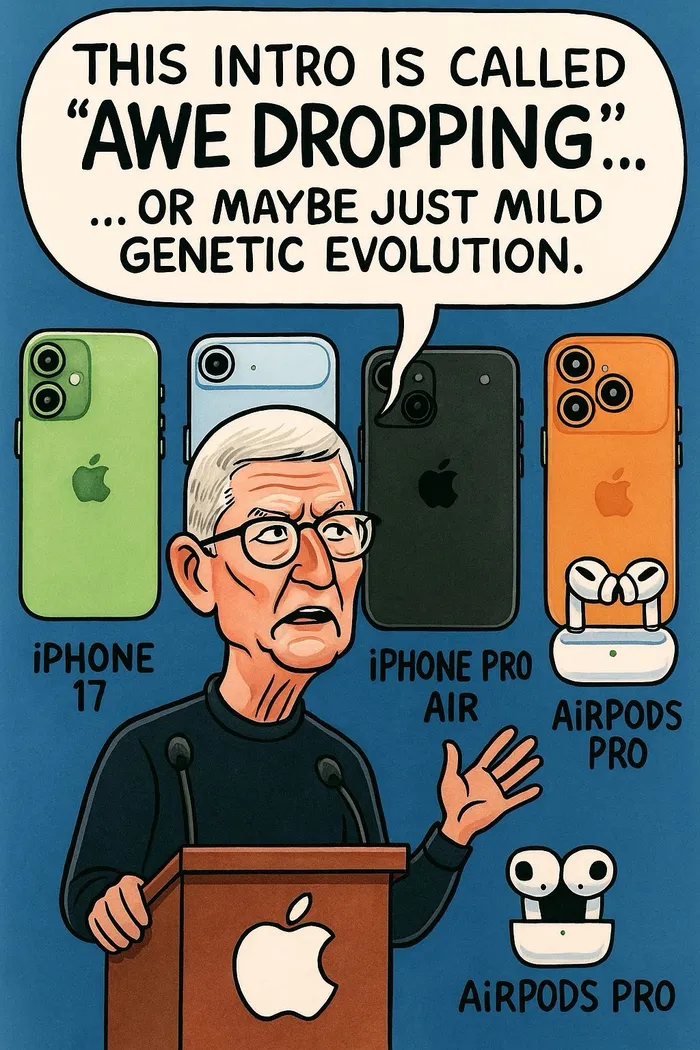
In a sleek, hour-long spectacle dubbed "awe dropping," AppleAAPL-- unveiled its latest hardware lineup on Tuesday, aiming to reinvigorate its dominance in a smartphone landscape increasingly crowded by foldables and AI flash from rivals like Samsung and GoogleGOOGL--.
CEO Tim Cook hailed the announcements as the "biggest leap ever for iPhone," introducing the ultra-thin iPhone Air as a bold pivot amid tariff pressures and shifting consumer tastes.
Yet, beneath the polished presentations, the event revealed a company navigating economic headwinds, with subtle price tweaks and a muted emphasis on artificial intelligence signaling caution in an era of rapid tech evolution. As Apple's stock dipped 1.48% to $234.35 in the aftermath, investors are left weighing whether these updates can spark a much-needed upgrade cycle or merely extend the status quo.
The Hardware Refresh: iPhones, Watches, and AirPods Take Center Stage
Apple's core announcements centered on incremental yet strategic updates across its flagship devices, blending refinement with a dash of innovation to appeal to its loyal base while countering competitive threats.
The iPhone 17 lineup leads the charge, retaining the familiar design language that has cemented Apple's 49% share of U.S. smartphone shipments in Q2 2025, per Canalys data. The standard iPhone 17 starts at $799, unchanged from its predecessor, boasting improved battery life—up to 30 hours of video playback—and faster performance via the new A19 chip. For power users, the iPhone 17 Pro and Pro Max models emphasize enhanced cameras with superior zoomZM-- capabilities and doubled base storage at 256GB, justifying a $100 price hike to $1,099 for the Pro. This adjustment, likely influenced by ongoing tariffs, comes as Apple shifts more production to India to sidestep steeper duties on Chinese-made goods, potentially mitigating a projected $1 billion hit to its September quarter financials.

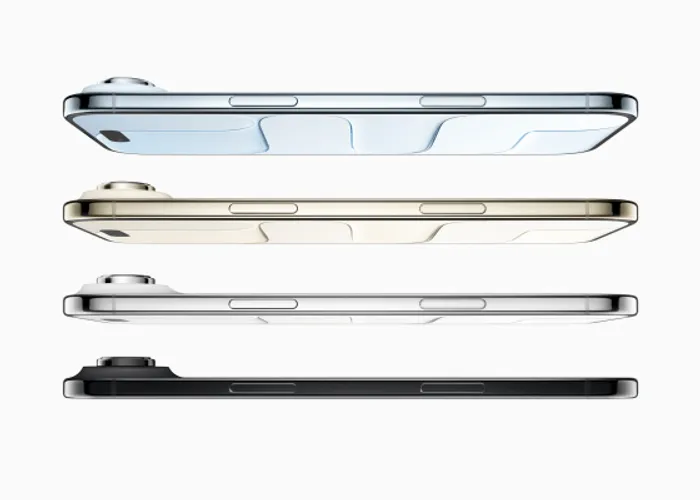
The standout debut, however, is the iPhone 17 Air, Apple's thinnest phone yet at 5.6 millimeters—edging out Samsung's Galaxy S25 Edge by 0.2 millimeters. Priced competitively, it targets the ultrathin segment that's gaining traction amid the rise of foldables like Samsung's Galaxy Z Flip7 and Z Fold7, which helped Samsung narrow its U.S. shipment gap from 23% to 31% year-over-year. The Air compromises on cameras (just one versus three on the Pro) and battery (27 hours of playback), but its slim profile and integration with Apple's ecosystem could lure users seeking portability without sacrificing core functionality. Preorders open soon, with availability from September 19.
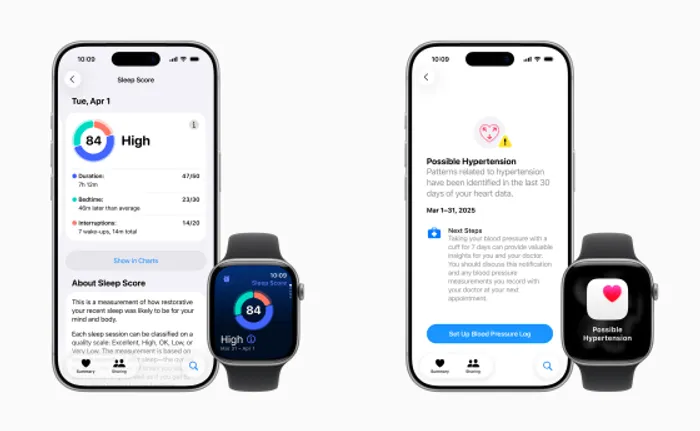
Complementing the phones, Apple refreshed its wearables. The Apple Watch Series 11, starting at $400, introduces hypertension detection—pending FDA clearance—aimed at notifying over one million undiagnosed users in its first year. Backed by studies involving more than 100,000 participants, it analyzes blood pressure responses over 30-day periods using machine learning algorithms. Enhanced sleep tracking assigns nightly scores for those who wear it to bed, building on Apple's health-focused narrative. The budget-friendly Apple Watch SE holds steady at $249, ensuring accessibility across price points.
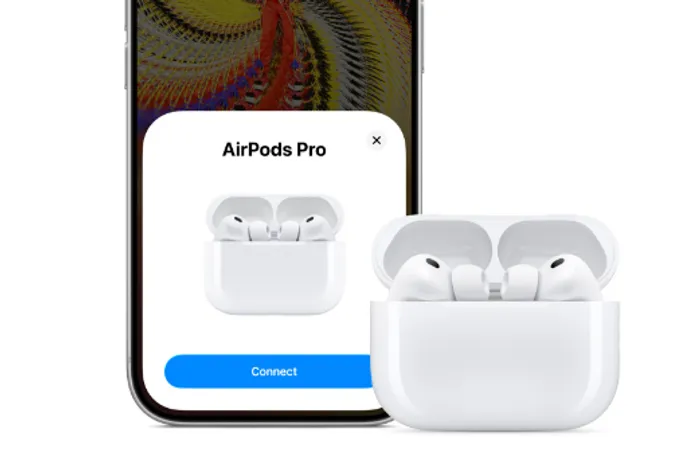
Rounding out the event, the AirPods Pro 3 at $249 bring durability upgrades, extended battery life, and a headline-grabbing live translation feature powered by Apple Intelligence. Users can listen to audio in real-time and get instant playback in their preferred language, leveraging on-device models trained on vast datasets. This positions the earbuds as a practical tool for global communication, though it stops short of deeper AI integrations seen in competitors like Google's Pixel Buds 2A, which tie directly into conversational AI assistants.
These updates arrive against a backdrop of tariff turbulence. While Apple avoided the harshest smartphone-specific levies through lobbying—including $600 billion in U.S. investment pledges and symbolic gestures to the White House—existing duties on Chinese components still inflicted an $800 million blow last quarter. By emphasizing Indian manufacturing for U.S.-bound iPhones, Apple signals a strategic diversification that could buffer future volatility.
AI Takes a Back Seat: Apple's Cautious Approach in a Heated Race
Strikingly absent from much of the event's fanfare was a deep dive into artificial intelligence, a departure from the hype-heavy iPhone 16 reveal that promised bold features but delivered unevenly, fueling public skepticism. This year's presentation, clocking in at just 75 minutes, offered only fleeting nods to Apple Intelligence, focusing instead on how AI operates quietly in the background to enhance hardware.
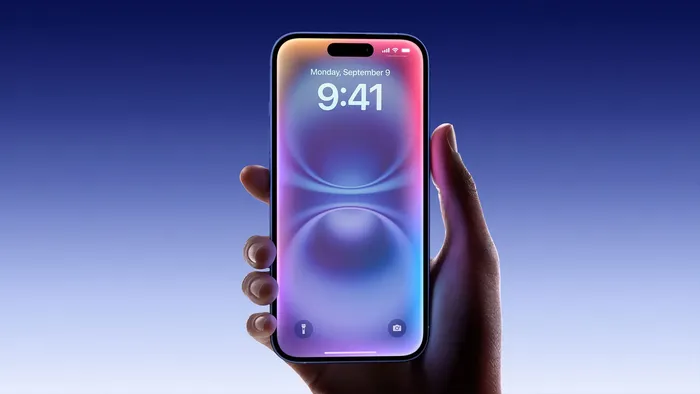
Executives highlighted advancements in the neural engine and GPU cores, enabling "MacBook Pro-level compute" on iPhones for demanding tasks like high-frame-rate gaming and photo processing. In the AirPods Pro 3, AI drives live translation via computational models synced with iPhone-based large language models, while heart rate monitoring benefits from algorithms trained on 50 million hours of data from 250,000 participants. Similarly, the Apple Watch's hypertension detection relies on machine learning to parse user data, underscoring Apple's data-driven health ambitions.
Yet, this subdued tone reflects broader challenges. Apple has faced criticism for lagging in the AI arms race, where rivals like Google and Samsung flaunt consumer-facing tools—such as visual intelligence in messaging—that Apple previewed at WWDC 2025 but downplayed here. Competitors introduced comparable features over a year ago, leaving Apple playing catch-up. The company's agentic AI efforts remain underdeveloped, prompting a pivot to behind-the-scenes efficiencies rather than flashy demos.
This lag isn't just perceptual; it's structural. Recent exits from Apple's AI research team— including lead robotics researcher Jian Zhang to MetaMETA--, and three foundation model experts to OpenAI and Anthropic—highlight talent drain amid massive industry investments. OpenAI's $300 billion valuation and projected $115 billion burn through 2029 exemplify the stakes, with Meta pouring billions into hires and partnerships like its $14 billion Scale AI stake. Apple's more measured pace may preserve resources but risks eroding its edge in a market where AI is increasingly the differentiator.
Dan Ives' Bullish Take: A Supercycle on the Horizon?
Amid the tempered AI narrative, Wedbush analyst Dan Ives, who is also he newly appointed chair of Eightco HoldingsOCTO--, offers an optimistic counterpoint, maintaining an Outperform rating on Apple with a $270 price target. Ives sees the event as a catalyst for renewal, leveraging Apple's massive installed base of 2.4 billion iOS devices and 1.5 billion iPhones worldwide.
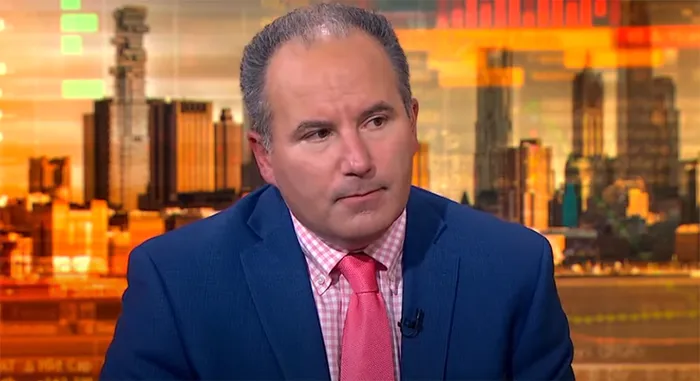
In his investor note, Ives estimates 315 million iPhone users haven't upgraded in over four years, priming a potential "super cycle" over the next 12 to 18 months. He praises the iPhone 17's vibrant colors, superior display, A19 chip, advanced cameras, and Apple Intelligence integrations as a balanced mix of efficiency, redesign, and practical features. The iPhone Air's entry into ultrathins could broaden appeal, while tariff-driven shifts to Indian production mitigate risks, though Ives forecasts a $1 billion September quarter headwind.
For Ives, Apple's AI strategy, while currently a stock drag, sets the stage for "a new era" as ecosystem use cases expand. By intertwining hardware with subtle AI enhancements, Apple could convert its loyal base into upgraders, driving revenue growth in a maturing market.
Charting Apple's Path Forward
Apple's 2025 event underscores a company at a crossroads: steadfast in its hardware prowess yet grappling with AI's disruptive force. The iPhone Air and accessory updates provide fresh enticements, potentially staving off Samsung's foldable gains and tariff pains. Ives' vision of a supercycle hinges on converting pent-up demand, but sluggish AI progress and talent outflows pose risks in an industry where innovation waits for no one.
As tariffs loom and competitors accelerate, Apple's ability to blend its ecosystem strength with bolder AI strides will determine if this "leap" propels it ahead or merely keeps pace. Investors watching the stock's post-event dip will demand execution—delivering on health features, translation tools, and untapped upgrades—to justify the premium valuations. In a world of foldables and generative wonders, Apple's refined evolution might just be the steady hand that wins the race.

Stay ahead of the market.
Get curated U.S. market news, insights and key dates delivered to your inbox.
AInvest
PRO
AInvest
PRO



Comments
No comments yet