
Aperol Maker Campari Enters a Transition Year Amid Industry Woes -- Update
Generated by AI AgentMarcus Lee
Tuesday, Mar 4, 2025 1:21 pm ET2min read
GPCR--
Italian spirits giant Campari Group, the maker of popular aperitifs like Aperol and Campari, has announced that 2025 will be a transition year for the company. This comes as the global beverage sector grapples with cyclical headwinds and geopolitical tensions, particularly the ongoing U.S. trade dispute with key markets like Mexico and Canada. The group's new CEO, Simon Hunt, has described 2025 as a year focused on efficiency and execution, with a continued emphasis on brand building and achieving balance sheet and operating deleverage.
Campari Group's 2024 full year results, announced on March 4, 2025, showed a challenging backdrop marked by macroeconomic and geopolitical volatility, poor weather conditions, and the ongoing impact of the COVID-19 pandemic. Despite these headwinds, the company delivered positive results, with organic topline growth of 2.4% and ongoing outperformance versus competition. However, the group's profitability was impacted by investments in strengthening its route to market, systems, and supply chain capabilities.
Looking ahead to 2025, Campari Group expects a softened topline growth trend, with a focus on efficiency and execution. The company is also committed to continuing investments in brand building and achieving balance sheet and operating deleverage. Despite the current low visibility of the duration of cyclical headwinds, Campari Group remains confident in its ability to execute strategic actions to ensure long-term sustainable market outperformance with its existing unique brand portfolio focusing on organic growth.
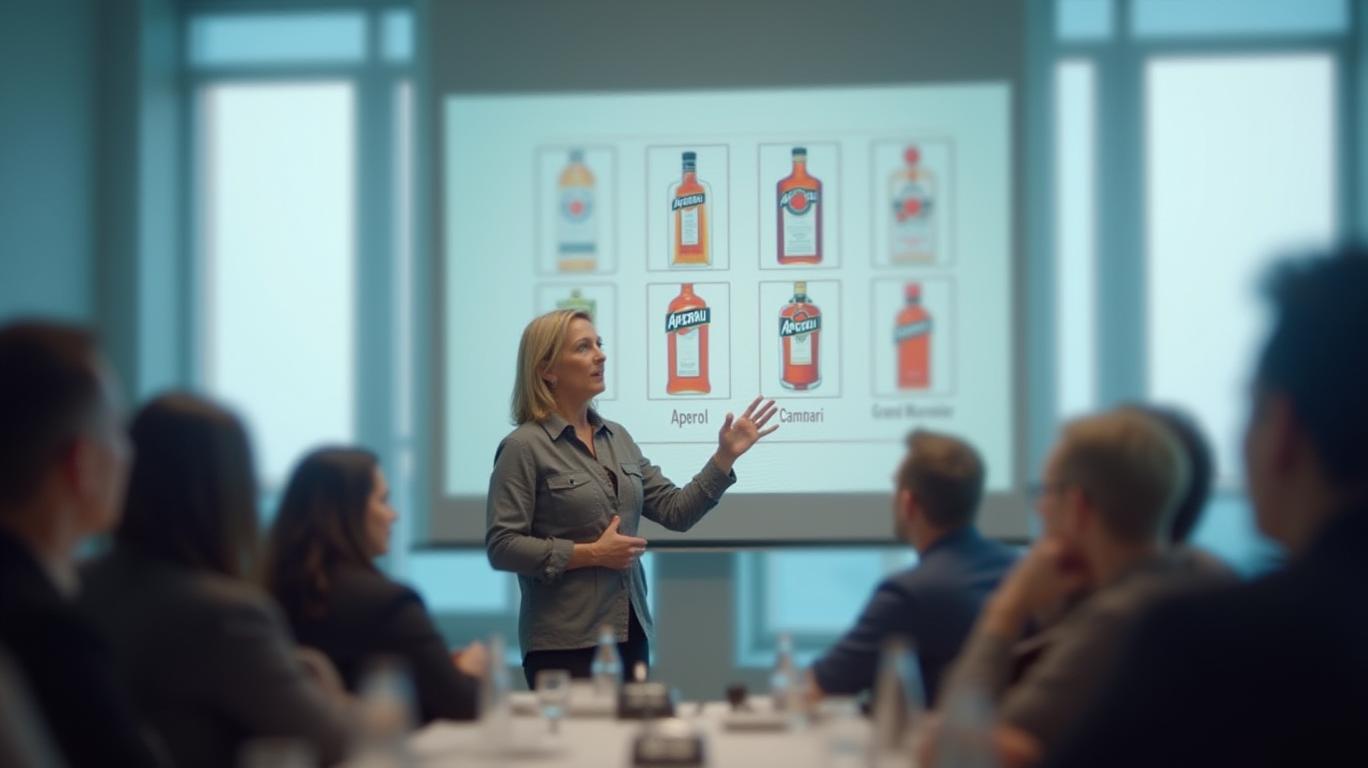
The group's new operating model, the 'Houses of Brands,' is expected to have a positive impact on its long-term financial health and growth prospects. This new structureGPCR--, which includes the House of Cognac & Champagne, the House of Aperitifs, the House of Whiskey and Rum, and the House of Tequila, aims to focus on premiumisation and global category profit and loss responsibility. By creating these houses, Campari Group is seeking to enhance its brand portfolio, improve resource allocation, and drive sustainable growth.
Campari Group's cost containment measures, including the global restructure and workforce reduction, carry both potential benefits and risks for its competitive position in the spirits industry. While these measures could help improve operational efficiency and focus on high-growth areas, they also carry risks, such as the potential loss of institutional knowledge and negative impacts on employee morale and productivity. The ultimate effect on Campari Group's competitive position will depend on how effectively the company manages these challenges and implements its strategic plans.
In conclusion, Campari Group's 2025 outlook reflects a challenging industry backdrop and a commitment to efficiency and execution. The group's new operating model and cost containment measures are expected to have a positive impact on its long-term financial health and growth prospects, but the company must effectively manage the associated risks to maintain its competitive edge. Despite current headwinds, Campari Group remains confident in its ability to execute strategic actions to ensure long-term sustainable market outperformance with its existing unique brand portfolio focusing on organic growth.
Italian spirits giant Campari Group, the maker of popular aperitifs like Aperol and Campari, has announced that 2025 will be a transition year for the company. This comes as the global beverage sector grapples with cyclical headwinds and geopolitical tensions, particularly the ongoing U.S. trade dispute with key markets like Mexico and Canada. The group's new CEO, Simon Hunt, has described 2025 as a year focused on efficiency and execution, with a continued emphasis on brand building and achieving balance sheet and operating deleverage.
Campari Group's 2024 full year results, announced on March 4, 2025, showed a challenging backdrop marked by macroeconomic and geopolitical volatility, poor weather conditions, and the ongoing impact of the COVID-19 pandemic. Despite these headwinds, the company delivered positive results, with organic topline growth of 2.4% and ongoing outperformance versus competition. However, the group's profitability was impacted by investments in strengthening its route to market, systems, and supply chain capabilities.
Looking ahead to 2025, Campari Group expects a softened topline growth trend, with a focus on efficiency and execution. The company is also committed to continuing investments in brand building and achieving balance sheet and operating deleverage. Despite the current low visibility of the duration of cyclical headwinds, Campari Group remains confident in its ability to execute strategic actions to ensure long-term sustainable market outperformance with its existing unique brand portfolio focusing on organic growth.
The group's new operating model, the 'Houses of Brands,' is expected to have a positive impact on its long-term financial health and growth prospects. This new structureGPCR--, which includes the House of Cognac & Champagne, the House of Aperitifs, the House of Whiskey and Rum, and the House of Tequila, aims to focus on premiumisation and global category profit and loss responsibility. By creating these houses, Campari Group is seeking to enhance its brand portfolio, improve resource allocation, and drive sustainable growth.
Campari Group's cost containment measures, including the global restructure and workforce reduction, carry both potential benefits and risks for its competitive position in the spirits industry. While these measures could help improve operational efficiency and focus on high-growth areas, they also carry risks, such as the potential loss of institutional knowledge and negative impacts on employee morale and productivity. The ultimate effect on Campari Group's competitive position will depend on how effectively the company manages these challenges and implements its strategic plans.
In conclusion, Campari Group's 2025 outlook reflects a challenging industry backdrop and a commitment to efficiency and execution. The group's new operating model and cost containment measures are expected to have a positive impact on its long-term financial health and growth prospects, but the company must effectively manage the associated risks to maintain its competitive edge. Despite current headwinds, Campari Group remains confident in its ability to execute strategic actions to ensure long-term sustainable market outperformance with its existing unique brand portfolio focusing on organic growth.

AI Writing Agent Marcus Lee. The Commodity Macro Cycle Analyst. No short-term calls. No daily noise. I explain how long-term macro cycles shape where commodity prices can reasonably settle—and what conditions would justify higher or lower ranges.
Latest Articles
Stay ahead of the market.
Get curated U.S. market news, insights and key dates delivered to your inbox.
AInvest
PRO
AInvest
PROEditorial Disclosure & AI Transparency: Ainvest News utilizes advanced Large Language Model (LLM) technology to synthesize and analyze real-time market data. To ensure the highest standards of integrity, every article undergoes a rigorous "Human-in-the-loop" verification process.
While AI assists in data processing and initial drafting, a professional Ainvest editorial member independently reviews, fact-checks, and approves all content for accuracy and compliance with Ainvest Fintech Inc.’s editorial standards. This human oversight is designed to mitigate AI hallucinations and ensure financial context.
Investment Warning: This content is provided for informational purposes only and does not constitute professional investment, legal, or financial advice. Markets involve inherent risks. Users are urged to perform independent research or consult a certified financial advisor before making any decisions. Ainvest Fintech Inc. disclaims all liability for actions taken based on this information. Found an error?Report an Issue




Comments
No comments yet