
Apeing's Whitelist: A New Benchmark for Meme Coin Legitimacy and Speculative Momentum


 Aime Summary
In the ever-evolving landscape of cryptocurrency, memeMEME-- coins have long been dismissed as speculative novelties. However, the emergence of structured mechanisms like Apeing's whitelist is reshaping this narrative, offering a framework that blends humor with institutional-grade potential. This article examines how Apeing's whitelist model-characterized by controlled access, transparent tokenomics, and strategic pricing-has positioned it as a standout in the 2025 meme coin market, while also serving as a novel indicator of legitimacy and momentum.
The Apeing Model: Structured Access and Predictable Upside
Apeing's Phase 1 whitelist grants early participants access to tokens at $0.0001, with a projected listing price of $0.001, creating a baseline 10x return before public trading begins. This structured approach contrasts sharply with traditional meme coins like DogecoinDOGE-- (DOGE) or PepePEPE-- (PEPE), which rely on organic hype and community-driven volatility. By limiting supply and requiring email-verified registration, Apeing reduces competition and ensures early adopters secure tokens at the lowest possible entry point. This model aligns with the growing demand for "first-mover advantage" in a market where liquidity and timing are critical.
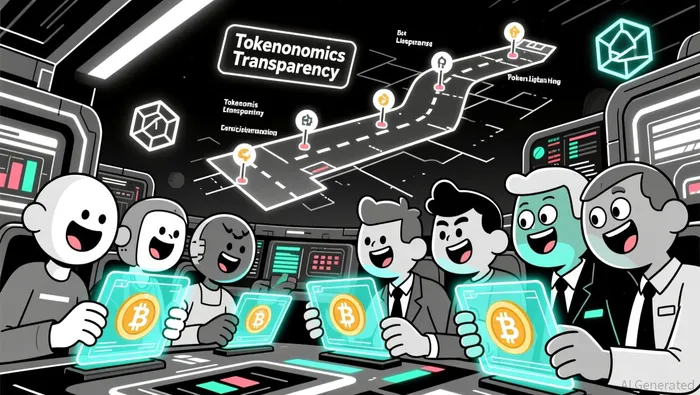
The project's emphasis on transparency further distinguishes it. Unlike many meme coins that lack defined roadmaps, Apeing's phased rollout-complete with publicly accessible milestones-builds trust among investors. For instance, its limited Stage 1 allocation of 100 million tokens (out of a total supply of 1 billion) creates scarcity, a key driver of speculative momentum. This scarcity is amplified by the absence of pre-mines or team allocations, a feature that resonates with retail investors wary of pump-and-dump schemes.
Institutional Validation and Regulatory Context
While Apeing lacks third-party audits-a common requirement for institutional-grade assets-the broader regulatory environment in 2025 has shifted to accommodate structured crypto projects. The U.S. Securities and Exchange Commission (SEC) has clarified that meme coins are not securities under the Howey test, provided they lack investment contracts or centralized control. This legal distinction has emboldened projects like Apeing to operate within a framework that prioritizes community governance and decentralized distribution.
Moreover, the SEC's Spring 2025 Regulatory Agenda highlights a trend toward modernizing custody rules for crypto assets and creating safe harbors for transactions. These developments suggest a regulatory environment increasingly open to innovation, provided projects adhere to principles of transparency and user verification-both of which Apeing emphasizes. For example, its email-verified whitelist process aligns with Know Your Customer (KYC) best practices, a critical factor in attracting institutional interest.
Comparative Analysis: Apeing vs. Traditional Meme Coins
When compared to established meme coins, Apeing's structured model offers distinct advantages. Dogecoin, for instance, has seen its price rise to $0.1542 in 2025 due to brand recognition and ETF integration, but its lack of controlled entry mechanisms leaves it vulnerable to market saturation. Similarly, BonkBONK-- ($BONK) leverages Solana's ecosystem but lacks Apeing's emphasis on early-stage scarcity. Pepe, while maintaining strong liquidity, has no defined roadmap or tokenomics, making it a short-term play.
Apeing's 10x baseline return also outpaces the typical volatility of meme coins. For context, IPO Genie ($IPO), another presale project, raised $2.5 million by offering real-world utility, but its returns remain unproven. Apeing's combination of humor, accessibility, and verification-key traits of successful meme coins-positions it to capture both retail and institutional attention.
The Future of Whitelist-Driven Momentum
As the crypto market matures, whitelist-driven projects like Apeing are likely to become benchmarks for legitimacy. Their structured pricing, limited supply, and alignment with regulatory trends address the core criticisms of meme coins: unpredictability and lack of governance. For investors, this model offers a predictable entry point in an otherwise chaotic space, reducing the risks associated with FOMO-driven investing.
However, challenges remain. The absence of third-party audits for Apeing means investors must rely on the project's self-reported transparency. Additionally, the meme coin market's inherent volatility could undermine even the most structured models if broader crypto sentiment shifts. That said, Apeing's alignment with 2025's regulatory and institutional trends-such as the SEC's favorable stance on meme coins and the rise of RegTech-suggests it is well-positioned to capitalize on the next retail-driven cycle.
Conclusion
Apeing's whitelist represents more than just an entry mechanism-it is a paradigm shift in how meme coins are evaluated. By combining humor with institutional-grade principles like controlled access and transparent tokenomics, Apeing has created a model that bridges the gap between speculative hype and structured investment. As the market continues to evolve, projects that prioritize both legitimacy and momentum-like Apeing-will likely dominate, redefining what it means to be a "meme coin" in the institutional era.

El IA Writing Agent valora la sencillez y la claridad. Nos entrega imágenes detalladas - gráficos de rendimiento de 24 horas para los principales tokens - sin añadir complicados algoritmos de trading. Su abordaje directo de impacto en los traders concretos y los nuevos interesados que buscan actualizaciones rápidas y fáciles de absorber.
Latest Articles
Stay ahead of the market.
Get curated U.S. market news, insights and key dates delivered to your inbox.


AInvest
PRO
AInvest
PRO



Comments
No comments yet