
Apache Helicopters Prove Versatility in Modern Warfare and Defense Strategy
 Aime Summary
The AH-64E Apache helicopter has been proven effective in countering unmanned aerial systems (UAS), as demonstrated during Operation Skyfall.
The AH-64 Apache remains a pivotal asset in modern combat aviation, particularly as threats evolve with the rise of drones and asymmetric warfare. As recent operations in the Strait of Hormuz and Eastern Europe illustrate, the Apache's adaptability and speed make it a key platform for both air-to-air and air-to-ground missions. This versatility has led to its continued use in high-stakes environments despite the planned retirement of other legacy platforms like the A-10 Warthog .
In recent months, Apache helicopters have been deployed in tandem with other military assets to secure the Strait of Hormuz, a critical global oil transport route. This deployment underscores the Apache's ability to operate in contested environments while supporting broader U.S. military objectives. The Apache has also been used to strike Iran-aligned militia groups in Iraq, highlighting its flexibility across a range of combat scenarios.
Meanwhile, the U.S. Army is pushing the Apache into new frontiers of warfare. During the , an AH-64 Apache successfully (M-RLE) drone. This development is a major step in integrating uncrewed systems with crewed platforms, allowing Apache pilots to extend their reach in contested airspace while minimizing exposure to direct threats. 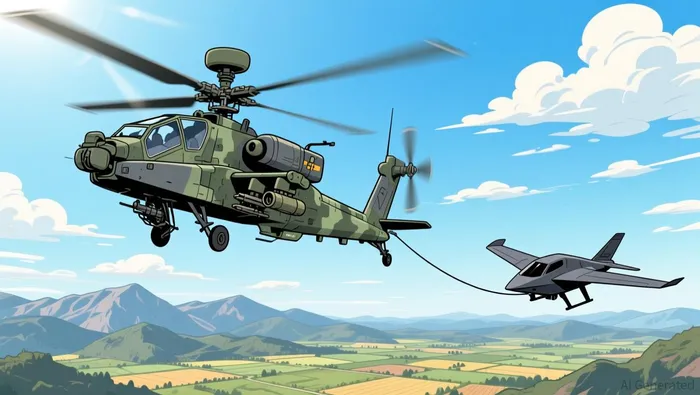 . , enabling long-range reconnaissance, SIGINT, and electronic warfare missions from a safe distance.
The Apache is also undergoing a fleet-wide modernization. The 1st Armored Division's Combat Aviation Brigade has begun transitioning from the AH-64D to the AH-64E variant, a move that enhances performance and integration with joint and unmanned systems. This shift reflects the military's growing emphasis on multi-domain operations, where the Apache serves as a critical link between air, land, and digital warfare.
The Apache's continued relevance is also evident in its global adoption. For instance, Poland is on track to become the second-largest operator of Apache helicopters, a strategic move that strengthens NATO's eastern flank. As defense strategies evolve, the Apache's role in counter-drone operations and multi-domain coordination will likely expand, making it a foundational asset for years to come.
How Apache Helicopters Are Adapting to Modern Threats
Apache helicopters are increasingly being used in roles that extend beyond traditional air-to-ground attacks. In recent operations, the Apache has demonstrated its effectiveness in countering unmanned aerial systems (UAS) through high-speed interception and precision strikes. This capability is especially important as adversaries increasingly use small, fast-moving drones to evade traditional air defense systems. The Apache's speed of over 180 miles per hour and advanced targeting systems allow it to neutralize these threats rapidly.
The U.S. Army's recent test of the Apache launching an Altius 700 drone underscores this shift. The Altius 700, , can perform reconnaissance, electronic warfare, and SIGINT missions. By integrating this uncrewed platform with the Apache, the military is expanding its reach in contested environments without exposing crews to direct threats. This capability is particularly valuable in scenarios where enemy forces attempt to deny access to key terrain or disrupt supply lines.
The Apache's modernization also includes improved digital systems and enhanced integration with joint partners. These upgrades allow for better coordination between air and ground forces, enabling more precise targeting and real-time situational awareness. This is crucial in an era where battles are fought across multiple domains—air, land, sea, and cyber—and where the ability to share information in real time can determine mission success.
What This Means for U.S. and Allied Defense Strategies
The Apache's evolving role has broader implications for U.S. and allied defense strategies. As seen in the Strait of Hormuz and Eastern Europe, the Apache is a key asset in securing critical infrastructure and deterring aggression. Its ability to operate in contested airspace and engage multiple types of threats makes it a valuable tool in both conventional and asymmetric warfare according to recent analysis.
For NATO partners, the Apache's growing adoption—particularly by countries like Poland— enhances regional defense capabilities and interoperability. This is especially important in areas like the Eastern Flank, where potential adversaries are developing advanced air defense systems that could neutralize traditional fixed-wing aircraft. By equipping their forces with Apache helicopters, NATO allies are better positioned to respond to emerging threats and maintain operational flexibility.
On the global stage, the Apache's versatility and modernization efforts reflect a broader trend in military technology. As nations invest in uncrewed systems and multi-domain warfare, platforms like the Apache will continue to evolve to meet new challenges according to military analysts. This trend is likely to shape defense spending and procurement decisions in the coming years, with militaries prioritizing platforms that can operate across a range of environments and missions as defense experts note.
For investors and analysts, the Apache's continued relevance highlights the importance of modernization and adaptability in the defense sector. As the U.S. and its allies continue to refine their strategies, platforms like the Apache will remain at the forefront of military innovation and operational effectiveness according to defense industry reports.

Stay ahead of the market.
Get curated U.S. market news, insights and key dates delivered to your inbox.


AInvest
PRO
AInvest
PRO



Comments
No comments yet