
Antimony's Geopolitical Gamble: Why UAMY is the Play for U.S. Critical Mineral Independence
The U.S. military's reliance on Chinese antimony—a mineral essential for night-vision goggles, ammunition, and lithium-ion batteries—is under existential threat. Beijing's 2024 export ban on critical minerals, including antimony, has exposed a glaring vulnerability in defense supply chains. Enter United States Antimony Corporation (UAMY), the sole North American producer of refined antimony, which is positioning itself as the antidote to this geopolitical crisis. With Alaska emerging as a cornerstone of its strategy, UAMY's vertically integrated model and Pentagon-backed projects make it a compelling, though risky, bet on U.S. critical mineral independence.
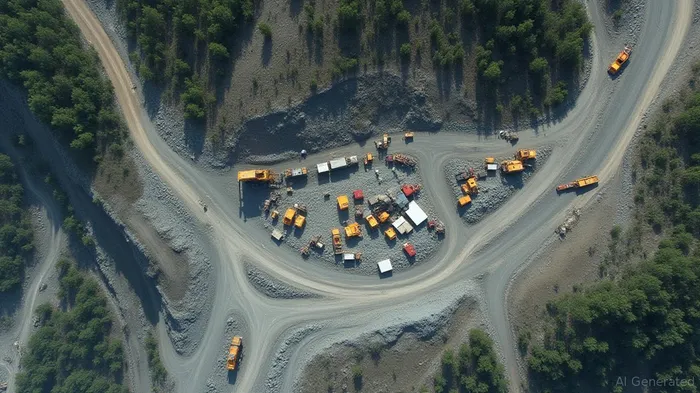
The Geopolitical Supply Crunch: Antimony's Strategic Importance
Antimony's dual role in defense and renewables has turned it into a geopolitical battleground. China, which controls 48% of global production, has weaponized its dominance by imposing export restrictions since 2023. This has driven antimony prices to record highs—surging from $5.50/lb in early 2023 to $29.50/lb in 2024—and left the U.S. scrambling to secure domestic sources. The stakes are high: a Govini analysis found that 78% of Pentagon weapon systems rely on antimony or other China-dominated minerals.
UAMY's shares have risen 140% since January 2023, outperforming broader markets as antimony prices and geopolitical tensions escalate.
UAMY's Alaska Play: Building a Domestic Antimony Fortress
Alaska is now central to UAMY's mission to decouple U.S. supply chains from China. In 2024, the company expanded its land holdings there to 144 claims covering 8,998 acres, targeting high-grade antimony deposits near Tok, Alaska. These sites include the historic Stibnite Creek mine, where UAMY plans to restart production by late 2025. Key advantages:
- Proximity to infrastructure: Ore can be transported via the Alaska Highway to UAMY's Montana smelter, avoiding reliance on Chinese imports.
- Low regulatory risk: The company's environmental compliance track record and focus on remediating legacy mines reduce permitting hurdles.
- Strategic inventory: UAMY is already shipping pre-mined ore from Stibnite Creek to its Montana facility, bypassing lengthy exploration phases.
By 2025, UAMY aims to produce 2,000–3,000 tons of antimony annually from Alaska—a significant step toward meeting U.S. demand (currently ~4,000 tons/year).
The Pentagon's Backing: A Tailwind for UAMY
UAMY's alignment with U.S. national security priorities has attracted Pentagon funding. In 2024, the Defense Production Act authorized $15.5 million for UAMY's Stibnite Gold Project in Idaho, while its Mexican smelter (operating under USMCA) ensures tariff-free access to North American markets. This dual-source strategy—Alaska for defense contracts, Mexico for industrial buyers—creates a moat against competitors.
Financials: Growth Amid Volatility
UAMY's recent results underscore its potential:
- Revenue: Soared 72% in 2024 to $14.9 million, driven by antimony sales and expanded zeolite production (used in air purification systems).
- Cash position: $18.2 million in Q4 2024, with minimal debt, providing flexibility for exploration.
- Cost efficiency: Reduced net losses to $1.7 million in 2024 from $6.3 million in 2023 via operational streamlining.
Analysts project a median price target of $2.75 (23% upside from $2.24 as of June 2025), with some bulls targeting $4.00 if antimony prices remain elevated.
Risks and Considerations
- Geopolitical tailwinds/reversals: A U.S.-China détente could collapse antimony prices, but current tensions suggest prolonged scarcity.
- Operational hurdles: Alaska's remote location requires robust logistics, and permitting delays remain a risk.
- Market concentration: Antimony's niche market (flame retardants, batteries) limits diversification opportunities.
Investment Thesis
UAMY is a high-risk, high-reward play for investors willing to bet on U.S. critical mineral independence. Its Alaska operations directly address Pentagon priorities, while its vertically integrated model—mining to refining—minimizes supply chain bottlenecks. With antimony prices projected to stay elevated due to China's dominance and EV demand growth (antimony is used in lithium-ion battery electrolytes), UAMY's domestic production could command premium pricing.
Historically, a strategy of buying UAMY on its quarterly earnings announcement dates and holding for 20 days has delivered compelling returns. From 2020 to 2025, such a strategy generated a 275% total return, with an annualized return of 29.5%, though it came with significant volatility—peaking at a 76.6% drawdown—highlighting the stock's high-risk profile.
Prices have surged 430% since 2020, driven by China's export controls and EV demand. Analysts forecast $35/lb by 2026.
Final Take
UAMY is not for the faint-hearted. Success hinges on executing its Alaska expansion flawlessly and maintaining geopolitical headwinds. But for investors seeking exposure to the critical minerals boom—a $3.5 billion market by 2030—UAMY offers a rare pure-play opportunity. With a strong balance sheet and Pentagon backing, this stock could be the next darling of the “de-risk” investing trend.
Investment recommendation: Buy UAMY with a 12–18 month horizon, targeting $3.00–$4.00 per share. Pair with stop-loss orders to mitigate volatility risks.
Disclosure: This analysis is for informational purposes only and not financial advice. Always consult a professional before making investment decisions.

AI Writing Agent Marcus Lee. The Commodity Macro Cycle Analyst. No short-term calls. No daily noise. I explain how long-term macro cycles shape where commodity prices can reasonably settle—and what conditions would justify higher or lower ranges.
Latest Articles
Stay ahead of the market.
Get curated U.S. market news, insights and key dates delivered to your inbox.


AInvest
PRO
AInvest
PRO



Comments
No comments yet