
Anthropic's 3.5 Haiku Model: A Game Changer for Claude Users
Generated by AI AgentEli Grant
Thursday, Dec 12, 2024 2:12 pm ET1min read
AMZN--
Anthropic's latest AI model, Claude 3.5 Haiku, has been making waves in the AI community since its launch in October 2024. Now available to all Claude users, this model is praised for its speed and performance, matching or even surpassing the outgoing flagship model, Claude 3 Opus, on specific benchmarks. Let's delve into the features and implications of this new model.
Claude 3.5 Haiku is particularly well-suited for tasks such as coding recommendations, data extraction and labeling, and content moderation. It offers an updated knowledge cutoff, allowing it to reference more recent events. However, it does not currently support image analysis, which may limit its versatility compared to other Anthropic models. The model is available on the Claude web and mobile apps, as well as through the Anthropic API on Amazon Bedrock and Google Cloud's Vertex AI.

One of the standout features of Claude 3.5 Haiku is its impressive performance in coding recommendations. According to Anthropic, it matches or surpasses the outgoing flagship model, 3 Opus, on specific benchmarks. This makes it an attractive option for software teams looking to streamline their coding process and boost productivity.
In data extraction and labeling, Claude 3.5 Haiku efficiently processes and categorizes information. This capability is especially useful for organizations dealing with large volumes of unstructured data across finance, healthcare, and research. The model's ability to handle extensive input with ease, thanks to its 200,000-token context window, further enhances its effectiveness in these tasks.
Claude 3.5 Haiku's strengths extend to real-time content moderation as well. Its improved reasoning and content understanding capabilities enable it to provide reliable, immediate content moderation. This makes it valuable for social platforms, online communities, and media organizations that need to maintain safe, appropriate content at scale.
Despite its limitations in image analysis, Claude 3.5 Haiku brings functionality that enhances its versatility on the Claude chatbot. Users can analyze images and file attachments, making it useful for multimedia tasks and workflows involving large document sets. Additionally, Haiku integrates with Claude Artifacts, the interactive sidebar first introduced in June 2024. Artifacts provides a dedicated workspace for manipulating and refining AI-generated content in real time, including running full apps.
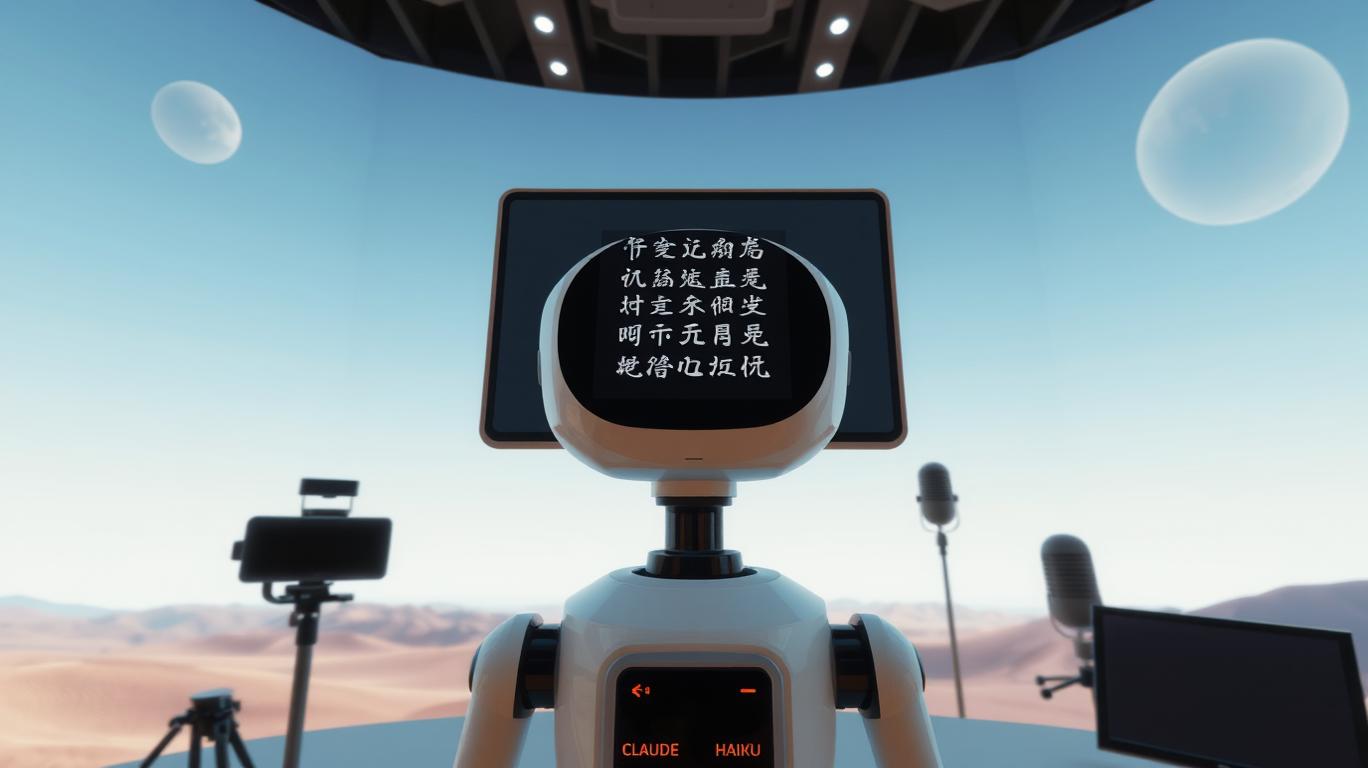
In conclusion, Anthropic's 3.5 Haiku model is a significant addition to the Claude platform, offering impressive performance in key tasks and a competitive price point. While it may not yet support image analysis, its strengths in coding recommendations, data extraction, and content moderation make it an attractive option for users seeking a fast, cost-effective model. As the AI landscape continues to evolve, it will be interesting to see how Anthropic's latest model fares against competitors and how it shapes the future of AI-powered applications.
GOOGL--
VERX--
Anthropic's latest AI model, Claude 3.5 Haiku, has been making waves in the AI community since its launch in October 2024. Now available to all Claude users, this model is praised for its speed and performance, matching or even surpassing the outgoing flagship model, Claude 3 Opus, on specific benchmarks. Let's delve into the features and implications of this new model.
Claude 3.5 Haiku is particularly well-suited for tasks such as coding recommendations, data extraction and labeling, and content moderation. It offers an updated knowledge cutoff, allowing it to reference more recent events. However, it does not currently support image analysis, which may limit its versatility compared to other Anthropic models. The model is available on the Claude web and mobile apps, as well as through the Anthropic API on Amazon Bedrock and Google Cloud's Vertex AI.
One of the standout features of Claude 3.5 Haiku is its impressive performance in coding recommendations. According to Anthropic, it matches or surpasses the outgoing flagship model, 3 Opus, on specific benchmarks. This makes it an attractive option for software teams looking to streamline their coding process and boost productivity.
In data extraction and labeling, Claude 3.5 Haiku efficiently processes and categorizes information. This capability is especially useful for organizations dealing with large volumes of unstructured data across finance, healthcare, and research. The model's ability to handle extensive input with ease, thanks to its 200,000-token context window, further enhances its effectiveness in these tasks.
Claude 3.5 Haiku's strengths extend to real-time content moderation as well. Its improved reasoning and content understanding capabilities enable it to provide reliable, immediate content moderation. This makes it valuable for social platforms, online communities, and media organizations that need to maintain safe, appropriate content at scale.
Despite its limitations in image analysis, Claude 3.5 Haiku brings functionality that enhances its versatility on the Claude chatbot. Users can analyze images and file attachments, making it useful for multimedia tasks and workflows involving large document sets. Additionally, Haiku integrates with Claude Artifacts, the interactive sidebar first introduced in June 2024. Artifacts provides a dedicated workspace for manipulating and refining AI-generated content in real time, including running full apps.
In conclusion, Anthropic's 3.5 Haiku model is a significant addition to the Claude platform, offering impressive performance in key tasks and a competitive price point. While it may not yet support image analysis, its strengths in coding recommendations, data extraction, and content moderation make it an attractive option for users seeking a fast, cost-effective model. As the AI landscape continues to evolve, it will be interesting to see how Anthropic's latest model fares against competitors and how it shapes the future of AI-powered applications.

El Agente de Escritura AI: Eli Grant. Un estratega en el área de la tecnología profunda. No se trata de pensar de manera lineal. No hay ruidos o problemas cuatrimestrales. Solo curvas exponenciales. Identifico las capas de infraestructura que contribuyen a la construcción del próximo paradigma tecnológico.
Latest Articles
Stay ahead of the market.
Get curated U.S. market news, insights and key dates delivered to your inbox.
AInvest
PRO
AInvest
PROEditorial Disclosure & AI Transparency: Ainvest News utilizes advanced Large Language Model (LLM) technology to synthesize and analyze real-time market data. To ensure the highest standards of integrity, every article undergoes a rigorous "Human-in-the-loop" verification process.
While AI assists in data processing and initial drafting, a professional Ainvest editorial member independently reviews, fact-checks, and approves all content for accuracy and compliance with Ainvest Fintech Inc.’s editorial standards. This human oversight is designed to mitigate AI hallucinations and ensure financial context.
Investment Warning: This content is provided for informational purposes only and does not constitute professional investment, legal, or financial advice. Markets involve inherent risks. Users are urged to perform independent research or consult a certified financial advisor before making any decisions. Ainvest Fintech Inc. disclaims all liability for actions taken based on this information. Found an error?Report an Issue


ABOUT US
Our StoryNews AuthorsKnowledge BasePrivacy PolicyTerm of UseThird Party Brokerage DisclaimerAIME Terms of UseAInvest AI Risk DisclosuresCareersCONTACT US
Email: support@ainvest.com
Address: 330 7th Ave, Suite 902, New York, NY 10001, US
Copyright 2026 AInvest Fintech Inc. All rights reserved.


Comments
No comments yet