
Anthropic CEO Warns Of National Security Risks From AI Chip Sales
 Aime Summary
Anthropic CEO Dario Amodei has publicly criticized the U.S. administration and chipmakers for approving the sale of advanced AI chips to China, warning of national security risks. The U.S. has begun to loosen export restrictions, allowing companies like NvidiaNVDA-- to sell H200 AI chips to Chinese customers, a move Amodei compares to providing nuclear weapons to a rival. Amodei argues that the U.S. maintains a technological edge in chip production and that easing export controls could undermine this advantage, accelerating China's AI development. Nvidia CEO Jensen Huang is scheduled to visit China in late January to engage with potential customers and navigate the market amid ongoing export policy changes. Investors are watching how the U.S. balances economic interests and national security in this high-stakes geopolitical and technological contest.
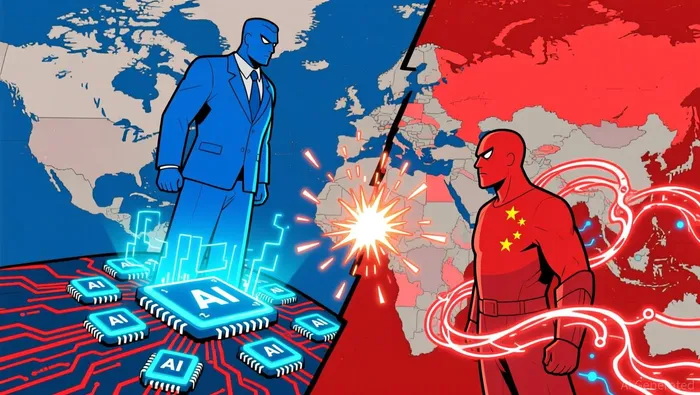
The AI arms race has become more than just a race for market share—it's a battle for global influence and control over the future of technology. Anthropic CEO Dario Amodei has positioned himself at the center of this debate by sounding the alarm on the risks of allowing advanced AI chips to reach Chinese hands. At the World Economic Forum in Davos, Amodei likened the move to selling nuclear weapons to North Korea, a powerful metaphor that underscores his deep concerns about the strategic and national security implications.
The U.S. administration has recently permitted companies like Nvidia to sell their H200 AI chips to approved Chinese customers, a shift that has drawn both support and criticism. Nvidia, a key partner in Anthropic's AI infrastructure, has long advocated for the removal of such restrictions, arguing that limiting access to advanced chips only pushes China to develop its own alternatives. However, Amodei and others warn that even slightly less advanced chips can significantly boost China's AI capabilities, allowing it to catch up in a field where the U.S. currently leads.
Still, the decision reflects a broader industry trend. Nvidia CEO Jensen Huang is set to visit China in late January to strengthen ties in what remains a crucial market for the company's AI products. His visit highlights the tension between geopolitical concerns and commercial interests. While U.S. policymakers weigh the long-term risks of AI proliferation, chipmakers are eager to tap into a market that has long been a source of revenue and growth.
Why Is Anthropic's CEO Warning Against AI Chip Sales To China?
Anthropic's CEO is not alone in his concerns. Other AI and tech leaders have also raised red flags about the implications of AI technology falling into the hands of adversarial nations. Amodei's warnings are grounded in his belief that the U.S. maintains a critical edge in chip manufacturing and AI development, and that easing export controls could erode this lead. He has previously called the decision to allow chip sales to China the "single most disastrous" move of the Trump administration.
Amodei argues that AI is not just a tool for business and productivity—it has the potential to reshape global power structures, intelligence capabilities, and the future of governance. By selling even slightly advanced chips to China, the U.S. risks enabling the development of AI systems that could be used in ways that challenge U.S. national interests, particularly in the context of authoritarian regimes.
What Are The Implications For Investors In AI And Chip Stocks?
For investors, the debate over AI chip exports underscores a growing tension between near-term economic incentives and long-term geopolitical risks. U.S. chipmakers like Nvidia and AMD stand to benefit from expanded access to the Chinese market, as they can now sell more advanced chips to approved customers. However, these companies also face the risk of increased scrutiny and potential regulatory backlash if these exports are perceived as compromising national security.
At the same time, the rise of AI companies like Anthropic is reshaping investor sentiment in the broader tech and software industry. The launch of Anthropic's Cowork AI platform has raised questions about how AI innovations will disrupt traditional software models, with shares of companies like Atlassian and ServiceNow already reacting to these concerns. As AI companies continue to expand their reach into enterprise and consumer markets, the software landscape may undergo a major transformation, with investors closely watching how traditional players adapt.
What Should Investors Watch For Next?
The coming months will be crucial for understanding how the U.S. and its tech firms navigate this complex landscape. For one, the administration's final stance on AI chip exports will shape not only the market opportunities for U.S. chipmakers but also the trajectory of global AI development.
Meanwhile, the success of AI platforms like Anthropic's Cowork will be an indicator of how AI is reshaping business and productivity tools. If these systems gain widespread adoption, they could challenge traditional software models in ways that investors have yet to fully appreciate.
The AI arms race is far from over. And for investors, the next few quarters will reveal how this technological and geopolitical contest plays out on both the market and the world stage.

Stay ahead of the market.
Get curated U.S. market news, insights and key dates delivered to your inbox.


AInvest
PRO
AInvest
PRO



Comments
No comments yet