
Anthropic's $50 Billion AI Infrastructure Expansion: A Strategic Catalyst for Tech Equity Portfolios


 Aime Summary
Market Context: A Sector in Turmoil and Transition
The AI sector has faced headwinds in 2025, exemplified by C3.ai's struggles. The company's 54% stock price decline and $116.8 million net loss in Q1 2025, as reported by a Tech2 article, have amplified sector-wide volatility, with ripple effects extending to crypto AI assets like the COAI Index, which has seen a significant decline as noted in a Bitget report. These challenges highlight the fragility of AI-driven equities amid leadership transitions and regulatory scrutiny, such as the CLARITY Act's impact on crypto markets, as described in a Grand View Research report. Against this backdrop, Anthropic's expansion represents a bold counterpoint-a bet on long-term growth through infrastructure dominance.
Anthropic's Strategic Play: Scale, Partnerships, and Timelines
Anthropic's collaboration with Fluidstack to build custom data centers in Texas and New York, as reported by a Yahoo Finance article, is a calculated move to secure dedicated capacity beyond its existing cloud partnerships with AmazonAMZN-- and GoogleGOOGL--. The first facilities are slated to come online in 2026, according to a FindArticles piece, with the project expected to create 800 permanent jobs and 2,400 construction roles, as detailed in the Yahoo Finance article. By tailoring infrastructure to its Claude models' needs, Anthropic aims to reduce latency and optimize costs-a critical advantage in an industry where performance and efficiency are paramount.
This expansion also aligns with a broader industry trend: the race for AI capacity. Meta and a Stargate consortium are reportedly pursuing even larger investments, as reported in the FindArticles piece, signaling that infrastructure will be a defining battleground for AI leadership.
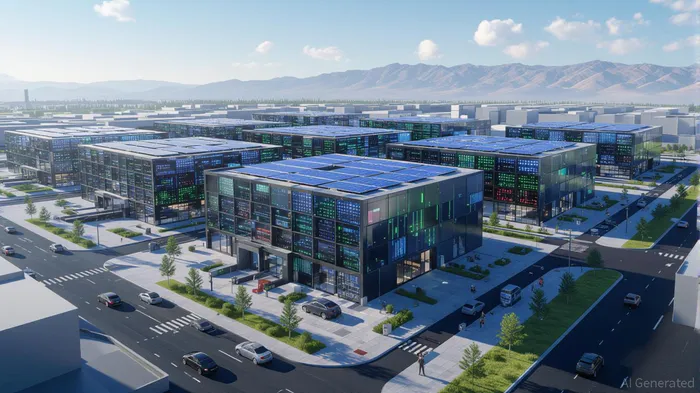
The AI Infrastructure Market: A $223 Billion Opportunity
The global AI infrastructure market is projected to grow at a 30.4% CAGR from 2024 to 2030, reaching $223.45 billion by 2030, according to a Deloitte report. This surge is driven by demand for HPC in AI training and cloud-based platforms across healthcare, finance, and manufacturing, as described in the Deloitte report. Energy-efficient computing is a key differentiator, with innovations like NVIDIA's advanced AI chips and liquid cooling systems addressing the sector's voracious energy appetite, as noted in the Deloitte report.
However, challenges persist. U.S. grid capacity and supply chain bottlenecks threaten to slow deployment, as discussed in a GuruFocus article, underscoring the need for regulatory reforms and technological breakthroughs. Early movers like Anthropic and Fluidstack, with their focus on capital-efficient approaches, as described in the Yahoo Finance article, are well-positioned to navigate these hurdles.
Energy-Efficient Computing: A Competitive Edge
Anthropic's emphasis on cost-effective infrastructure mirrors broader industry shifts toward sustainability. For example, C3.ai's partnership with PwC to deploy AI-powered energy management solutions highlights the growing intersection of AI and green technology, as reported in the GuruFocus article. Similarly, geothermal cooling and liquid-cooled servers are gaining traction as data centers seek to reduce their carbon footprints, as noted in the GuruFocus article.
Investors should note that companies excelling in energy-efficient computing-such as NVIDIA and Fluidstack-may outperform peers in the long term. These firms not only address environmental concerns but also mitigate operational costs, a critical factor in an industry where energy expenses can account for 20-30% of total costs, as detailed in the GuruFocus article.
Investment Implications and Strategic Recommendations
Anthropic's expansion reinforces the importance of AI infrastructure as a strategic asset. For tech equity portfolios, this means prioritizing companies with:
1. Scalable infrastructure: Firms like Anthropic and Fluidstack that can rapidly deploy custom data centers.
2. Energy innovation: Leaders in chip design (e.g., NVIDIA) and cooling technologies.
3. Regulatory agility: Entities capable of navigating evolving policies, such as the CLARITY Act, as discussed in the Grand View Research report.
Diversification remains key. While Anthropic's project is ambitious, the sector's volatility-exemplified by C3.ai's struggles, as reported by the Tech2 article-warrants caution. Investors should balance high-growth AI plays with hedging strategies, such as exposure to energy-efficient equities or AI-focused ETFs.
Conclusion
Anthropic's $50 billion bet on U.S. data centers is more than a capital play-it's a statement of intent in a sector poised for explosive growth. As AI infrastructure becomes the backbone of the digital economy, early movers with scalable, energy-efficient solutions will define the next decade of innovation. For investors, the challenge lies in identifying these leaders while mitigating sector-specific risks. In this high-stakes race, patience and strategic diversification may prove as valuable as technical prowess.

Delivering real-time insights and analysis on emerging financial trends and market movements.
Latest Articles
Stay ahead of the market.
Get curated U.S. market news, insights and key dates delivered to your inbox.
AInvest
PRO
AInvest
PRO



Comments
No comments yet