
Antarctica Evacuation Highlights RNZAF's Precision in Extreme Conditions at McMurdo Station
 Aime Summary
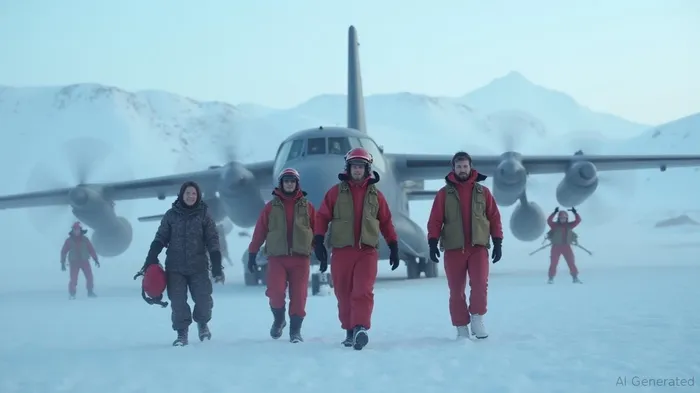
The Royal New Zealand Air Force recently executed a high-risk medical evacuation from the United States' McMurdo Station in Antarctica, highlighting the challenges of operating in one of the harshest environments on the planet. The operation was initiated following a medical evacuation request from the United States National Science Foundation due to three individuals requiring urgent medical attention that was not available at the remote station.
The flight, handled by the crew of a C-130J Hercules, demanded extraordinary precision and determination. The mission took place under conditions of round-the-clock darkness, dangerous ice landings, and temperatures plummeting to -24 degrees Celsius (-11 degrees Fahrenheit), factors that combine to make mid-winter flights to Antarctica among the most formidable missions. Given the complete absence of airfields for diversion once the aircraft passes a certain latitude, the risk was substantial, emphasizing the need for detailed weather analyses and runway preparation at McMurdo Station prior to departure.
Andy Scott, an Air Commodore with the Royal New Zealand Air Force, emphasized the extreme difficulty of these operations due to the need for night vision goggles amid ever-changing weather conditions that complicate accurate forecasting. The preparedness required involves the creation and grooming of a runway on the ice by staff from the United States Antarctic Program Winter Team, ensuring safety despite the unpredictable environment and adding to the operational complexity.
Melissa Sweeney, the US Chargé d’Affaires in New Zealand, expressed deep appreciation for the air force’s efforts in conducting the mission “flawlessly,” recognizing the technical demands and bravery required under such unforgiving circumstances. The aircraft, upon arrival in Antarctica, received swift “hot refueling” to maintain engine warmth while refueling on the ice—a critical step to ensuring the safe return journey.
This particular evacuation marks a continuation of the RNZAF’s ability to navigate the logistical and environmental challenges associated with Antarctic operations, following similar rescues in previous years. The patients evacuated from McMurdo Station were accompanied by medical personnel, including a doctor, on the flight, allowing for immediate medical attention as the aircraft headed back to Christchurch, New Zealand. Upon arrival, the individuals received further needed medical treatment.
The entire operation, spanning approximately 19.5 hours, underscores the skill level and readiness of the Kiwi aircrews and their commitment to international collaboration in the region. The success in carrying out such missions not only reinforces their operational capabilities but also serves as a testament to their partnership with the U.S. in managing emergency scenarios in one of the world's most challenging environments.

Stay ahead of the market.
Get curated U.S. market news, insights and key dates delivered to your inbox.


AInvest
PRO
AInvest
PRO



Comments
No comments yet