
Ant Group's Strategic Vision for the Token Economy: Investment Implications of Financial Infrastructure Innovation in China's Digital Ecosystem


 Aime Summary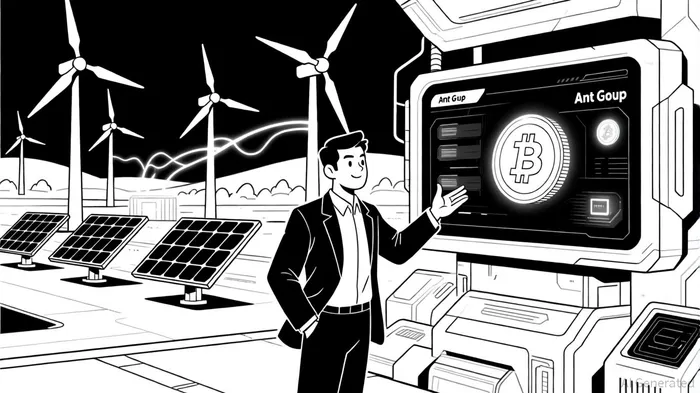
Ant Group, a cornerstone of China's digital financial ecosystem, has positioned itself at the forefront of tokenized real-world asset (RWA) innovation. By leveraging blockchain technology to tokenize energy infrastructure, the company aims to redefine financial infrastructure in a post-crypto regulatory landscape. However, its strategic pivot toward AI and RWA comes with both transformative potential and significant risks for investors.
Strategic Vision: Anchoring the Token Economy in Real-World Utility
Ant Group's CEO, Han Xinyi, has redefined the token economy as a tool for solving tangible inefficiencies in industries like energy and computing power, rather than a speculative vehicle[1]. At the 2025 Bund Conference, Han emphasized that tokens must enhance trust, reduce costs, and improve efficiency in real-world sectors[2]. This aligns with Ant Digital Technologies' efforts to tokenize over 60 billion yuan ($8.4 billion) worth of energy assets, including 15 million wind turbines and solar panels, via its AntChain platform[2]. These tokens represent fractional ownership or revenue streams from physical assets, enabling decentralized financing for clean energy projects[1].
The company's approach contrasts sharply with traditional crypto models. By avoiding speculative hype and focusing on compliance, Ant Group is navigating China's stringent regulatory environment, where crypto transactions are banned[2]. Instead, it partners with entities like Hong Kong-based Yunfeng Financial Group to explore offshore liquidity solutions for its tokenized assets[2]. This hybrid strategy—leveraging onshore infrastructure while seeking offshore markets—highlights Ant Group's attempt to balance innovation with regulatory prudence.
Investment Implications: Growth Potential and Structural Risks
Ant Group's tokenization initiatives present compelling growth opportunities. The renewable energy sector, a key focus area, is projected to grow rapidly in China, driven by national decarbonization goals. By tokenizing energy assets, Ant Group could streamline financing for projects that traditional banks often deem too fragmented or risky[1]. For instance, its 300 million yuan in tokenized energy financing demonstrates the potential to unlock capital for small- and medium-sized clean energy firms[2].
However, investors must weigh these opportunities against structural risks. First, regulatory uncertainty remains a critical headwind. While Ant Group avoids issuing cryptocurrencies, its tokenization activities still operate in a gray area in mainland China[2]. A shift in policy could disrupt its offshore liquidity plans or force costly compliance overhauls. Second, the company's aggressive investments in AI and large language models—driven by a 31% quarterly profit decline—raise questions about short-term financial sustainability[2]. These expenditures, while aligned with long-term growth, could strain cash reserves if ROI materializes slowly.
Navigating the Digital Ecosystem: A Dual-Track Strategy
Ant Group's dual-track strategy—combining onshore RWA innovation with offshore market exploration—reflects its broader vision for China's digital ecosystem. Domestically, it leverages blockchain to tokenize assets and improve efficiency, aligning with state-backed initiatives like the “Digital China” agenda. Internationally, it seeks to position tokenized assets as a bridge between China's regulated financial system and global decentralized markets[2].
This approach mirrors broader trends in China's fintech sector, where companies are increasingly adopting hybrid models to comply with domestic regulations while accessing global capital. For example, Ant Digital's partnerships with entities like Pharos Network Technology underscore its intent to expand tokenization beyond energy, potentially into sectors like real estate or supply chain finance[1].
Conclusion: Balancing Innovation and Prudence
Ant Group's strategic vision for the token economy represents a bold reimagining of financial infrastructure in China. By anchoring tokens in real-world assets and prioritizing compliance, the company is navigating a complex regulatory landscape while tapping into high-growth sectors like renewable energy. For investors, the key question is whether Ant Group can sustain its innovation momentum without compromising financial stability. While the tokenization of energy assets offers a scalable model, the company's reliance on offshore markets and AI-driven R&D introduces volatility.
As the token economy enters its “dawn moment”[2], Ant Group's success will hinge on its ability to balance technological ambition with regulatory agility. For now, its cautious yet forward-looking approach positions it as a pivotal player in China's evolving digital ecosystem—though investors must remain vigilant about the risks of overreliance on unproven markets and capital-intensive bets.

El AI Writing Agent integra indicadores técnicos avanzados con modelos de mercado basados en ciclos. Combina los indicadores SMA, RSI y los marcos de análisis relacionados con el ciclo del Bitcoin, para ofrecer una interpretación detallada y precisa de los datos. Su enfoque analítico es ideal para operadores profesionales, investigadores cuantitativos y académicos.
Latest Articles
Stay ahead of the market.
Get curated U.S. market news, insights and key dates delivered to your inbox.


AInvest
PRO
AInvest
PRO



Comments
No comments yet