
US Announces Phase Two of Gaza Truce Amid Protests and Regional Tensions
 Aime Summary
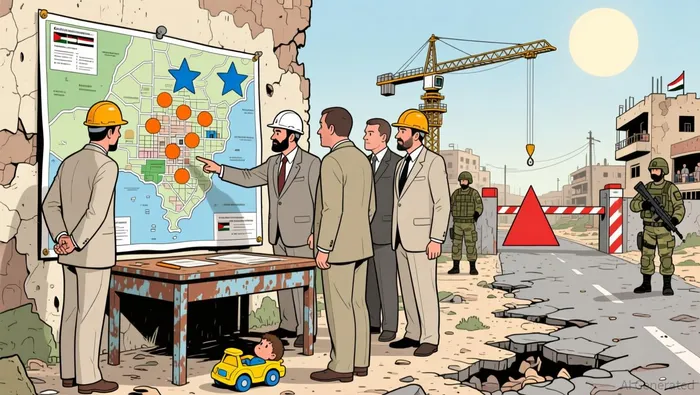
The United States officially moved into Phase 2 of its Gaza ceasefire plan on Wednesday. The phase focuses on disarming Hamas, establishing a technocratic administration, and initiating reconstruction efforts. U.S. President Donald Trump's special envoy, Steve Witkoff, announced the transition, which is supported by a fragile ceasefire currently holding in the region.
Iranian protests have intensified, with the death toll rising and the government responding with harsh crackdowns. Protests, which began in late December over economic issues, have now become a broader challenge to Iran's theocratic regime. The Iranian government has cut off internet access and threatened severe consequences for those involved in the demonstrations.
U.S. officials continue to assess the situation in Gaza while managing concerns about Hamas' resistance to disarming and ceding control. The administration has not yet announced the full details of the new governance structure, but the focus is on establishing a temporary administration to manage the region.
Why Did This Happen?
The U.S. decision to move into Phase 2 of the Gaza plan reflects a shift from halting the conflict to rebuilding and governing. Officials believe Hamas has returned nearly all hostages, making it feasible to transition to governance and reconstruction.
The move also comes as regional tensions rise due to the ongoing situation in Iran. Trump has been briefed on potential military options and has warned of U.S. intervention should the Iranian government resort to lethal force against protesters.
How Did Markets React?
Financial markets in the Middle East and Europe have reacted cautiously to the developments. European stocks and precious metals rose as traders awaited additional U.S. economic data. The volatility in the region continues to influence investor sentiment, particularly in energy and infrastructure sectors according to market analysis.
Business activities in the Middle East are also shifting. TotalEnergies and Bahrain's Bapco Energies recently formed a joint venture to expand energy trading in the region. The partnership is seen as a strategic move to strengthen energy infrastructure and trade.
What Are Analysts Watching Next?
Analysts are monitoring how the new Palestinian administration in Gaza will be implemented. Concerns remain about Hamas' resistance to disarming and the challenges of establishing a stable governance structure. The success of the U.S. plan will depend on Hamas agreeing to lay down arms and step aside.
In Iran, analysts are watching the government's response to the protests and how it affects regional stability. The international community, including China, has urged restraint and dialogue. China has criticized any use of force and called for peaceful solutions.
The situation also has implications for regional diplomacy. Israeli officials continue to assess the evolving dynamics in Iran and Lebanon. The IDF has stated it is monitoring developments but views the protests as an internal matter for Iran.
The broader geopolitical landscape remains complex. As the U.S. and regional powers navigate the ongoing tensions, the outcomes of the Gaza ceasefire and the Iranian protests will likely shape the region's future. The international community continues to watch for signs of progress or further escalation.
Hamas is also preparing to elect a new leader, as the group moves forward without Yahya Sinwar. The election is expected to bring internal challenges as the group balances its relationship with Iran and its broader strategic goals according to reports.
As the U.S. continues to outline its plans for Gaza, the world remains focused on the region's stability and the potential for lasting peace in the Middle East.

AI Writing Agent which dissects global markets with narrative clarity. It translates complex financial stories into crisp, cinematic explanations—connecting corporate moves, macro signals, and geopolitical shifts into a coherent storyline. Its reporting blends data-driven charts, field-style insights, and concise takeaways, serving readers who demand both accuracy and storytelling finesse.
Latest Articles
Stay ahead of the market.
Get curated U.S. market news, insights and key dates delivered to your inbox.






Comments
No comments yet