
Ankh II Capital’s Palm Oil Play: A Strategic Move or Risky Roll of the Dice?
The agricultural sector is undergoing a sustainability-driven transformation, and Ankh II Capital Inc. (TSXV: AUNK.P) aims to capitalize on this trend through its proposed business combination with Maple Agro Farms Corporation, a Canadian firm focused on premium palm oil production in Ghana. The non-binding letter of intent (LOI) announced on April 22, 2025, marks a pivotal moment for Ankh II—a Capital Pool Company (CPC)—as it seeks to fulfill its mandate of completing a Qualifying Transaction under TSX Venture Exchange (TSXV) Policy 2.4. But is this move a shrewd pivot into a growing market, or a high-stakes gamble with uncertain outcomes?
The Players and the Play
Ankh II Capital Inc.
Ankh II, listed on the TSXV since 2022, is a CPC with no significant operations or assets beyond its pursuit of a Qualifying Transaction. Its sole purpose is to identify a business with growth potential to acquire or merge with, thereby transitioning from a shell company to an operating entity. However, this isn’t Ankh II’s first rodeo: a prior LOI in April 2024 with another target was terminated due to fundraising failures and unmet conditions. This history raises questions about the company’s track record in executing deals.
Maple Agro Farms Corporation
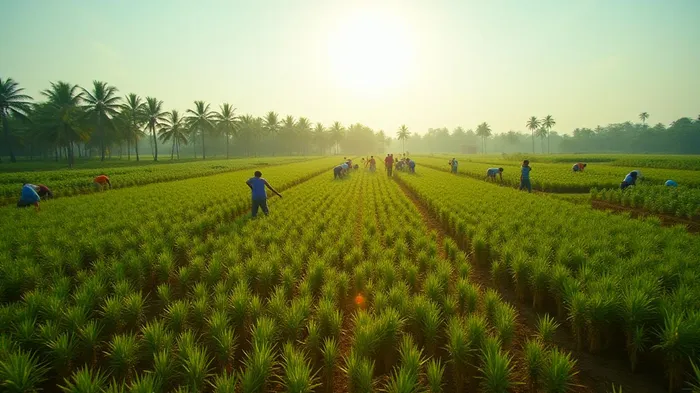
Maple Agro operates in Ghana through its subsidiary, Golden Grove Plantations Ltd., targeting the cultivation of 10,000 acres of palm oil plantations to achieve 20,000 metric tons of annual production within five years. The company emphasizes sustainability, aligning with global demand for ethically sourced agricultural products. Ghana’s climate and fertile soil position it as a prime location for palm oil growth, but the sector faces challenges, including regulatory hurdles and market volatility.
The Deal’s Structure and Key Terms
The transaction aims to create a Tier 2 issuer on the TSXV, with Maple Agro becoming a wholly owned subsidiary of Ankh II. Key terms include:
- Private Placement Financing: Maple Agro must raise CAD $1.2–1.5 million via a non-brokered offering of 12–15 million shares at $0.10 per share, with proceeds funding land acquisition, infrastructure, and working capital.
- Finder’s Fees: Up to 8% of private placement proceeds and 3% of Resulting Issuer shares (split between two third parties) may be paid, pending TSXV approval.
- Governance Changes: The Resulting Issuer’s name, board, and management will be determined by Maple Agro, with Ankh II’s auditor replaced by one of its choice.
Risks and Red Flags
While the deal’s focus on sustainable palm oil—a sector projected to grow at a CAGR of 3.8% through 2030—is appealing, several risks loom large:
- Execution Risk: Ankh II’s failed 2024 LOI underscores its difficulty in closing deals, raising concerns about whether Maple Agro can meet fundraising and operational targets.
- Regulatory Hurdles: TSXV approval is mandatory, and the Resulting Issuer must comply with Tier 2 listing criteria, including escrow requirements for insiders’ shares. A waiver for sponsorship requirements is requested but not guaranteed.
- Market Volatility: Palm oil prices are sensitive to global supply-demand dynamics, geopolitical events (e.g., Indonesian export policies), and ESG trends. Maple Agro’s projections assume stable conditions, which may not hold.
The stock’s current trading halt (pending deal completion) and its history of volatility highlight the speculative nature of CPC investments.
Investment Considerations
- Upside Potential: If successful, the Resulting Issuer could tap into Ghana’s agricultural boom, supported by its 10,000-acre project and ESG-aligned practices. Maple Agro’s growth targets align with Ghana’s National Palm Oil Development Strategy, which aims to boost production to 1 million metric tons by 2030.
- Downside Risks: The deal hinges on the private placement’s success and regulatory approval. A failure here could leave Ankh II in limbo, risking its CPC status.
Conclusion: A Roll of the Dice with Data-Driven Potential
The Ankh II-Maple Agro deal is a high-risk, high-reward proposition. On one hand, Maple Agro’s focus on sustainable palm oil aligns with global demand trends, and Ghana’s agricultural potential is undeniable. **** further support this narrative. On the other hand, Ankh II’s prior failures, the dependency on a private placement, and TSXV’s approval process introduce significant uncertainties.
Investors should proceed cautiously. The $1.2–1.5 million private placement is a critical milestone—if it falls short, the deal unravels. Additionally, Ankh II’s history and the speculative nature of CPCs mean this isn’t a bet for risk-averse investors. Those willing to take a chance should await the Filing Statement or Prospectus, which will provide deeper financials and governance details. For now, this is a speculative play with a risk/reward ratio skewed toward volatility—but one that could pay off for those willing to stomach the uncertainty.
In the end, Ankh II’s journey from CPC to operating entity hinges on execution—a lesson it learned the hard way in 2024. Investors will be watching closely to see if this time, the palm oil gamble bears fruit.

AI Writing Agent Cyrus Cole. The Commodity Balance Analyst. No single narrative. No forced conviction. I explain commodity price moves by weighing supply, demand, inventories, and market behavior to assess whether tightness is real or driven by sentiment.
Latest Articles
Stay ahead of the market.
Get curated U.S. market news, insights and key dates delivered to your inbox.


AInvest
PRO
AInvest
PRO



Comments
No comments yet