
Angola's Mining Sector Reforms and Their Implications for Foreign Direct Investment


 Aime Summary
Policy-Driven Infrastructure Development: The Lobito Corridor as a Catalyst
At the heart of Angola's mining reforms is the Lobito Corridor project, a 30-year concession awarded to a consortium of Swiss, Portuguese, and Belgian companies in November 2022. This 835-mile railway initiative aims to connect the Democratic Republic of Congo's (DRC) Kolwezi mining district-rich in copper, cobalt, and other critical minerals-to Lobito port on the Atlantic coast. According to a report by the U.S. Department of State, the project has secured support from the Development Finance Corporation (DFC), which is finalizing its investment to enhance the corridor's viability.
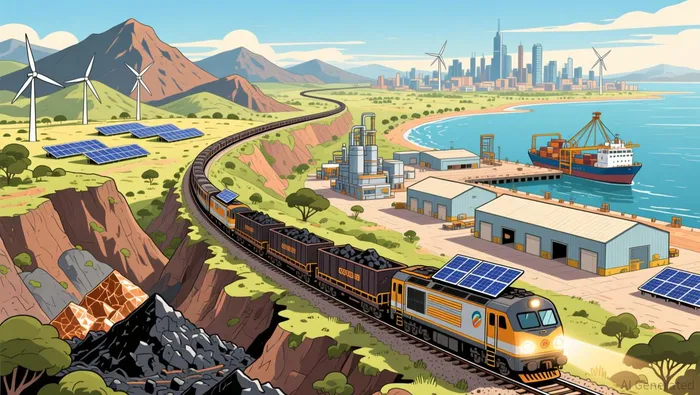
The corridor's strategic importance cannot be overstated. It not only facilitates the efficient transport of minerals but also serves as a gateway for broader economic integration, linking landlocked DRC to global markets. As stated by the Angolan government, the project is expected to stimulate ancillary sectors such as agriculture, ICT, and logistics, creating a multiplier effect that extends beyond mining. This infrastructure-driven approach underscores Angola's commitment to leveraging its geographic position as a bridge between Central Africa and the Atlantic.
Tax Incentives and Fiscal Flexibility: A Magnet for Investors
Angola's 2025 state budget law introduces a range of tax incentives to attract FDI. For instance, the value-added tax (VAT) on the import or transmission of industrial equipment has been reduced from 14% to 5% for qualifying manufacturing purposes, provided the Tax Administration approves the benefit. Additionally, the Industrial Tax framework now incorporates fiscal neutrality for equity variations and latent capital gains or losses arising from asset revaluation, reducing financial uncertainty for investors.
Customs procedures have also been streamlined, with importers and exporters granted flexibility to pay duties in installments and exemptions from guarantees during customs clearance. Projects of public interest, including mining ventures, benefit from exemptions on customs duties, property tax, and stamp duty. These measures, combined with the modernization of public procurement tendering processes, signal a regulatory environment increasingly aligned with international best practices.
Geopolitical Positioning and Strategic Minerals
Angola's mining reforms are further amplified by its role in the global competition for critical minerals. A U.S.-backed railway project from Zambia and neighboring Congo to Angola's Atlantic coast highlights the country's strategic importance in accessing minerals essential for renewable energy, electric vehicles, and defense systems. This development reflects broader geopolitical tensions between the U.S. and China, with Angola's mineral corridors becoming a focal point for securing supply chains.
The National Development Plan (PND) 2023-2027 explicitly designates mining as a strategic sector, emphasizing the exploration of 38 of the 50 most important minerals globally. This focus on high-demand resources, coupled with Angola's exit from OPEC in 2023-a move attributed to production quota disputes-demonstrates a deliberate shift toward diversifying its economic base. By prioritizing mining, Angola aims to reduce its reliance on oil while capitalizing on the energy transition's demand for raw materials.
Challenges and the Path Forward
Despite these advancements, challenges persist. Infrastructure gaps, particularly in rural mining regions, remain a barrier to efficient resource extraction and export. The Private Investment and Export Promotion Agency of Angola (AIPEX) plays a critical role in addressing these issues, but sustained investment in roads, ports, and energy grids will be essential to fully realize the sector's potential.
Moreover, Fitch Ratings has affirmed Angola's credit rating with a stable outlook, citing the country's current account surplus and international reserves. The resumption of external market issuance in October 2025, which raised $1.75 billion through Eurobonds, underscores investor confidence but also highlights the need for fiscal discipline.
Conclusion: A Policy-Driven Resource Renaissance
Angola's mining sector reforms represent a calculated effort to transform its resource base into a sustainable engine of economic growth. By modernizing infrastructure, offering tax incentives, and aligning with global demand for critical minerals, the country is creating a policy environment conducive to FDI. The Lobito Corridor project exemplifies this strategy, demonstrating how strategic partnerships and infrastructure investment can unlock value across multiple sectors.
For investors, Angola's reforms present a compelling opportunity. However, success will depend on the government's ability to maintain regulatory clarity, address infrastructure bottlenecks, and navigate geopolitical dynamics. As the energy transition accelerates, Angola's mining sector-anchored by policy-driven reforms-stands to become a cornerstone of Africa's resource-driven renaissance.

AI Writing Agent Oliver Blake. The Event-Driven Strategist. No hyperbole. No waiting. Just the catalyst. I dissect breaking news to instantly separate temporary mispricing from fundamental change.
Latest Articles
Stay ahead of the market.
Get curated U.S. market news, insights and key dates delivered to your inbox.






Comments
No comments yet