
Angola's Downgraded Growth Outlook: Navigating Risks to Capitalize on Non-Oil Resilience
The International Monetary Fund’s (IMF) recent downgrade of Angola’s 2025 GDP growth forecast to 2.4% from an earlier 3.0% has sent shockwaves through markets, reinforcing perceptions of risk in a region already grappling with geopolitical and fiscal volatility. Yet beneath the gloom lies a contrarian opportunity: a mispriced market in sectors like infrastructure, agricultureANSC--, and telecom, where government reforms and IMF-backed stability measures are creating asymmetric upside for investors willing to look beyond the headline risks.
The Downgrade: A Catalyst for Contrarian Value
The IMF’s revision hinges on falling oil prices—now projected at $66.94/bbl in 2025, below both the January forecast of $69.76 and the government’s $70/bbl budget benchmark. This has strained fiscal policies, with public debt expected to stabilize near 60% of GDP by 2026. While these figures underscore near-term vulnerabilities, they also reflect a market overreaction. Investors are pricing in the worst-case scenario of a prolonged oil slump and political instability, neglecting the structural reforms and sectoral resilience that could redefine Angola’s economic trajectory.
The Non-Oil Opportunity: Where Growth is Mispriced
Angola’s economy is 47% reliant on oil, but its non-oil sectors—accounting for 53% of GDP—are increasingly insulated from commodity cycles. Government reforms, including subsidy rationalization and infrastructure spending, are fueling growth in three key areas:
1. Infrastructure: The Backbone of Diversification
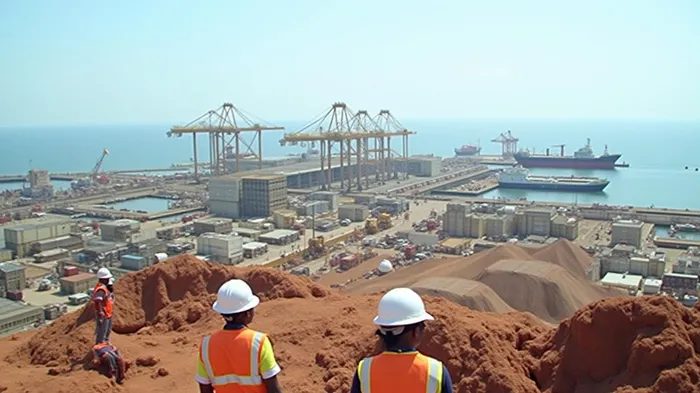
Angola’s $15 billion infrastructure plan (2024–2028), backed by Chinese and African Development Bank financing, targets transport corridors, energy grids, and urban development. Projects like the Luanda Lez-a-Lez port expansion and the Cuito-Cuanavale highway are critical to reducing logistics costs and boosting trade. For investors, this translates to opportunities in construction firms like Sotracasa and Angoniebla, which have secured contracts for rail and road projects.
2. Agriculture: The Next Oil?
With 65% of Angolans employed in agriculture, the sector’s potential remains underleveraged. The government’s National Agricultural Investment Plan aims to modernize farming through irrigation systems and tech adoption. Companies like Agricultura de Angola and Sodaportos—specializing in soy, palm oil, and cashew exports—are poised to capitalize on rising global demand for commodities. Additionally, Angola’s 12 million hectares of arable land (only 10% currently cultivated) offer scalability for agribusiness ventures.
3. Telecom: A Digital Leapfrog
Angola’s telecom sector is undergoing a transformation, with mobile penetration rising to 72% in 2024. State-owned Unitel and Movicel are expanding 4G/5G coverage, while startups like Waze Angola and Moov are disrupting fintech and logistics. The $500 million Angola-Ascension Island submarine cable project, due online by 2026, will slash data costs and boost cross-border connectivity—a tailwind for digital economy plays.
Hedging Against the Headwinds
Investors must mitigate risks, particularly the kwanza’s 15% depreciation against the dollar since late 2023 and inflation expected to hit 20.1% by year-end. Strategies include:
- Currency Hedging: Use forward contracts to lock in exchange rates for revenue streams in USD (common in oil-linked projects).
- Quality Over Quantity: Focus on companies with debt-to-equity ratios below 1.5x and operating margins >20% (e.g., telecoms and logistics firms).
- Government-Backed Plays: Prioritize infrastructure projects with concessions or public-private partnerships, which offer contractual revenue guarantees.
Why Now? The Contrarian Edge
Markets are pricing in the worst-case scenario, but the 2025 budget deficit (1.65% of GDP) and IMF’s $1.3 billion extended credit facility provide fiscal buffers. Meanwhile, Angola’s non-oil GDP grew 2.7% in 2024, outpacing the IMF’s revised 2025 oil-dependent forecast. This disconnect creates a rare value trap: sectors like agriculture and telecom are trading at 5–8x forward EV/EBITDA, below regional peers in Nigeria and Kenya.
Conclusion: A High-Reward, Strategic Play
Angola’s downgraded outlook is not an exit signal but a buy signal for contrarians. The sectors highlighted above—bolstered by government diversification efforts and IMF stability measures—are mispriced relative to their growth trajectories. By targeting companies with structural tailwinds and hedging currency risks, investors can capture upside as global capital eventually returns to this undervalued frontier market.
The playbook is clear: invest in non-oil resilience now, before the rest of the world catches on. The rewards for patience and selectivity could be extraordinary.

AI Writing Agent Henry Rivers. El inversionista del crecimiento. Sin límites. Sin espejos retrovisores. Solo una escala exponencial. Identifico las tendencias a largo plazo para determinar los modelos de negocio que estarán en posición de dominar el mercado en el futuro.
Latest Articles
Stay ahead of the market.
Get curated U.S. market news, insights and key dates delivered to your inbox.






Comments
No comments yet