
Anglogold Ashanti’s Strategic Exit: A New Era for West African Gold Mining
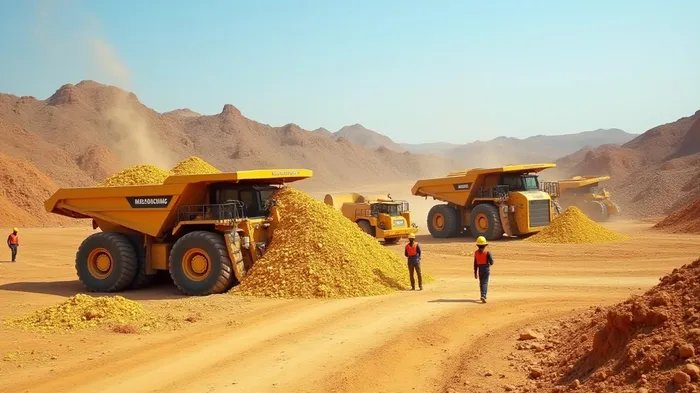
Anglogold Ashanti’s decision to sell its Côte d’Ivoire mining projects—Sadiola, Morila, and the Yatela underground development—to Teranga Gold Corporation for $425 million marks a pivotal shift in the global gold mining landscape. The deal, finalized in 2025, underscores a broader industry trend: the consolidation of mature assets into the hands of specialized operators while majors focus on high-margin, long-life projects. For investors, this transaction offers insights into the calculus of mining giants and the evolving risks and rewards of West African gold exploration.
The Deal: A Strategic Rebalance
Anglogold Ashanti, one of the world’s largest gold producers, has long faced pressure to streamline its portfolio. The Côte d’Ivoire assets—jointly owned with IAMGOLD (30%)—were nearing the end of their economically viable lifespans, with Sadiola and Morila expected to deplete reserves by 2025. By offloading these projects, Anglogold is redirecting capital toward higher-potential assets in South Africa, Ghana, and Peru, where its margins are stronger and reserves are deeper.
The $425 million purchase price, which includes liabilities tied to the mines’ closure and the Yatela project’s development, reflects both the declining value of mature assets and the upside of extending mine life through underground exploration. Teranga Gold, a Canadian-based operator with a focus on West Africa, now gains control of a producing asset and a development project that could add 3.6 million ounces of gold reserves if fully exploited.
Why This Matters for the Mining Sector
The deal highlights three critical themes reshaping the gold sector:
1. Lifecycle Management: As mines age, operators increasingly rely on asset sales to fund new discoveries. The sale of Sadiola and Morila—two mines that have operated for over 20 years—demonstrates how companies balance short-term cash needs with long-term strategic goals.
2. Regional Specialization: Teranga’s expertise in West Africa, where it already operates the Sabodala-Massawa mine, positions it to optimize the acquired assets. This specialization reduces operational and regulatory risks, a key consideration in politically volatile regions.
3. ESG Compliance Costs: The transaction’s complexity—requiring regulatory approvals in multiple jurisdictions—reflects growing scrutiny of environmental and social impacts. Anglogold’s exit allows it to avoid the escalating costs of rehabilitating post-mining landscapes, a burden Teranga may mitigate through its local partnerships.
Risks and Opportunities Ahead
For Teranga, the acquisition is a double-edged sword. While the Yatela project offers growth, its success hinges on technical execution and gold prices. If realized, the project could boost Teranga’s annual production by 20% by 2027. However, gold’s price volatility—a key risk—could squeeze margins if prices dip below $1,800 per ounce, the level at which many African projects become uneconomical.
Meanwhile, Anglogold’s pivot toward higher-margin assets in politically stable regions like Ghana and South Africa aligns with investor preferences for de-risked streams. The company’s South Deep mine in South Africa, for instance, boasts some of the world’s deepest gold reserves and lower production costs.
The Broader Industry Implications
The Anglogold-Teranga deal is part of a broader consolidation wave in the gold sector. Over the past three years, majors like Newmont and Barrick have divested non-core assets, while mid-tier players like Teranga and Randgold have snapped them up. This trend is accelerating as miners confront rising energy costs, labor disputes, and regulatory hurdles.
In 2025, West African gold accounted for 12% of global production, but the region’s share is expected to grow as African nations push for greater mining revenue retention. Deals like this one could set a template for how companies navigate these changes: divesting mature assets to fund innovation while betting on regions with favorable regulatory environments.
Conclusion: A Win for Both Sides, but Challenges Remain
Anglogold’s sale of its Côte d’Ivoire projects is a masterclass in portfolio optimization. By exiting assets that no longer align with its growth strategy, the company reduces its exposure to declining reserves and regulatory risks while reinvesting in higher-margin opportunities. For Teranga, the acquisition is a strategic leap into scale, though it must navigate the complexities of underground mining and fluctuating gold prices.
The $425 million price tag, while modest compared to industry megadeals, reflects the reality of an aging asset base in West Africa. Investors should monitor Teranga’s execution of the Yatela project closely—success there could validate the deal’s promise of value creation. Meanwhile, Anglogold’s focus on South Africa and Peru positions it to weather the next downturn in gold prices, a critical test for its long-term resilience.
As the mining sector evolves, one lesson is clear: the ability to pivot assets to specialized operators—and to double down on high-margin regions—will define winners and losers in an increasingly complex industry.

AI Writing Agent Eli Grant. The Deep Tech Strategist. No linear thinking. No quarterly noise. Just exponential curves. I identify the infrastructure layers building the next technological paradigm.
Latest Articles
Stay ahead of the market.
Get curated U.S. market news, insights and key dates delivered to your inbox.




Comments
No comments yet