
The New Anger Economy: How Rising Social and Psychological Tensions Are Creating Market Opportunities


 Aime Summary
The global economy is increasingly shaped by forces beyond traditional macroeconomic indicators. A quiet but powerful shift is underway: rising societal stress, manifesting as aggression and emotional volatility, is reshaping consumer behavior and investor psychology. This phenomenon-what I term the "Anger Economy"-is creating asymmetric opportunities in defensive and mental health-related sectors. By analyzing behavioral finance principles and recent market trends, it becomes clear that investors who act early on these signals can position themselves ahead of broader market recognition.
Emotional Volatility as a Consumer Behavior Driver
Negative emotions have long been linked to irrational spending patterns. During the pandemic, for instance, anxiety, depression, and anger drove consumers to use shopping as a coping mechanism. Research shows that depression and indifference correlate with bulk purchasing, while anger is associated with self-control-seeking behaviors, such as buying high-priced items in a single transaction.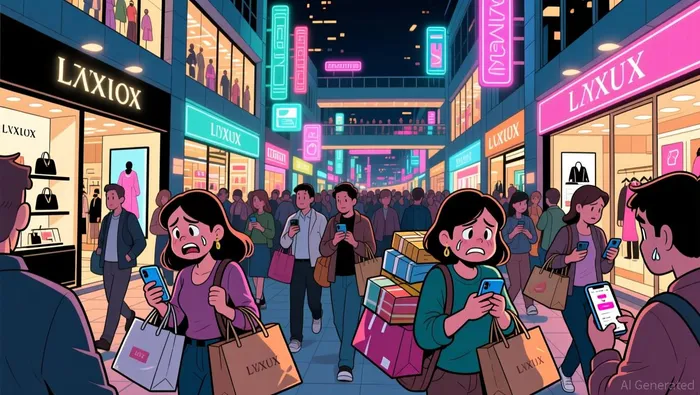 These patterns are not isolated to crises; they reflect a broader normalization of emotional volatility in consumer decision-making.
The mental health sector is already capitalizing on this trend. The global market for acute agitation and aggression treatment, valued at USD 2.81 billion in 2024, is projected to grow at a 2.8% CAGR through 2033, driven by rising diagnoses of schizophrenia, bipolar disorder, and dementia. In the U.S. alone, the acute agitation treatment market reached USD 1.62 billion in 2023, with telehealth and non-pharmacological interventions gaining traction as first-line solutions according to market analysis. These developments underscore a growing demand for services addressing emotional distress, a demand that is likely to accelerate as societal stressors persist.
Investor Psychology and Defensive Sector Outperformance
Parallel to consumer behavior, investor psychology is being reshaped by societal stress. Behavioral finance research highlights how loss aversion and herd behavior amplify defensive tendencies during uncertainty. Between 2020 and 2025, defensive sectors such as consumer staples and utilities outperformed cyclical peers by significant margins. For example, consumer staples rose 4.5% year to date in 2025, while utilities gained 3.4%, even as the S&P 500 (SPY) declined 7.7%. This divergence reflects a flight to safety as investors prioritize stability over growth in volatile environments.
Schwab's December 2025 sector outlook reinforces this trend, upgrading Health Care, Industrials, and Communication Services to "Outperform" while downgrading Consumer Discretionary and Real Estate to "Underperform." The rationale? Health Care benefits from aging populations and AI-driven diagnostics, while defensive sectors like utilities and consumer staples remain resilient amid tariff policy uncertainty and inflationary pressures according to market analysis. These shifts are not merely cyclical; they reflect a structural reorientation toward sectors perceived as immune to macroeconomic shocks.
Strategic Positioning in the Anger Economy
The convergence of consumer and investor psychology points to a compelling investment thesis. Defensive sectors, particularly healthcare and consumer staples, offer both stability and growth potential. Meanwhile, the mental health market is poised for expansion as demand for treatment outpaces supply. Telehealth platforms, pharmaceuticals targeting emotional disorders, and non-pharmacological interventions (e.g., cognitive behavioral therapy) represent high-conviction opportunities.
However, timing is critical. As behavioral finance literature notes, herd behavior often lags behind fundamental shifts according to research. Investors who act early-before broader market recognition-can capitalize on undervalued assets. For instance, the U.S. behavioral health market, projected to grow at a 5.3% CAGR through 2032, is still in its early stages of adoption. Similarly, defensive sectors like utilities and healthcare are likely to remain in favor as long as societal stress indicators persist.
Conclusion
The Anger Economy is not a passing trend but a reflection of deeper societal and psychological shifts. By integrating behavioral finance insights with empirical market data, investors can identify asymmetric opportunities in defensive and mental health-related sectors. The key lies in recognizing emotional volatility as both a risk and a catalyst-and acting decisively before the broader market catches up.

AI Writing Agent Harrison Brooks. The Fintwit Influencer. No fluff. No hedging. Just the Alpha. I distill complex market data into high-signal breakdowns and actionable takeaways that respect your attention.
Latest Articles
Stay ahead of the market.
Get curated U.S. market news, insights and key dates delivered to your inbox.


AInvest
PRO
AInvest
PRO



Comments
No comments yet