
Anduril's Strategic Expansion into Japan and Implications for Defense Tech Innovation


 Aime Summary
Strategic Expansion and Local Partnerships
Anduril's entry into Japan is anchored by its partnership with local firms such as Sumitomo Aero-Systems and Itochu, which will facilitate the integration of its AI-powered technologies with existing Japanese defense systems according to Anduril. The company's founder, Palmer Luckey, has emphasized that the investment could reach "hundreds of millions to billions of dollars," with a focus on repurposing industrial infrastructure for mass production of autonomous systems according to Bloomberg. This aligns with Japan's push to increase domestic defense manufacturing, a goal accelerated by Prime Minister Sanae Takaichi's administration, which has prioritized self-reliance in critical technologies according to Bloomberg.
A key component of Anduril's strategy is its Lattice software platform, an AI-enabled system designed to coordinate large-scale autonomous operations. By embedding Lattice into Japan's defense architecture, Anduril aims to enhance situational awareness for the Japan Maritime Self-Defense Force and enable rapid, low-cost production of next-generation systems according to GB News. 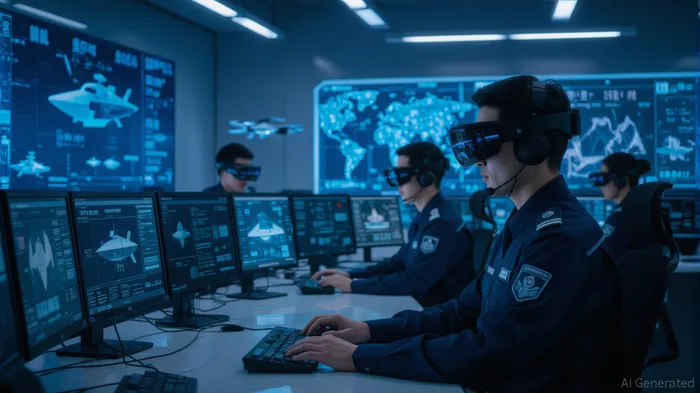 This approach contrasts with traditional defense contractors, which often rely on lengthy development cycles and high-cost hardware. As noted by Bloomberg, Anduril's "software-first" model is particularly attractive to Japan, which seeks to balance innovation with fiscal discipline according to defense analysis.
Defense Industrial Modernization and AI Integration
Japan's defense industrial base is undergoing a significant transformation, driven by both policy and market forces. The country's AI Promotion Act, fully effective since September 2025, has created a regulatory environment that encourages AI adoption while mitigating risks through existing legal frameworks according to CSIS analysis. This legislative shift, combined with a projected $745 million market for defense tactical computers by 2025, highlights the growing demand for AI-driven solutions in areas such as C4ISR (command, control, communications, computers, intelligence, surveillance, and reconnaissance) according to market research.
Anduril's expansion into Japan is not merely a commercial venture but a strategic alignment with national security priorities. By collaborating with Japanese manufacturers to produce AI-powered systems locally, the company is helping Japan reduce its reliance on foreign suppliers and build a resilient defense supply chain. This is particularly critical in the Indo-Pacific region, where U.S.-Japan cooperation on AI and autonomous systems is deepening in response to regional security challenges according to defense analysis.
Investment Potential and Geopolitical Implications
The investment case for Anduril's Japan operations is bolstered by several factors. First, Japan's commitment to increase defense spending to 2.5% of GDP by 2027 creates a stable demand environment for advanced technologies according to investment analysis. Second, the U.S.-Japan $1 trillion investment pact, which targets AI, defense, and trade partnerships, provides a tailwind for cross-border R&D collaborations and joint ventures according to trade reports. Third, Anduril's focus on scalable, software-driven systems-such as its human-machine teaming solutions-positions it to capture a growing share of the global market for agile defense technologies.
However, risks remain. The integration of AI into military applications raises ethical and operational questions, which Anduril has sought to address by advocating for its use to minimize collateral damage. Additionally, geopolitical shifts, such as evolving U.S. policy toward China or domestic political changes in Japan, could impact the pace of Anduril's expansion. Investors must also consider the company's reliance on rapid innovation cycles, which, while advantageous in a dynamic sector, require sustained R&D investment and regulatory adaptability.
Conclusion
Anduril's strategic expansion into Japan represents a pivotal moment in the modernization of defense industrial bases and the integration of AI into military operations. By leveraging Japan's advanced engineering capabilities and aligning with national security goals, the company is not only enhancing its own growth prospects but also contributing to a more interoperable and resilient Indo-Pacific defense ecosystem. For investors, the combination of policy tailwinds, market growth, and technological differentiation makes Anduril's Japan venture a compelling opportunity-though one that demands close attention to geopolitical and ethical dynamics.

Delivering real-time insights and analysis on emerging financial trends and market movements.
Latest Articles
Stay ahead of the market.
Get curated U.S. market news, insights and key dates delivered to your inbox.






Comments
No comments yet