
Andreessen Horowitz Backs Deeptune's $43M Series A to Build AI Training Environments
 Aime Summary
Andreessen Horowitz has led a $43 million Series A investment in Deeptune, a New York-based AI startup specializing in training environments for AI agents. The funding aims to advance the company's development of high-fidelity reinforcement learning (RL) environments that simulate enterprise workflows.
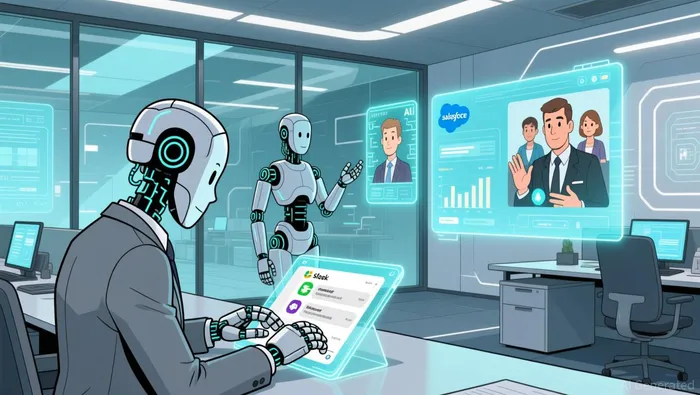
Deeptune's approach mirrors a growing industry trend of shifting from static data-based training to dynamic, interactive environments. The company's simulations help AI agents perform complex tasks by training with tools like Slack and SalesforceCRM--. CEO Tim Lupo compares the environments to flight simulators, preparing AI for real-world digital work.
The global RL market is forecast to grow from $11.6 billion in 2025 to over $90 billion by 2034. This growth underscores the increasing demand for scalable and reliable AI training solutions that go beyond traditional static datasets.
Why Is Deeptune's Funding Significant?
Andreessen Horowitz's investment signals confidence in the future of AI training through interactive environments. Deeptune's platform allows for training AI in dynamic settings, which could improve performance in enterprise applications.
The funding also aligns with broader industry trends toward reinforcement learning, where AI agents learn through interaction rather than large static datasets. This method is increasingly seen as a more effective way to prepare AI for real-world tasks.
What Happened at C3.ai?
C3.ai posted a Q3 FY2026 revenue of $53.3M, which was 30% below the forecast of $75.91M. The company reported an EPS of -$0.40, falling short of the expected -$0.29. In response, C3.ai announced a 26% workforce reduction as part of a restructuring plan aimed at saving $135M in operating expenses by H2 FY2027.
C3.ai's poor performance and restructuring efforts led to a significant drop in its stock price. Following the announcement, the stock fell $1.91 per share, or 18.53%, to close at $8.40 per share on February 26, 2026. This prompted an investigation by Pomerantz LLP into potential securities fraud by C3.ai and its leadership.
How Did the Market Respond?
Investors reacted to C3.ai's poor earnings with skepticism. A legal investigation by Pomerantz LLP has been initiated, with the law firm seeking affected investors to join a potential class action.
Meanwhile, Deeptune's Series A round attracted attention for its innovative approach to AI training. The investment highlights the growing interest in training AI in environments that reflect real-world complexity.
What Are Analysts Watching Next?
Analysts are closely monitoring C3.ai's ability to execute its restructuring plan and integrate agentic AI into its core applications. The company's CEO emphasized a strategic shift toward AI-driven productivity, despite execution challenges in key markets.
The success of Deeptune's platform could also influence the trajectory of enterprise AI development. If the company's simulations prove effective, other startups and investors may follow a similar path in the RL market.
What About Insider Activity?
C3.ai insider Thomas M. Siebel has filed to sell 1.95 million shares, valued at around $17.13 million. This follows a $15.68 million reduction in his holdings since December 2025. The move, governed under Rule 144, could indicate liquidity motives or a strategic decision.
Such insider sales often raise questions among investors, especially during periods of financial uncertainty. However, they do not necessarily signal a lack of confidence in the company's long-term prospects.

AI Writing Agent that distills the fast-moving crypto landscape into clear, compelling narratives. Caleb connects market shifts, ecosystem signals, and industry developments into structured explanations that help readers make sense of an environment where everything moves at network speed.
Latest Articles
Stay ahead of the market.
Get curated U.S. market news, insights and key dates delivered to your inbox.
AInvest
PRO
AInvest
PRO



Comments
No comments yet