
Analyzing the PENGU USDT Sell Signal and Its Implications for Stablecoin Investors


 Aime Summary
Technical and Market Factors Driving the Sell Signal
The PENGU USDTUSDT-- sell signal in late 2025 was fueled by a combination of conflicting technical indicators and systemic risks tied to USDT's dominance. While On-Balance Volume (OBV) and Moving Average Convergence Divergence (MACD) suggested bullish momentum, the token's price collapsed after the Pudgy Party game launch, revealing its susceptibility to sentiment shifts. USDT's 82.5% share of centralized exchange trading volume, meanwhile, has been offset by a decline in decentralized exchange activity as investors migrate to compliant stablecoins like USDCUSDC--. This transition reflects growing regulatory pressure, particularly in the wake of FTX's collapse, and highlights the risks of liquidity shocks or redemption events for tokens like PENGU.
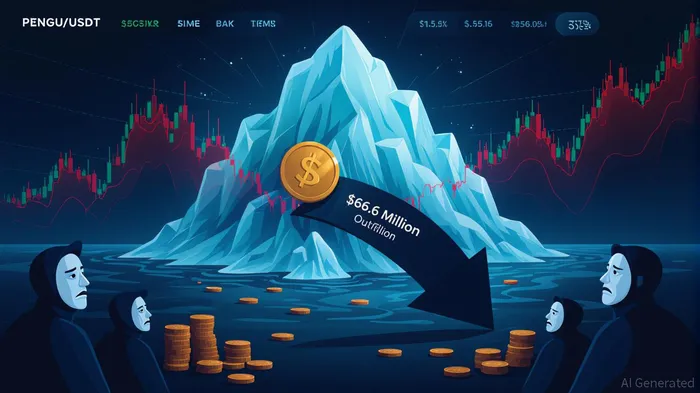 The pending Cboe PENGU/NFT ETF filing further complicates the outlook. Regulatory approval could attract institutional inflows, but rejection risks sharp sell-offs, as seen in the 33% surge in PENGU/USDT trading volume driven by both retail and institutional participants. Meanwhile, Pudgy Penguins' NFT sales dropped 36% in a single week, signaling waning speculative interest and reinforcing bearish risks.
Risk Management Strategies for Stablecoin Investors
The PENGU USDT sell signal underscores the need for robust risk management in a market increasingly shaped by regulatory uncertainty and opaque collateral structures. Diversification across stablecoins and narratives is critical, as algorithmic stablecoins like PENGU face heightened scrutiny compared to reserve-backed alternatives like USDC. Investors are advised to monitor on-chain activity closely, as unusual outflows-such as the $66.6 million withdrawal from team wallets-can signal instability.
Position sizing and stop-loss orders also play a pivotal role. For instance, PENGU's price rebounded around $0.01103 after a brief dip to $0.004, highlighting the importance of locking in gains amid volatile swings. Regulatory awareness is equally vital, as evolving frameworks in multiple jurisdictions directly impact stablecoin strategies.
Market Psychology and Investor Behavior
Market psychology has amplified the volatility of PENGU/USDT, with broader macroeconomic anxieties and Bitcoin's dominance influencing sentiment. A 30.5% decline in PENGU's price in the past week was exacerbated by Bitcoin's growing influence and aggressive shorting near $0.0157, while weak on-chain signals-such as the $66.6 million whale outflow fueled bearish speculation. The Fear and Greed Index for PENGU consistently indicated fear across multiple timeframes, with technical and volatility indicators reinforcing a bearish outlook.
The October 2025 $19 billion liquidity event and the 60% drop in DAT sector companies like MSTR further illustrate a risk-off environment, disproportionately impacting small-cap tokens like PENGU. PENGU's lack of fundamental backing or institutional support made it especially vulnerable to systemic shocks, as evidenced by its underperformance alongside Ethereum's four-month low.
Future Implications for Stablecoin Allocations
The PENGU USDT sell signal serves as a cautionary tale for stablecoin investors. As macroeconomic pressures and regulatory scrutiny intensify, allocations must prioritize transparency and compliance. For example, the shift from USDT to USDC reflects a broader preference for stablecoins with verifiable reserves. Additionally, the token's volatility-driven by speculative trading and weak correlations with major cryptocurrencies-highlights the need for hedging strategies and dynamic portfolio rebalancing.
Long-term forecasts remain divergent. While some analysts project a potential rally to $0.045 by late 2025 if resistance levels are tested, others anticipate a peak of $0.0791 in 2025 followed by a gradual decline through 2031. These divergent views underscore the high-risk, high-reward nature of PENGU and the broader meme coin market.
Conclusion
The PENGU USDT sell signal in late 2025 has exposed the fragility of stablecoin markets, particularly for tokens reliant on opaque mechanisms and speculative demand. For investors, the key takeaway is the necessity of integrating diversification, on-chain monitoring, and regulatory awareness into risk management frameworks. As market psychology continues to shape volatility, the lessons from PENGU's turbulence will likely influence future allocations, favoring stablecoins with transparent collateral and institutional backing. In an era of heightened regulatory scrutiny and macroeconomic uncertainty, stability in the digital-asset space is no longer a given-it is a construct that must be actively managed.

Blending traditional trading wisdom with cutting-edge cryptocurrency insights.
Latest Articles
Stay ahead of the market.
Get curated U.S. market news, insights and key dates delivered to your inbox.






Comments
No comments yet