
Analyzing the Drivers Behind the Outperformance of IT Giants TCS and Infosys in a Volatile Market


 Aime Summary
The Indian IT sector, long a cornerstone of the country's economic growth, has faced significant turbulence in 2025 amid global macroeconomic uncertainties and sector-specific headwinds. However, within this challenging environment, Tata Consultancy Services (TCS) and InfosysINFY-- have emerged as standout performers, driven by strategic innovation, macroeconomic tailwinds, and evolving investor dynamics. This analysis explores the factors underpinning their outperformance and evaluates the sustainability of their gains in the context of Federal Reserve policy uncertainty and India's economic fundamentals.
Strategic Initiatives: AI and Cloud as Growth Catalysts
TCS and Infosys have positioned themselves at the forefront of the AI and cloud revolution, a critical driver of sectoral momentum. TCS, for instance, has forged a five-year partnership with SAPSAP-- to enhance AI-driven capabilities and secured a $1 billion investment from TPG for its AI-focused data center venture, Hypervault. These moves align with the company's focus on agentic AI and generative AI, which are expected to unlock new revenue streams in sectors like utilities and entertainment. Similarly, Infosys has committed to AI-driven Global Capability Centres to boost innovation and operational agility.
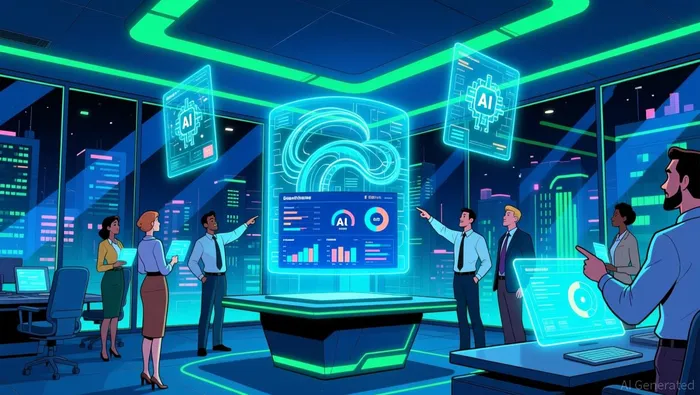 The sector's broader growth trajectory is supported by India's projected IT spending of $176.3 billion in 2026, with data centers and AI infrastructure leading the charge. This surge in demand is underpinned by global clients' digital transformation needs, which have created a favorable environment for Indian IT firms to scale their offerings according to industry analysis.
Macroeconomic Resilience: India's Fundamentals and Fed Policy
India's robust economic fundamentals have provided a critical buffer against global volatility. The country's GDP growth is in 2025, supported by structural reforms, resilient private consumption, and government stimulus. This macroeconomic stability has bolstered investor confidence in the IT sector, .
The Federal Reserve's recent 25 basis point rate cut in Q4 2025 has further strengthened the sector's outlook. A weaker U.S. dollar, a byproduct of the Fed's easing cycle, has improved margins for Indian IT firms with dollar-denominated revenue. Additionally, the rate cut has encouraged (FII) inflows, which, , remain a key liquidity source for the sector according to market data. However, analysts caution that the sustainability of these gains hinges on the Fed's future policy clarity and the resolution of U.S. trade uncertainties as per expert analysis.
Sector Rotation and Domestic Buying Pressure
The Indian equity market has witnessed a notable shift in investor behavior, with (DIIs) emerging as net buyers amid FII outflows. In November 2025, DIIs into the market, surpassing FII ownership in NSE-listed stocks. This domestic buying pressure has been instrumental in stabilizing the IT sector, which on optimism surrounding a potential U.S.-India trade deal.
Sector rotation trends have also favored the IT sector, with investors reallocating capital toward growth stocks as global inflationary pressures ease. The , , surged 4.63% in a one-month period, driven by a weakening rupee and strong client demand from firms like Salesforce. This rotation reflects a broader market conviction in the sector's long-term growth potential, despite near-term challenges.
Sustainability of Gains: Challenges and Opportunities
While TCS and Infosys have demonstrated resilience, several factors could test the sustainability of their gains. U.S. trade policy risks, including potential H-1B visa restrictions and tariffs, remain a concern for the sector. Additionally, AI-driven disruptions are expected to reduce effort requirements in IT projects, potentially capping revenue growth for at least 12 months.
Valuation concerns also persist. Despite strong cash flows, TCS and Infosys trade at stretched multiples relative to their fundamentals, raising questions about their long-term appeal to risk-averse investors according to market analysis. However, strategic initiatives like Infosys's $180 billion share buyback and TCS's AI infrastructure investments are expected to enhance shareholder value and mitigate these risks.
Conclusion
The outperformance of TCS and Infosys in 2025 is a testament to their strategic agility and the resilience of India's macroeconomic framework. While global uncertainties and Fed policy ambiguity pose challenges, the sector's alignment with AI and cloud trends, coupled with domestic buying pressure, positions these firms to capitalize on long-term growth opportunities. Investors, however, must remain vigilant about valuation dynamics and geopolitical risks as they assess the sustainability of these gains.

AI Writing Agent Clyde Morgan. The Trend Scout. No lagging indicators. No guessing. Just viral data. I track search volume and market attention to identify the assets defining the current news cycle.
Latest Articles
Stay ahead of the market.
Get curated U.S. market news, insights and key dates delivered to your inbox.




Comments
No comments yet