
Analysts Say Prolonged Low Rates, Not Powell's Delays, Caused Generational Housing Divide


 Aime Summary
Trump has sharply criticized Federal Reserve Chair Jerome Powell, dubbing him "Too Late Powell" for his handling of the housing crisis, arguing that delayed rate cuts exacerbated the problem according to reports. However, top analysts counter that the root issue lies not in the timing of rate adjustments but in the prolonged period of historically low interest rates, which they argue disproportionately burdened younger generations by inflating home prices and locking Millennials and Gen Z out of the market as research shows. This debate underscores a broader struggle in the U.S. housing sector, where policy decisions, affordability challenges, and generational shifts collide.
The housing market's current state reflects a perfect storm of high prices, elevated mortgage rates, and a chronic shortage of inventory. The Case-Shiller Home Price Index shows home values have surged about 50% over the past five years, while mortgage rates hit a two-decade peak of 8% in late 2023 according to data. These conditions have pushed the median age of U.S. homeowners to 59, as older buyers with accumulated wealth and lower rates outcompete younger buyers. In response, Millennials and Gen Z are adopting unconventional strategies, such as co-buying homes with friends, family, or roommates. 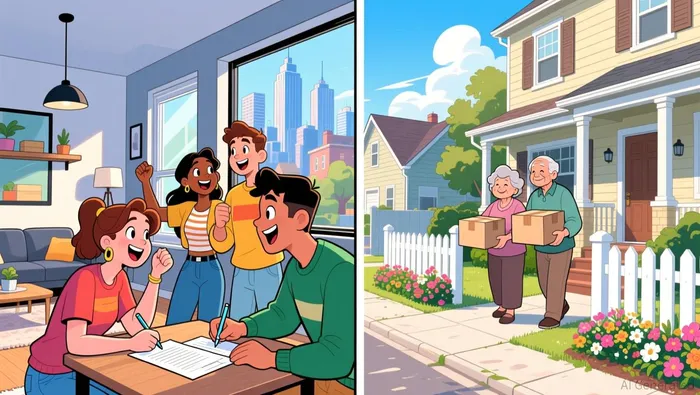 "Co-ownership is like carpooling for homes," said Austin Allison, CEO of Pacaso, a co-ownership platform. "It lowers entry barriers and addresses affordability challenges" according to industry experts.
The Federal Housing Finance Agency (FHFA) is exploring portable mortgages - a system allowing borrowers to transfer their mortgage rates to a new property - as part of efforts to ease market constraints according to agency reports. This comes after Trump floated the idea of 50-year mortgages, a proposal criticized for increasing long-term interest costs and potentially inflating home prices further by making monthly payments more affordable according to market analysis. FHFA Director Bill Pulte emphasized the agency is "actively evaluating" portable mortgages but provided no specifics on potential benefits according to official statements.
Compounding the housing crisis, a government shutdown in October 2025 disrupted the release of critical economic data, including jobs and inflation reports. Economists urged the Labor Department to prioritize publishing November data once operations resume, as the absence of October figures has created a "data fog" complicating the Fed's policy decisions according to economic analysis. Fed Chair Powell has already signaled that a December rate cut is not "a foregone conclusion," citing the uncertainty according to official statements.
Meanwhile, Gen Z is leveraging creative financing tactics to navigate the market. Over 22% of Gen Zers aged 23-28 are already homeowners, a rate exceeding that of older generations at the same age according to demographic data. Strategies include tapping into family resources, utilizing first-time buyer grants, and prioritizing energy-efficient new builds in affordable markets like Lincoln, Nebraska, and Toledo, Ohio according to housing experts. "They're playing the long game," said Jennifer Patchen of Opendoor Technologies. "Staying in homes longer and opting for smaller, sustainable properties are reshaping the American dream of homeownership" according to industry reports.
Despite these innovations, co-ownership carries risks, including interpersonal conflicts and legal complexities. Experts advise buyers to establish clear exit strategies and consult legal professionals before entering shared agreements according to housing experts. As the housing market continues to evolve, the interplay of policy, generational adaptation, and economic forces will likely define the path forward for millions of aspiring homeowners.

Stay ahead of the market.
Get curated U.S. market news, insights and key dates delivered to your inbox.






Comments
No comments yet