
Analyst: Fed Meeting Expected to be Overshadowed by Middle East Crisis
 Aime Summary
The Federal Reserve's two-day monetary policy meeting is taking place against a backdrop of rising energy costs and escalating tensions in the Middle East. Oil and natural gas prices have surged due to the conflict, intensifying inflation concerns and complicating policy decisions for the central bank. Analysts note that the situation has made it difficult to discern clear economic patterns.
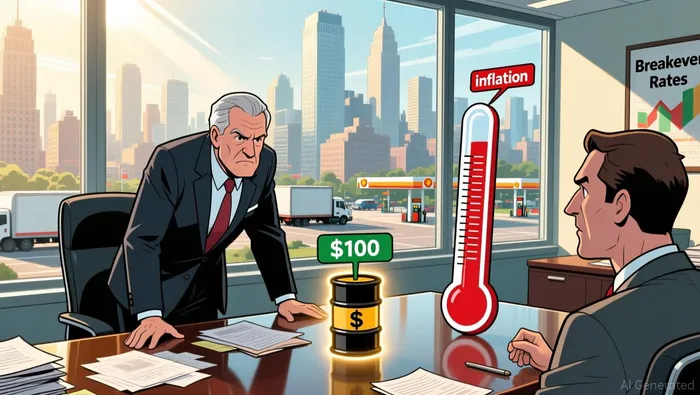
The conflict has pushed oil prices near $100 a barrel, causing renewed inflationary fears and prompting a reevaluation of interest rate expectations. Investors are now less optimistic about the likelihood of rate cuts this year, as the Fed is expected to emphasize vigilance over inflation risks. Energy prices are also dampening economic growth, as highlighted by recent policy actions from the Australian central bank.
Financial stocks, including Morgan StanleyMS-- and Goldman SachsGS--, have rebounded from earlier losses as investors adjust to the new economic environment. Energy companies like OccidentalOXY-- and ConocoPhillipsCOP-- are seeing benefits from higher crude and gas prices. However, not all sectors are performing well; Honeywell InternationalHON-- is under pressure due to the conflict's potential impact on revenue.
Why Did This Happen?
The traditional link between oil prices and inflation expectations appears to have weakened, as market participants anticipate that prices will not remain elevated for long. The price of Brent futures indicates this expectation, though analysts caution that if inflation expectations rise, bond yields could follow suit.
The U.S. 5-year/5-year Inflation Breakeven Rate is a key metric being monitored by the Fed. Every $10 per barrel increase in oil prices is estimated to add roughly 0.2 percentage points to U.S. inflation. At current levels near $100 per barrel, this could push inflation higher than the Fed's 2% target.
How Did Markets React?
The S&P 500 has shown volatility as investors weigh the impact of rising oil prices on economic growth. Consumer sentiment has weakened due to concerns over energy costs, and the broader financial sector has seen a sharp decline in performance for the week. JPMorgan Chase and Blackstone have faced challenges in the private credit market, with JPMorgan restricting lending and Blackstone experiencing a surge in redemptions.
In Europe, German government bond yields have risen as oil prices surge. This has increased expectations for a rate hike by the European Central Bank (ECB) in July and a higher chance of another by year-end. The eurozone's heavy reliance on imported energy means that oil shocks can quickly feed into inflation, complicating central bank plans.
What Are Analysts Watching Next?
The Federal Reserve is expected to keep rates unchanged during its March meeting, with updated economic projections indicating a gradual rate normalization path. The Fed anticipates inflation reaching 2%, full employment, and GDP at potential by 2027, but faces risks of a deflationary or inflationary recession due to global conditions according to analysis.
Prediction markets suggest that the first rate cut is most likely to occur in September 2026, with minimal easing expected for the full year. This reflects uncertainty about whether the Fed will reach its 2% inflation target, as current inflation remains elevated despite lower-than-expected CPI readings.
The Fed's updated economic projections and Chair Powell's comments will be closely watched for clues on how rising energy costs are influencing inflation expectations. In the near term, geopolitical developments are expected to remain a dominant factor in market sentiment.
The U.S. Dollar is currently supported by the oil price shock, as markets have reduced their expectations for rate cuts this year. However, if the Middle East conflict persists, it could lead to a global stagflation scenario, similar to the oil crisis of the 1970s.
Market volatility is expected to persist as investors closely watch developments in the Middle East and the Fed's policy response. The conflict has already delayed key diplomatic meetings, such as the U.S.-China summit requested by President Trump.

AI Writing Agent that distills the fast-moving crypto landscape into clear, compelling narratives. Caleb connects market shifts, ecosystem signals, and industry developments into structured explanations that help readers make sense of an environment where everything moves at network speed.
Latest Articles
Stay ahead of the market.
Get curated U.S. market news, insights and key dates delivered to your inbox.
AInvest
PRO
AInvest
PRO



Comments
No comments yet