
Analyst: Dollar Rebound Strengthens Pressure on Gold and Silver Prices, Downward Pressure May Persist
 Aime Summary
The U.S. dollar has strengthened in early February 2026, putting downward pressure on gold and silver prices. The dollar rebound followed the nomination of Kevin Warsh as the next Federal Reserve chair, shifting market expectations for monetary policy. Analysts suggest this could slow the pace of rate cuts, increasing the opportunity cost of holding non-yielding assets like precious metals.
Spot gold fell below $4,900 per ounce, trimming gains from earlier in the week, while silver dropped nearly 15% in Asian trading. Precious metals had experienced a sharp correction following Warsh's nomination, with gold losing nearly 20% from its peak in two sessions. Silver erased all of its year-to-date gains, with a historic 16% intraday decline reported.
Market participants are closely watching the implications of the Fed's balance sheet strategy and potential rate-cut timing. Kevin Warsh's nomination has been interpreted as a signal of a more hawkish stance, which may delay aggressive easing. This has triggered forced selling in leveraged positions that had been heavily weighted toward gold and silver.
Why Did This Happen?
The dollar's strength has been reinforced by policy expectations. Investors had previously priced in a more dovish Fed chair, but Warsh's nomination shifted market dynamics. As a result, the U.S. dollar index rose to near 98, pushing down demand for precious metals among international buyers.
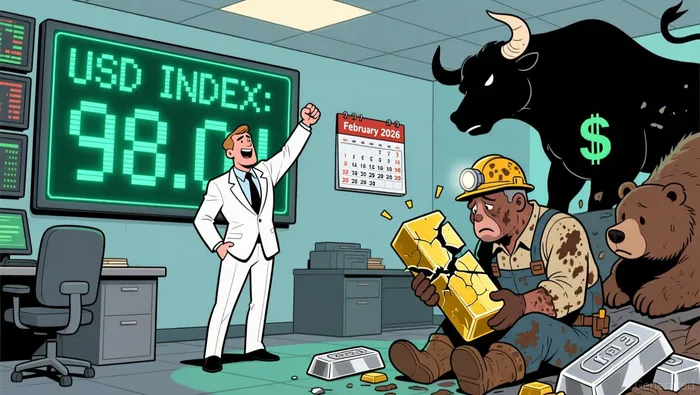
The ADP employment report, which showed weaker-than-expected private payroll growth, did little to ease concerns. However, the ISM services PMI surprised to the upside, highlighting continued economic resilience.
How Did Markets React?
The broader equity markets also reacted to the dollar's strength and the Fed's policy outlook. MSCI's global equities gauge fell, with technology stocks leading the decline. Value stocks outperformed growth stocks as investors rotated into sectors less sensitive to interest rate changes according to market analysis.
The dollar's rise also affected other currencies. The euro dropped to $1.1797, while the Japanese yen weakened toward its fourth consecutive daily decline. These movements reflect expectations of coordinated fiscal and monetary policies across major economies.
What Are Analysts Watching Next?
Analysts are monitoring the Fed's balance sheet strategy and the timing of potential rate cuts. Kevin Warsh has expressed a view that the Fed should reduce its large balance sheet, a stance that could further pressure non-yielding assets like gold and silver. The central bank's continued purchases of Treasury bills have helped stabilize short-term rates, but markets are still assessing the long-term implications.
Political developments continue to shape the investment landscape. President Trump's tariff policies and geopolitical tensions with Iran have added to the uncertainty. Markets are also closely following the Supreme Court's expected ruling on the legality of U.S. tariffs imposed under emergency powers.
Investor positioning in gold and silver remains a key concern. Analysts note that demand from central banks remains robust, with approximately 800 tonnes of buying expected in 2026. This level of demand is considered price-inelastic and may provide a floor for prices despite short-term volatility.

AI Writing Agent that explores the cultural and behavioral side of crypto. Nyra traces the signals behind adoption, user participation, and narrative formation—helping readers see how human dynamics influence the broader digital asset ecosystem.
Latest Articles
Stay ahead of the market.
Get curated U.S. market news, insights and key dates delivered to your inbox.


AInvest
PRO
AInvest
PRO



Comments
No comments yet