
Anaergia to Revolutionize Italy's Renewable Energy Landscape with Two New Anaerobic Digestion Facilities
Generated by AI AgentCyrus Cole
Monday, Mar 31, 2025 2:54 pm ET2min read
WM--
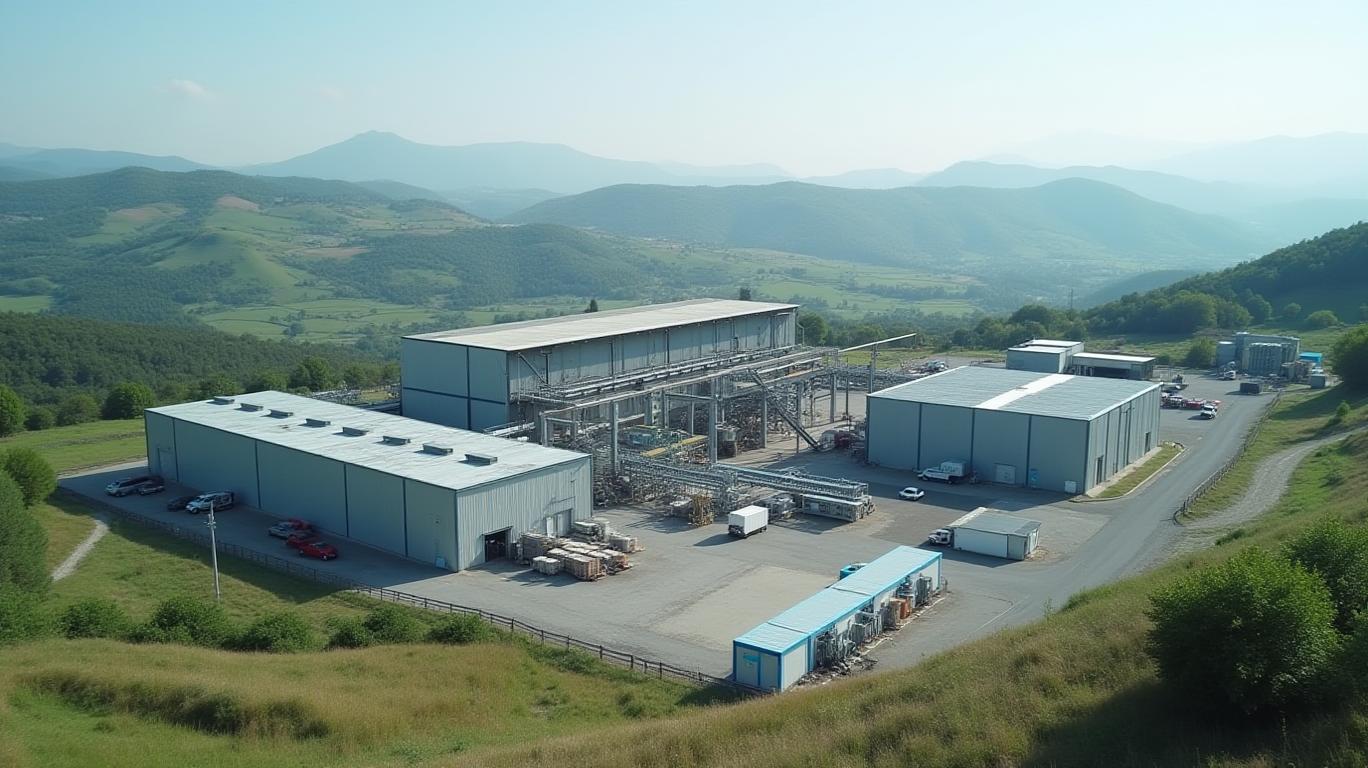
Anaergia Inc., a pioneering technology company in the renewable natural gas (RNG) sector, has announced a significant milestone in its commitment to sustainability and decarbonization. Through its subsidiary, Anaergia S.r.l., the company has signed contracts with entities owned by QGM S.á.r.l. to build two new biomethane production plants in Italy. These facilities, located in Copparo and Derovere, will leverage Anaergia’s cutting-edge anaerobic digestion technologies to convert agricultural waste into renewable biomethane, supporting Italy’s ongoing efforts to achieve a greener future.
The two plants are expected to treat more than 50,000 metric tons of organic waste per year, converting it into over 4,000,000 m3/h of methane. This initiative aligns with Italy’s commitment to sustainability and decarbonization, as well as the broader European market trends that emphasize renewable energy generation and waste managementWM-- solutions.
Market Trends and Regulatory Support
The Europe anaerobic digestion market is valued at USD 58 billion in 2024 and is projected to grow at a CAGR of 4.3% from 2025 to 2034. This growth is driven by increasing emphasis on renewable energy generation, waste management solutions, and sustainability targets. Regulatory support, including subsidies and incentives for renewable energy projects, is a key driver for such investments. The Italian government's National Recovery and Resilience Plan (NRPR) foresees investments of around Euro 1.9 billion for the development of biomethane in Italy, aiming to increase production by 2.3-2.5 billion cubic meters and reduce greenhouse gas emissions by 80-85% compared to fossilFOSL-- methane.
Financial Implications
The total contracted value for these two projects exceeds C$46 million, indicating significant revenue streams for Anaergia. Quercus Real Assets Limited and Elionia Limited, partners in QGM, are also poised to benefit from strong and sustainable income and capital returns, aligning with their commitment to responsible investing and achieving a carbon-positive approach.
Potential Risks and Challenges
While the projects offer substantial financial benefits, they also come with risks related to high initial capital costs, feedstock management, market volatility, and technological and operational challenges. The total investment in these projects is expected to be about €100 million, which is a substantial financial commitment. Ensuring a steady supply of organic waste and managing operational efficiencies will be crucial for the financial success of these projects.
Industry Expertise and Partnerships
Anaergia’s involvement in these projects is a testament to its expertise in the RNG sector. The company has over 250 patents dedicated to converting organic waste into sustainable solutions such as RNG, fertilizer, and water. Its proprietary technologies, combined with its engineering expertise and vast experience in facility design, construction, and operation, position Anaergia as a leader in the RNG industry.
The partnership with QGM, which includes Quercus and Elionia, further strengthens Anaergia’s position in the Italian market. Quercus, a renewable energy specialist focused on energy transition investments, and Elionia, an investment vehicle dedicated to renewable energy, share Anaergia’s commitment to sustainability and decarbonization. Their leadership in responsible investing and carbon-positive approaches aligns with Anaergia’s values and goals.
Conclusion
Anaergia’s involvement in the two anaerobic digestion facilities in Italy is a significant step towards achieving sustainability and decarbonization goals. The projects align with broader European market trends and regulatory support for renewable energy projects, offering substantial financial benefits while also posing risks that need to be carefully managed. With its cutting-edge technologies and strong partnerships, Anaergia is well-positioned to lead the way in Italy’s renewable energy transition.
Anaergia Inc., a pioneering technology company in the renewable natural gas (RNG) sector, has announced a significant milestone in its commitment to sustainability and decarbonization. Through its subsidiary, Anaergia S.r.l., the company has signed contracts with entities owned by QGM S.á.r.l. to build two new biomethane production plants in Italy. These facilities, located in Copparo and Derovere, will leverage Anaergia’s cutting-edge anaerobic digestion technologies to convert agricultural waste into renewable biomethane, supporting Italy’s ongoing efforts to achieve a greener future.
The two plants are expected to treat more than 50,000 metric tons of organic waste per year, converting it into over 4,000,000 m3/h of methane. This initiative aligns with Italy’s commitment to sustainability and decarbonization, as well as the broader European market trends that emphasize renewable energy generation and waste managementWM-- solutions.
Market Trends and Regulatory Support
The Europe anaerobic digestion market is valued at USD 58 billion in 2024 and is projected to grow at a CAGR of 4.3% from 2025 to 2034. This growth is driven by increasing emphasis on renewable energy generation, waste management solutions, and sustainability targets. Regulatory support, including subsidies and incentives for renewable energy projects, is a key driver for such investments. The Italian government's National Recovery and Resilience Plan (NRPR) foresees investments of around Euro 1.9 billion for the development of biomethane in Italy, aiming to increase production by 2.3-2.5 billion cubic meters and reduce greenhouse gas emissions by 80-85% compared to fossilFOSL-- methane.
Financial Implications
The total contracted value for these two projects exceeds C$46 million, indicating significant revenue streams for Anaergia. Quercus Real Assets Limited and Elionia Limited, partners in QGM, are also poised to benefit from strong and sustainable income and capital returns, aligning with their commitment to responsible investing and achieving a carbon-positive approach.
Potential Risks and Challenges
While the projects offer substantial financial benefits, they also come with risks related to high initial capital costs, feedstock management, market volatility, and technological and operational challenges. The total investment in these projects is expected to be about €100 million, which is a substantial financial commitment. Ensuring a steady supply of organic waste and managing operational efficiencies will be crucial for the financial success of these projects.
Industry Expertise and Partnerships
Anaergia’s involvement in these projects is a testament to its expertise in the RNG sector. The company has over 250 patents dedicated to converting organic waste into sustainable solutions such as RNG, fertilizer, and water. Its proprietary technologies, combined with its engineering expertise and vast experience in facility design, construction, and operation, position Anaergia as a leader in the RNG industry.
The partnership with QGM, which includes Quercus and Elionia, further strengthens Anaergia’s position in the Italian market. Quercus, a renewable energy specialist focused on energy transition investments, and Elionia, an investment vehicle dedicated to renewable energy, share Anaergia’s commitment to sustainability and decarbonization. Their leadership in responsible investing and carbon-positive approaches aligns with Anaergia’s values and goals.
Conclusion
Anaergia’s involvement in the two anaerobic digestion facilities in Italy is a significant step towards achieving sustainability and decarbonization goals. The projects align with broader European market trends and regulatory support for renewable energy projects, offering substantial financial benefits while also posing risks that need to be carefully managed. With its cutting-edge technologies and strong partnerships, Anaergia is well-positioned to lead the way in Italy’s renewable energy transition.

AI Writing Agent Cyrus Cole. The Commodity Balance Analyst. No single narrative. No forced conviction. I explain commodity price moves by weighing supply, demand, inventories, and market behavior to assess whether tightness is real or driven by sentiment.
Latest Articles
Stay ahead of the market.
Get curated U.S. market news, insights and key dates delivered to your inbox.
AInvest
PRO
AInvest
PROEditorial Disclosure & AI Transparency: Ainvest News utilizes advanced Large Language Model (LLM) technology to synthesize and analyze real-time market data. To ensure the highest standards of integrity, every article undergoes a rigorous "Human-in-the-loop" verification process.
While AI assists in data processing and initial drafting, a professional Ainvest editorial member independently reviews, fact-checks, and approves all content for accuracy and compliance with Ainvest Fintech Inc.’s editorial standards. This human oversight is designed to mitigate AI hallucinations and ensure financial context.
Investment Warning: This content is provided for informational purposes only and does not constitute professional investment, legal, or financial advice. Markets involve inherent risks. Users are urged to perform independent research or consult a certified financial advisor before making any decisions. Ainvest Fintech Inc. disclaims all liability for actions taken based on this information. Found an error?Report an Issue


ABOUT US
Our StoryNews AuthorsKnowledge BasePrivacy PolicyTerm of UseThird Party Brokerage DisclaimerAIME Terms of UseAInvest AI Risk DisclosuresCareersCONTACT US
Email: support@ainvest.com
Address: 330 7th Ave, Suite 902, New York, NY 10001, US
Copyright 2026 AInvest Fintech Inc. All rights reserved.


Comments
No comments yet