
Amtrak's Rail Renaissance: How Modernization is Bridging Equity Gaps and Fueling Investment Opportunities
The U.S. rail system is undergoing its most transformative era in decades, driven by a historic influx of federal funding and cutting-edge technological upgrades. Amtrak's infrastructure modernization—projected to reshape regional connectivity, reduce inequality, and unlock economic potential—isn't just about faster trains. It's a blueprint for redefining access to opportunity in an era of widening geographic disparities. For investors, this is a rare chance to back a sector poised to redefine the American economy's backbone.
The Equity Imperative: Closing the Rural-Urban Divide
The federal funding pouring into Amtrak's projects isn't merely about concrete and steel—it's about equity. Over 380 stations are being retrofitted with ADA-compliant upgrades, while bridges like the 115-year-old Kearny Sawtooth spans are being replaced to double capacity in the Northeast Corridor (NEC). These upgrades directly address systemic underinvestment in regions long sidelined by crumbling infrastructure. The underscores the ripple effect: modern rail networks can revive small-town economies by connecting workers to jobs in cities, students to universities, and farmers to markets.
Consider the Susquehanna River Bridge replacement or the Connecticut River Bridge study. Both projects, critical to the NEC and New England corridors, will reduce travel times and enable higher-frequency service. For communities like Springfield, MA, or Harrisburg, PA, this means access to Boston or Philadelphia in hours rather than days—a shift that could catalyze job growth and housing affordability.
Technological Leaps: The Smart Rail Revolution
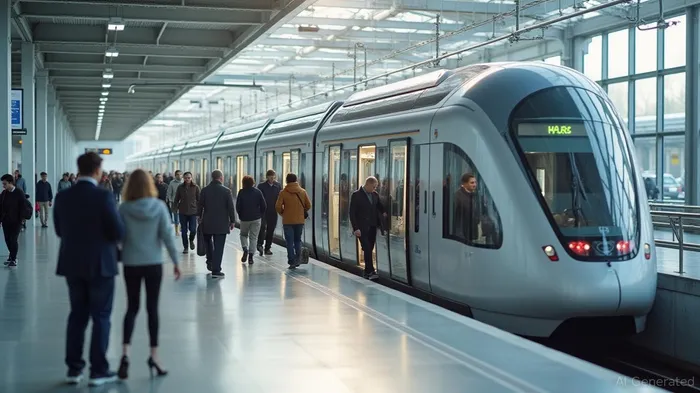
Amtrak's fleet renewal—111 new Airo trainsets and 125 high-powered locomotives—represents more than aesthetics. These trains, equipped with hybrid propulsion and real-time Wi-Fi, slash emissions by 20% while offering amenities competitive with air travel. The highlights investor confidence in this transition. Meanwhile, digital signaling upgrades on the Keystone Line and in New Jersey will allow trains to run more safely and frequently, reducing delays that disproportionately impact hourly commuters.
The data is clear: aligns with a demographic shift toward sustainable transit. For industries like tourism, agriculture, and logistics, rail modernization isn't optional—it's existential.
Infrastructure as an Economic Engine
Amtrak's projects are creating 200,000+ jobs in construction, engineering, and manufacturing—a boon for states like Pennsylvania, where the Zoo to Paoli electrification is revitalizing the Keystone Corridor. The reveals how these initiatives outpace other sectors in job density. Even more compelling: 99% of materials are sourced domestically, fueling regional supply chains from Midwest steel mills to Southern railcar manufacturers.
Investors should also note Amtrak's partnerships with firms like Kiewit and Skanska—companies with expertise in complex infrastructure projects. Their stock performance () signals a sector primed for sustained growth.
Why Act Now?
The window for investment in rail equity is narrowing. The Bipartisan Infrastructure Law and FSP-NEC funding are time-bound, and first-mover advantage favors those who recognize rail's role in a post-pandemic economy.
- Ride the Wave of Electrification: Substations like the new Kearny facility and the Frederick Douglass Tunnel replacement are foundational to high-speed rail. Firms supplying electric components (e.g.,ABB or Eaton) stand to gain.
- Bet on Regional Connectivity: States like Maryland and New Jersey, where NEC upgrades are concentrated, will see real estate booms near stations like Washington Union or New York Penn.
- Go Hybrid: The shift to hybrid locomotives and energy-efficient fleets favors companies like Cummins (CMI) or Wabtec (WAB), which dominate the U.S. rail equipment market.
Conclusion: The Tracks to Prosperity
Amtrak's modernization isn't just about trains—it's about stitching together a more equitable, resilient economy. With $94 billion allocated through 2026, the next five years will see the largest rail construction boom in U.S. history. Investors who overlook this shift risk missing out on a multi-decade opportunity to profit from the rebirth of American rail. The question isn't whether to invest—it's whether to act before the first train pulls out of the station.
The tracks are laid. The signal is green. The time to invest is now.

Stay ahead of the market.
Get curated U.S. market news, insights and key dates delivered to your inbox.


AInvest
PRO
AInvest
PRO



Comments
No comments yet