
Amtrak's Acela Revival: A Strategic Inflection Point for U.S. Rail Infrastructure?


 Aime Summary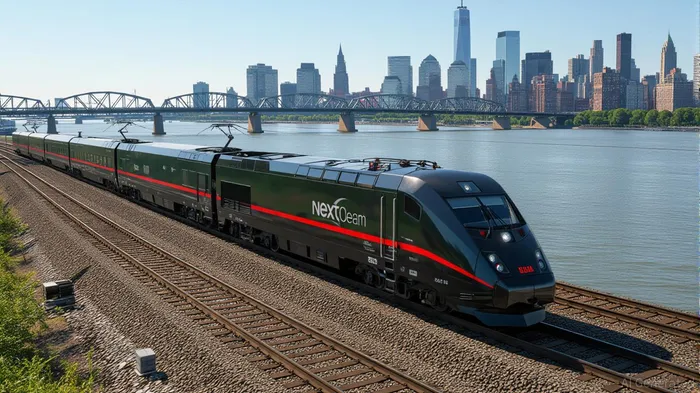
The U.S. rail renaissance is no longer a distant dream but a tangible reality, anchored by Amtrak's Acela Revival. This $2.45 billion modernization project, part of a broader $24 billion federal investment under the Infrastructure Investment and Jobs Act (IIJA), represents a pivotal test of public-private collaboration in transforming rail infrastructure. For investors, the Acela initiative offers a compelling lens to assess how strategic infrastructure spending can catalyze regional economic growth while aligning with environmental, social, and governance (ESG) imperatives.
The Acela Model: A Blueprint for Sustainable Growth
The NextGen Acela trains, launched in 2025, are more than just faster and more comfortable—they are a testament to the power of domestic supply chains. Built at Alstom's Hornell, New York, facility using 95% U.S.-sourced components, the project has generated 15,000 jobs across 29 states and injected $87 million into upstate New York's manufacturing sector. This localized production model not only revitalizes industrial hubs but also reduces reliance on foreign supply chains, a critical ESG consideration in an era of geopolitical uncertainty.
The economic ripple effects extend beyond manufacturing. By increasing seating capacity by 27% and expanding schedules, the Acela Revival is poised to shift travel demand from air and road networks to rail. This shift could reduce carbon emissions by an estimated 1.2 million metric tons annually—a 15% cut in the Northeast Corridor's transportation-related emissions—while boosting GDP growth through enhanced connectivity between Boston, New York, and Washington, D.C.
Public-Private Synergy: A New Paradigm for Infrastructure
The Acela project's success hinges on its ability to balance public funding with private-sector innovation. Alstom's role in manufacturing the trains, supported by federal grants, demonstrates how partnerships can accelerate technological adoption. Similarly, the modernization of key rail yards in Boston, New York, and Washington, D.C., led by firms like SPS New England and Scalamandre-Citnalta, underscores the importance of construction and engineering expertise in unlocking long-term value.
For investors, this model suggests a shift in infrastructure investment strategies. Traditional rail projects often rely on fragmented funding sources, but the Acela Revival's integrated approach—combining federal grants, state-level initiatives, and private capital—offers a replicable framework for future projects. The $66 billion federal rail investment plan, with $24 billion earmarked for the Northeast Corridor, further validates this model, positioning rail as a cornerstone of U.S. climate and economic policy.
ESG Alignment: Beyond Carbon Reduction
While the environmental benefits of high-speed rail are well-documented, the Acela Revival's ESG impact runs deeper. The project's emphasis on domestic job creation and supply chain resilience addresses social equity concerns, while its focus on climate resilience—such as modernizing aging infrastructure like the B&P Tunnel—aligns with governance goals of long-term sustainability.
Amtrak's FY2023 Sustainability Report highlights additional ESG wins, including a 63% reduction in greenhouse gas emissions through renewable diesel use on California routes and a 75% cut in plastic packaging via in-house food preparation. These initiatives, paired with the Acela Revival, position Amtrak as a leader in the transition to low-carbon transportation.
Challenges and Opportunities
Despite its promise, the Acela Revival faces hurdles. Freight train interference remains a persistent issue, with Amtrak's Host Railroad Report Card revealing delays caused by shared tracks. Addressing these bottlenecks will require continued collaboration with freight railroads and regulatory oversight—a test of the project's governance framework.
Moreover, the success of the Acela model depends on sustained political will. While the Biden administration's climate agenda provides a strong foundation, future administrations may prioritize different infrastructure goals. Investors should monitor federal funding trends and state-level initiatives, such as New York's $12 billion Empire State Rail Plan, to gauge the project's longevity.
Investment Implications
For investors, the Acela Revival signals a strategic inflection point in U.S. rail infrastructure. The project's alignment with ESG goals, coupled with its potential to drive regional GDP growth, makes it a compelling case study for infrastructure-focused portfolios. Key sectors to watch include:
- Rail Engineering and Manufacturing: Companies like Alstom and Bombardier, which supply high-speed rail technology.
- Sustainable Materials: Firms providing lightweight, energy-efficient components for train construction.
- Urban Development: Real estate firms capitalizing on transit-oriented development near rail hubs like Union Station.
Conclusion
Amtrak's Acela Revival is more than a modernization project—it is a blueprint for how infrastructure investment can harmonize economic growth, environmental sustainability, and social equity. By demonstrating the viability of public-private partnerships and the transformative potential of high-speed rail, the initiative sets a precedent for future projects in the Gulf Coast, Midwest, and beyond. For investors, the Acela's journey from Hornell to Washington, D.C., offers a roadmap to capitalize on the next wave of U.S. infrastructure innovation.
As the U.S. seeks to build a competitive rail network, the Acela Revival proves that strategic infrastructure spending is not just a public good—it's a powerful engine for long-term value creation.

Delivering real-time insights and analysis on emerging financial trends and market movements.
Latest Articles
Stay ahead of the market.
Get curated U.S. market news, insights and key dates delivered to your inbox.






Comments
No comments yet