
Amsterdam's Real Estate Gold Rush: Tech Innovation and Sustainability Fuel Prime Opportunities
Amsterdam, long renowned for its canals and historic charm, is now a beacon of the future. As Europe's fifth-largest tech hub and a global leader in sustainable urban development, the city is experiencing a real estate surge that investors cannot afford to overlook. With tech startups driving demand for premium office space, government policies prioritizing green infrastructure, and a booming residential market, Amsterdam's real estate landscape is ripe for strategic investments.
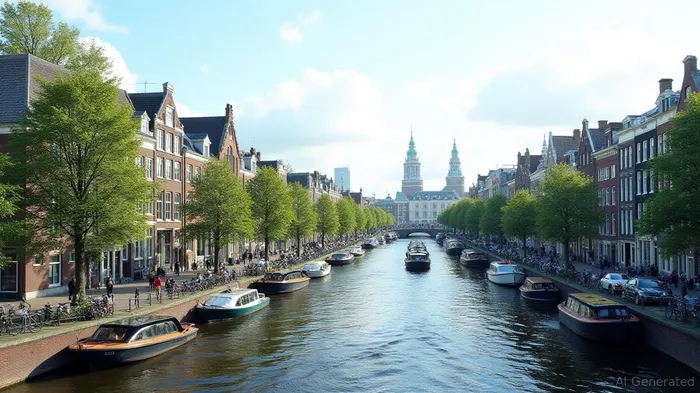
The Tech Hub Engine: Fueling Office Demand
Amsterdam's startup ecosystem is a powerhouse. Home to 4,000 tech startups employing 196,000 people, the city is Europe's densest tech cluster after London. Fintech, health tech, and deep tech (AI, quantum computing) dominate, with ventures like Mews (hotel tech) and DataSnipper (AI analytics) becoming unicorns. Venture capital pours in: Dutch startups raised €2.5 billion in 2024, with Amsterdam securing €576 million in Q4 alone.
This growth is not just about startups—it's about scale. The Netherlands' scaleup ratio has jumped from 13% to 21.5% since 2019, and Amsterdam is the launchpad. Tech firms need space to grow, and prime office demand is soaring.
Commercial Real Estate: Polarization and Premium Pricing
The office market is diverging sharply. Investors favor high-quality spaces near innovation hubs like Amsterdam Science Park, where quantum computingQUBT-- projects and corporate partnerships thrive. Prime office rents rose 2–4% in 2024, while poorly maintained buildings face rising vacancies.
Why now?
- Location: Amsterdam's central European position and Dutch fluency in English attract global talent.
- Talent: A skilled workforce (90% English-fluent) and competitive salaries (€66k–€115k for engineers) keep costs manageable.
- Government support: Initiatives like the Innovatiekrediet (innovation credit) and startup visas fuel growth.
For investors, prime office assets near tech clusters are low-risk, high-return bets.
Sustainability-Driven Development: Green is Gold
Amsterdam's commitment to sustainability is reshaping its real estate fabric. The Dutch government mandates net-zero emissions by 2050, pushing developers to build energy-efficient homes and green offices.
- Energy-efficient housing: Properties with high sustainability certifications qualify for tax breaks and mortgages up to 106% of value.
- Green infrastructure: Projects like solar-powered data centers and Fairphone's ethically sourced electronics hubs are magnets for ESG-conscious investors.
The numbers:
The Netherlands' construction sector will hit €50.95 billion by 2025, with 5% annual growth fueled by sustainable housing and infrastructure. Public-private partnerships are unlocking funding for projects like Amsterdam's Schiphol Airport expansion, which integrates green energy and smart tech.
Residential Market: Scarcity Meets Innovation
Amsterdam's residential market is tightening. With a housing deficit of 436,000 homes nationally and rents hitting €27/m² (the highest since 1993), demand outstrips supply.
Yet, rent controls (Affordable Rent Act, 2024) have introduced complexity. While capping mid-range rents, they've spurred investors to shift toward high-end luxury or affordable social housing. This segmentation creates opportunities:
- Luxury apartments: Serve affluent tech executives and global firms.
- Affordable housing: Government mandates 2/3 of new builds as affordable, with subsidies ensuring viability.
Proptech and the Future: AI and Data are the New Cornerstones
Tech isn't just moving into offices—it's redefining real estate itself. Proptech startups like Domos (AI-driven lease audits) and dcbel (energy grid integration) are automating workflows and boosting asset values.
Venture capital for proptech hit $2.06 billion in Q1 2025, with Amsterdam-based firms like Euronext enabling seamless capital flows. The European Common Prospectus (launched in April 2025) simplifies cross-border fundraising, giving Amsterdam a leg up.
Why Act Now?
- Prime office assets near tech hubs offer 2–4% annual rent growth and low vacancy risk.
- Sustainable housing benefits from tax incentives and rising demand.
- Proptech-driven efficiency ensures long-term value in a data-first economy.
Amsterdam's real estate market is at a tipping point—a confluence of tech-driven demand, sustainability mandates, and strategic government support. Investors who act swiftly can secure prime positions in a city set to define Europe's innovation economy for decades.
The question isn't whether to invest—it's when. Don't let this moment slip away.
Invest now—before the gold rush becomes a gilded past.

Stay ahead of the market.
Get curated U.S. market news, insights and key dates delivered to your inbox.


AInvest
PRO
AInvest
PRO



Comments
No comments yet