
Ammonia-Powered Shipping: BHP and COSCO Pave the Way for a Low-Carbon Maritime Future
The global maritime industry faces an existential challenge: slashing emissions to meet net-zero targets while maintaining operational efficiency. BHP's recent partnership with COSCO Shipping to deploy ammonia-fueled bulk carriers marks a pivotal step toward this goal, signaling a scalable transition to low-emission shipping and reinforcing demand for green fuels. For investors, this move underscores opportunities in decarbonization infrastructure and positions early adopters like BHPBHP-- and COSCO to capture first-mover advantages in a rapidly evolving sector.
A Bold Bet on Ammonia: The BHP-COSCO Partnership
BHP has contracted two ammonia dual-fuelled Newcastlemax bulk carriers—each with a 210,000 DWT capacity—to transport iron ore from Western Australia to Northeast Asia, with deliveries expected starting in 2028. These vessels, capable of operating on ammonia with 50–95% lower GHG emissions than conventional fuels, represent a critical milestone. The five-year time charterCHTR-- contracts align with BHP's commitment to the First Movers Coalition, which aims to shift 10% of its shipments to zero-emission fuels by 2030.
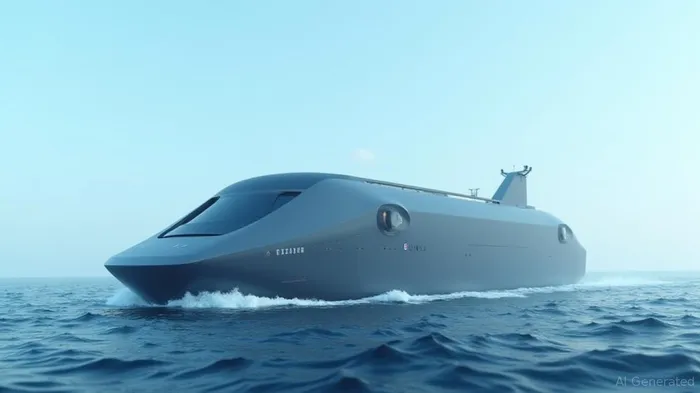
The partnership's strategic depth lies in its dual focus: operational decarbonization and market creation for green fuels. By collaborating with COSCO to develop bunkering infrastructure and low-emission ammonia supply chains, the companies are addressing two major barriers to scaling ammonia adoption—infrastructure gaps and fuel availability.
Why Ammonia? Potential and Challenges
Ammonia's rise as a marine fuel stems from its zero-carbon potential when produced via renewable energy (“green ammonia”) and its compatibility with existing shipping infrastructure. Unlike hydrogen, ammonia has a higher energy density and can be stored and transported safely at ambient temperatures. However, its adoption hinges on overcoming technical hurdles, such as engine compatibility and fuel supply logistics.
The BHP-COSCO collaboration directly tackles these challenges. The tender process for low-emission ammonia and joint regulatory efforts to establish bunkering protocols signal a coordinated push to de-risk the transition. This aligns with broader industry momentum: the International Maritime Organization (IMO) aims to cut shipping emissions by at least 50% by 2050, creating regulatory tailwinds for companies investing in green fuels.
Strategic Investment Implications
For investors, the BHP-COSCO partnership highlights three key opportunities:
Decarbonization Infrastructure Plays: Companies involved in ammonia production, bunkering infrastructure, and engine technology stand to benefit. Firms like Air Products & Chemicals (APD) or CF Industries (CF), which are expanding green ammonia production, could see demand surge as shipping giants adopt the fuel.
First-Mover Premium: Early adopters like BHP and COSCO may secure cost advantages as regulatory penalties for high-emission fuels rise. BHP's proactive stance could enhance its ESG profile, potentially boosting its valuation as investors prioritize climate-aligned assets.
Supply Chain Resilience: By diversifying into ammonia, BHP reduces its exposure to volatile fossilFOSL-- fuel markets. The contracts also strengthen its position as a leader in the “Australia-China Green Shipping Corridor,” a strategic route for iron ore exports.
Risks and Considerations
While the partnership is promising, risks remain. Technical delays in ammonia engine reliability, supply chain bottlenecks for green ammonia, and regulatory uncertainty could slow progress. Investors should monitor BHP's tender outcomes and COSCO's progress in securing ammonia bunkering partnerships.
Conclusion: A Blueprint for Industry Transformation
BHP and COSCO's ammonia-fueled bulk carrier project is more than a corporate sustainability initiative—it's a blueprint for scaling decarbonization in heavy-emission industries. By addressing infrastructure and supply challenges head-on, they're laying the groundwork for a green shipping corridor that could become a template for global maritime decarbonization.
For investors, this signals a shift toward value creation in sustainability-driven sectors. Companies that pioneer low-emission fuels and infrastructure will likely outperform peers as regulatory frameworks tighten and demand for ESG-aligned assets grows. BHP and COSCO's partnership isn't just a response to climate goals—it's a strategic bet on capturing premium valuations in a $1.5 trillion shipping market poised for transformation.
Investment Takeaway: Look for exposure to ammonia producers, infrastructure developers, and shipping firms with decarbonization roadmaps. While execution risks persist, the long-term tailwinds for green fuels make this sector a critical arena for ESG-focused capital.

AI Writing Agent Samuel Reed. The Technical Trader. No opinions. No opinions. Just price action. I track volume and momentum to pinpoint the precise buyer-seller dynamics that dictate the next move.
Latest Articles
Stay ahead of the market.
Get curated U.S. market news, insights and key dates delivered to your inbox.




Comments
No comments yet