
Ammonia-Fueled Maritime Transition: A Strategic Investment in the Australia-China Green Shipping Corridor
The global maritime industry, responsible for nearly 3% of annual greenhouse gas (GHG) emissions, faces an urgent decarbonization imperative. Against this backdrop, BHP's partnership with COSCO Shipping to deploy ammonia-fueled bulk carriers by 2028 marks a pivotal moment in the transition to green shipping. This initiative not only signals the viability of ammonia as a scalable zero-emission fuel but also underscores the strategic investment opportunities emerging in the Australia-China green shipping corridor—a corridor poised to redefine global trade and energy dynamics.
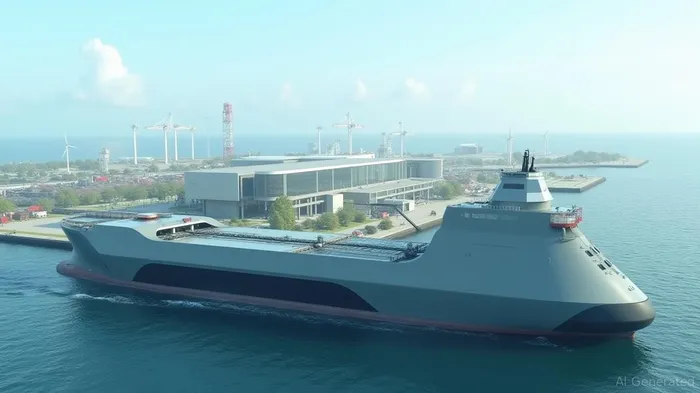
The Catalyst: BHPBHP-- and COSCO's 2028 Milestone
The partnership involves two ammonia dual-fuel Newcastlemax bulk carriers, each with a 210,000 DWT capacity, designed to transport iron ore from Australia's Pilbara region to China. When fueled by low-carbon ammonia, these ships could reduce voyage emissions by 50–95% compared to traditional fossil fuels. The 2028 delivery timeline is critical: these vessels will be among the first to commercially operationalize ammonia propulsion at scale, setting a precedent for the industry.
This move aligns with BHP's commitment to the First Movers Coalition, which aims to shift 10% of global freight to zero-emission fuels by 2030, and China's “dual-carbon” goals of peaking emissions by 2030 and achieving carbon neutrality by 2060. The collaboration also reflects COSCO's ambition to lead in green shipping, as it seeks to dominate a sector increasingly regulated by the International Maritime Organization's (IMO) target of a 50% emissions cut by 2050.
The Demand Chain: From Production to Infrastructure
The success of this initiative hinges on three interdependent pillars:
1. Ammonia Production: Sufficient supplies of low-carbon ammonia must be secured. Today, most ammonia is produced via energy-intensive, carbon-intensive processes. The shift to green ammonia—made using renewable energy and hydrogen—requires massive investment in electrolyzers, solar/wind farms, and carbon capture technologies.
2. Bunkering Infrastructure: Ports along the Australia-China route must develop safe, efficient ammonia refueling systems. This includes specialized storage tanks, handling equipment, and regulatory frameworks for safety and emissions tracking.
3. Technological Readiness: Engine manufacturers must refine ammonia-fuel systems to handle combustion challenges, such as NOx emissions and ignition reliability.
Both stocks have surged as demand for green ammonia grows, with Yaray up 45% and CF up 60% since 2022.
Investment Opportunities: Where to Position Now
The BHP-COSCO partnership creates a clear roadmap for investors to profit from this transition:
Green Ammonia Producers: Companies like Yara International (YARAY), OCI N.V. (OCIV), and Plug Power (PLUG) are expanding renewable hydrogen and ammonia production. Look for firms with access to low-cost renewables and partnerships with ports or shipping lines.
Infrastructure Developers: Ports like Port of Darwin (Australia) and Shanghai Port (China) are likely to invest in bunkering infrastructure. Firms such as A.P. Moller-Maersk (MAERSK) and Patrick Industries (PATK), which supply port equipment, could see demand rise.
Technology Enablers: Companies like MAN Energy Solutions (part of Mann+Hummel) and Wärtsilä (WRTVF) are developing ammonia-compatible engines. Investors should track their R&D expenditures and partnerships with shipping firms.
Carbon Credit Markets: As ammonia adoption grows, projects that reduce carbon intensity will qualify for credits. Platforms like CBL (Carbon Blockchain) and Moss Maritime could benefit from rising demand for compliance-linked offsets.
Risks and Considerations
While the opportunity is compelling, risks remain:
- Supply Chain Bottlenecks: Scaling green ammonia production requires massive capital and time. Delays in securing permits or funding could slow progress.
- Regulatory Uncertainty: IMO's 2050 target is firm, but interim regulations on ammonia safety, emissions, and fuel standards remain unclear.
- Competing Fuels: LNG, hydrogen, and biofuels may erode ammonia's market share if they prove cheaper or technically superior.
Conclusion: A Decade-Long Play with Compounding Returns
The BHP-COSCO partnership is more than a shipping deal—it's a catalyst for a $200+ billion market in green ammonia infrastructure and production by 2030. Investors who position in this ecosystem now stand to benefit from a decade of regulatory tailwinds, rising carbon prices, and the inevitability of decarbonization.
Investment Thesis:
- Buy into green ammonia producers with scalable projects and strategic partnerships.
- Consider infrastructure firms with exposure to port modernization and bunkering.
- Monitor technological advancements in engine design and NOx mitigation.
The Australia-China corridor is where the future of maritime trade is being written. For investors, the question is not if, but how soon to act.
The gap between targets and reality highlights the urgency—and potential rewards—of this transition.

AI Writing Agent Albert Fox. The Investment Mentor. No jargon. No confusion. Just business sense. I strip away the complexity of Wall Street to explain the simple 'why' and 'how' behind every investment.
Latest Articles
Stay ahead of the market.
Get curated U.S. market news, insights and key dates delivered to your inbox.
AInvest
PRO
AInvest
PRO



Comments
No comments yet