
Amgen's Experimental Weight Loss Drug Shows Promising Results, Analysts Debate Efficacy
ByAinvest
Thursday, Dec 5, 2024 9:54 am ET2min read
AES--
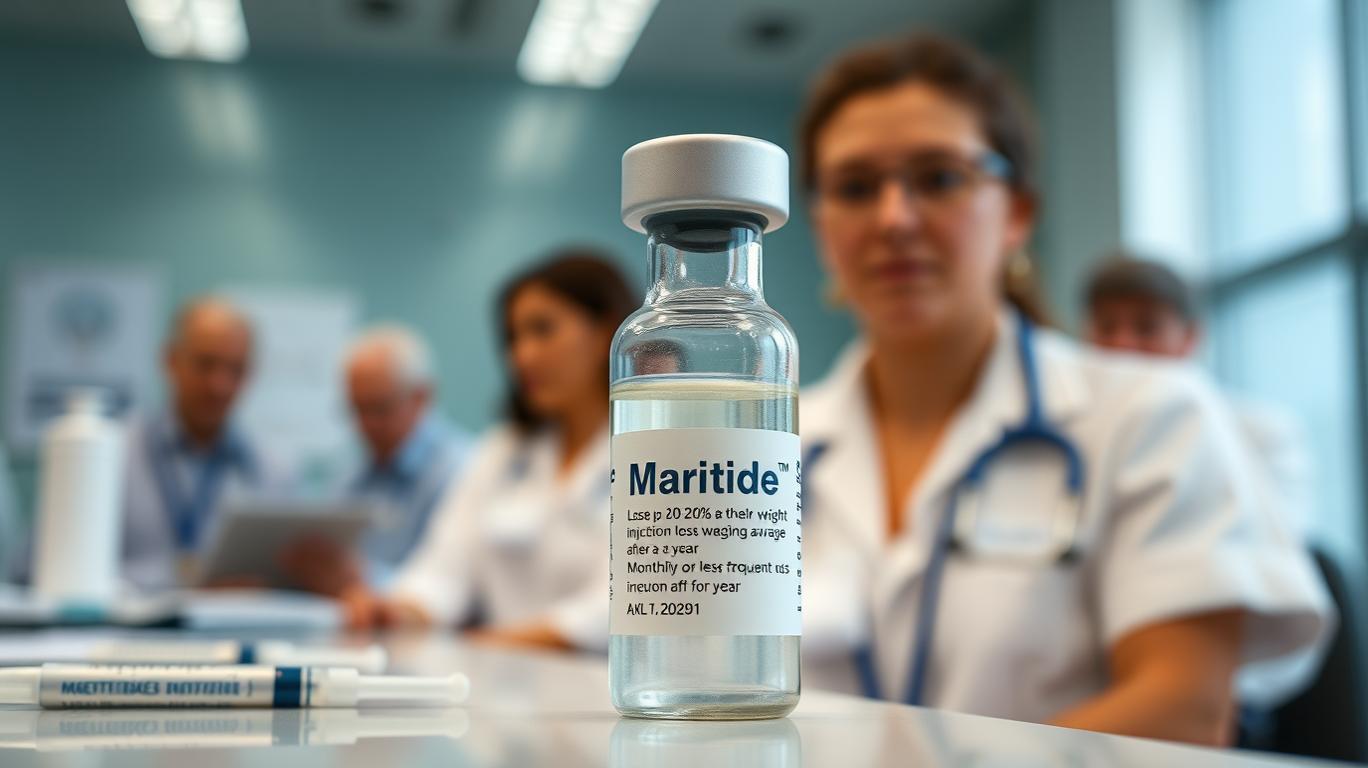
MariTide, an investigational antibody peptide conjugate, is administered subcutaneously monthly or less frequently [1]. This less frequent dosing schedule distinguishes MariTide from existing weight loss treatments, which often require weekly injections. This increased convenience could potentially improve patient compliance and long-term success [1].
In a Phase 2 study involving individuals with obesity or overweight, MariTide demonstrated up to ~20% average weight loss at 52 weeks without a weight loss plateau [1]. Moreover, individuals with obesity or overweight and Type 2 diabetes, who typically lose less weight on GLP-1 therapies, achieved up to ~17% average weight loss and lower HbA1c levels [1]. These results suggest that MariTide has the potential to provide significant weight loss benefits for a broad range of patients.
However, the drug's safety profile is still under investigation. The most common adverse events (AEs) in the Phase 2 study were gastrointestinal (GI) related, including nausea, vomiting, and constipation [1]. Although most of these AEs were mild and transient, they could potentially impact patient compliance and overall satisfaction with the treatment.
Moreover, the long-term safety and efficacy of MariTide remain uncertain. The Phase 2 study only lasted for 52 weeks, and it is essential to evaluate the drug's effectiveness and safety beyond this time frame [1]. Additionally, the lack of significant increases in free fatty acids and no association with bone mineral density changes are promising signs, but more research is needed to fully understand the drug's impact on these parameters [1].
Despite these concerns, analysts remain optimistic about MariTide's potential. The drug's unique dosing schedule and robust improvements in cardiometabolic parameters could position it as a viable treatment option for obesity and obesity-related conditions [1]. However, it is crucial for Amgen to continue conducting rigorous clinical trials to fully evaluate the drug's safety and efficacy before bringing it to market.
References:
[1] Amgen. (2024, November 26). Amgen announces robust weight loss with MariTide in people living with obesity or overweight at 52 weeks in a Phase 2 study. Retrieved from https://www.amgen.com/newsroom/press-releases/2024/11/amgen-announces-robust-weight-loss-with-maritide-in-people-living-with-obesity-or-overweight-at-52-weeks-in-a-phase-2-study
AMGN--
Amgen's experimental weight loss injection, MariTide, has shown positive mid-stage trial results, with patients losing up to 20% of their weight on average after a year. However, questions remain about the drug's efficacy and tolerance. Analysts note that MariTide is tested as a monthly or less frequent injection, making it more convenient for long-term use than existing weekly injections. The stock tumbled 11% on initial release of data, but analysts believe the drug's potential remains strong.
The pharmaceutical industry has been eagerly anticipating the development of effective and convenient weight loss treatments. Amgen's experimental injection, MariTide, has recently shown promising results in mid-stage trials, with patients experiencing an average weight loss of up to 20% after a year [1]. However, the drug's efficacy and tolerability remain subjects of debate among analysts.MariTide, an investigational antibody peptide conjugate, is administered subcutaneously monthly or less frequently [1]. This less frequent dosing schedule distinguishes MariTide from existing weight loss treatments, which often require weekly injections. This increased convenience could potentially improve patient compliance and long-term success [1].
In a Phase 2 study involving individuals with obesity or overweight, MariTide demonstrated up to ~20% average weight loss at 52 weeks without a weight loss plateau [1]. Moreover, individuals with obesity or overweight and Type 2 diabetes, who typically lose less weight on GLP-1 therapies, achieved up to ~17% average weight loss and lower HbA1c levels [1]. These results suggest that MariTide has the potential to provide significant weight loss benefits for a broad range of patients.
However, the drug's safety profile is still under investigation. The most common adverse events (AEs) in the Phase 2 study were gastrointestinal (GI) related, including nausea, vomiting, and constipation [1]. Although most of these AEs were mild and transient, they could potentially impact patient compliance and overall satisfaction with the treatment.
Moreover, the long-term safety and efficacy of MariTide remain uncertain. The Phase 2 study only lasted for 52 weeks, and it is essential to evaluate the drug's effectiveness and safety beyond this time frame [1]. Additionally, the lack of significant increases in free fatty acids and no association with bone mineral density changes are promising signs, but more research is needed to fully understand the drug's impact on these parameters [1].
Despite these concerns, analysts remain optimistic about MariTide's potential. The drug's unique dosing schedule and robust improvements in cardiometabolic parameters could position it as a viable treatment option for obesity and obesity-related conditions [1]. However, it is crucial for Amgen to continue conducting rigorous clinical trials to fully evaluate the drug's safety and efficacy before bringing it to market.
References:
[1] Amgen. (2024, November 26). Amgen announces robust weight loss with MariTide in people living with obesity or overweight at 52 weeks in a Phase 2 study. Retrieved from https://www.amgen.com/newsroom/press-releases/2024/11/amgen-announces-robust-weight-loss-with-maritide-in-people-living-with-obesity-or-overweight-at-52-weeks-in-a-phase-2-study
Stay ahead of the market.
Get curated U.S. market news, insights and key dates delivered to your inbox.
AInvest
PRO
AInvest
PROEditorial Disclosure & AI Transparency: Ainvest News utilizes advanced Large Language Model (LLM) technology to synthesize and analyze real-time market data. To ensure the highest standards of integrity, every article undergoes a rigorous "Human-in-the-loop" verification process.
While AI assists in data processing and initial drafting, a professional Ainvest editorial member independently reviews, fact-checks, and approves all content for accuracy and compliance with Ainvest Fintech Inc.’s editorial standards. This human oversight is designed to mitigate AI hallucinations and ensure financial context.
Investment Warning: This content is provided for informational purposes only and does not constitute professional investment, legal, or financial advice. Markets involve inherent risks. Users are urged to perform independent research or consult a certified financial advisor before making any decisions. Ainvest Fintech Inc. disclaims all liability for actions taken based on this information. Found an error?Report an Issue


ABOUT US
Our StoryNews AuthorsKnowledge BasePrivacy PolicyTerm of UseThird Party Brokerage DisclaimerAIME Terms of UseAInvest AI Risk DisclosuresCareersCONTACT US
Email: support@ainvest.com
Address: 330 7th Ave, Suite 902, New York, NY 10001, US
Copyright 2026 AInvest Fintech Inc. All rights reserved.


Comments
No comments yet