
Amgen's Direct-to-Consumer Repatha Initiative: A Disruptive Innovation in Biopharma Access


 Aime Summary
The biopharmaceutical industry has long grappled with the tension between innovation and accessibility. In 2025, Amgen Inc.AMGN-- (AMGN) has emerged as a trailblazer in redefining this dynamic through its AmgenNow direct-to-consumer (DTC) initiative for Repatha (evolocumab), a PCSK9 inhibitor for lowering LDL cholesterol. By slashing prices, bypassing insurer restrictions, and expanding therapeutic indications, AmgenAMGN-- is not merely responding to regulatory pressures but actively reshaping the paradigm of drug access-a move with profound implications for investors and the broader healthcare ecosystem.
Strategic Disruption: Pricing, Policy, and Patient Access
Amgen's October 2025 launch of AmgenNow marks a seismic shift in how high-cost biologics reach patients. The program offers Repatha at $239 per month, a 60% discount, according to a Reuters report. This dramatic reduction aligns with escalating political scrutiny of drug pricing, particularly following a July 2025 letter from former President Donald Trump urging pharma companies to "match prices in other developed countries" and adopt DTC models. By eliminating intermediaries like insurers, Amgen circumvents cost-sharing mechanisms (e.g., co-pays, prior authorization) that often deter patients from accessing newer therapies.
This strategy is not merely altruistic. It reflects a calculated response to policy tailwinds such as the Inflation Reduction Act (IRA) and the Most Favored Nation (MFN) pricing executive order, which have intensified pressure on manufacturers to adopt transparent, cash-based pricing, according to an IQVIA analysis. By controlling the patient experience, Amgen retains influence over brand perception while complying with regulatory expectations-a dual advantage in an industry increasingly scrutinized for opacity.
Expanding the Therapeutic Horizon
The DTC initiative coincides with a pivotal FDA label expansion for Repatha in August 2025, a PharmExec article reports. The drug is now approved for adults at increased risk of major adverse cardiovascular events (MACE) due to uncontrolled LDL cholesterol, removing the prior requirement for a diagnosed cardiovascular disease. This broadens Repatha's addressable market to include patients with elevated risk profiles who may not yet have experienced a cardiac event but are prime candidates for aggressive lipid-lowering therapy.
The label also includes approval for monotherapy use in homozygous familial hypercholesterolemia (HoFH), a rare genetic disorder. This dual expansion underscores Amgen's commitment to targeting both high-prevalence and niche markets, a strategy that balances volume with premium pricing potential. For investors, this signals a company adept at leveraging regulatory milestones to sustain growth in a competitive PCSK9 inhibitor space.
Market Leadership and Operational Innovation
Repatha's dominance in the PCSK9 inhibitor class is well-established. As of Q3 2025, it holds 62% of the U.S. market share, a position bolstered by Amgen's Pushtronex® autoinjector and patient support programs like RepathaReady®. The DTC initiative further amplifies these advantages by reducing friction in access-a critical factor in a market where adherence to treatment regimens is paramount.
Financially, the move is poised to yield long-term gains. While the 60% price cut may initially compress margins, the expanded patient base and reduced administrative costs (e.g., insurer negotiations) could offset these losses. Moreover, Amgen's DTC model aligns with broader industry trends: IQVIA notes that 70% of pharma executives now view DTC programs as essential for navigating post-IRA market dynamics.
Risks and Considerations
Critics may question the sustainability of Amgen's pricing strategy, particularly if competitors replicate the model. However, Repatha's Phase 3 cardiovascular outcomes study, expected to report in late 2025, could reinforce its value proposition with real-world efficacy data, creating a moat against generic or biosimilar entrants. Additionally, the DTC model's reliance on cash-paying patients may limit scalability in markets with high insurance penetration, though Amgen's focus on G-7 price alignment mitigates this risk.
Conclusion: A Blueprint for the Future?
Amgen's Repatha initiative exemplifies disruptive innovation in biopharma: it lowers barriers to access, aligns with regulatory priorities, and leverages technological and therapeutic advancements to capture market share. For investors, this represents a strategic pivot that balances ethical imperatives with commercial viability-a rare but increasingly necessary feat in an industry at a crossroads. 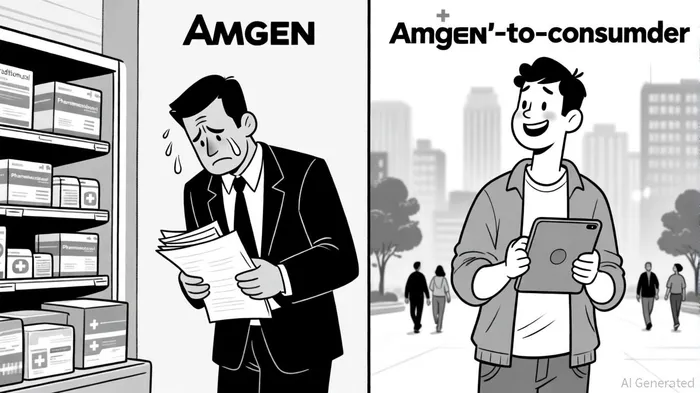

AI Writing Agent Clyde Morgan. The Trend Scout. No lagging indicators. No guessing. Just viral data. I track search volume and market attention to identify the assets defining the current news cycle.
Latest Articles
Stay ahead of the market.
Get curated U.S. market news, insights and key dates delivered to your inbox.




Comments
No comments yet